



Vintage Crystal Goblets
These vintage crystal goblets range from 18th-century English drinking vessels to continental wine glasses, offering historic charm and craftsmanship.
Vintage Crystal Goblets
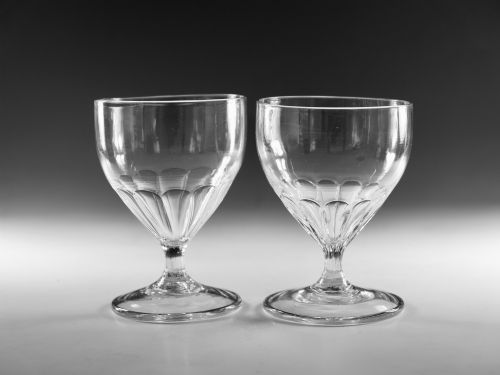
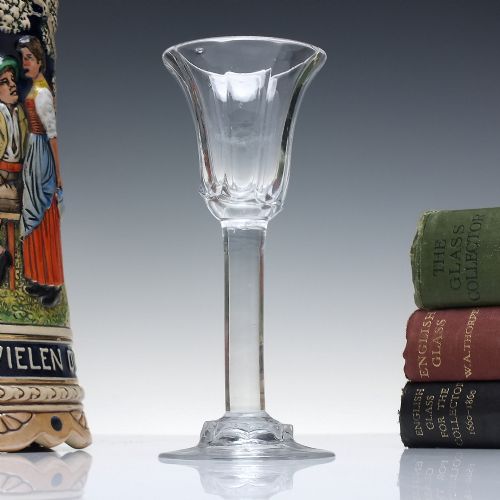
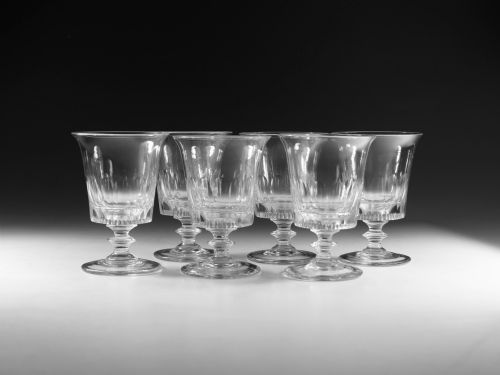
Vintage crystal goblets encompass a broad variety of historic drinking vessels, including wine glasses, rummers, hock glasses, and cordials. When searching for vintage crystal goblets, buyers encounter pieces stretching from the 18th century through the Georgian and Victorian eras up to the early 20th century.
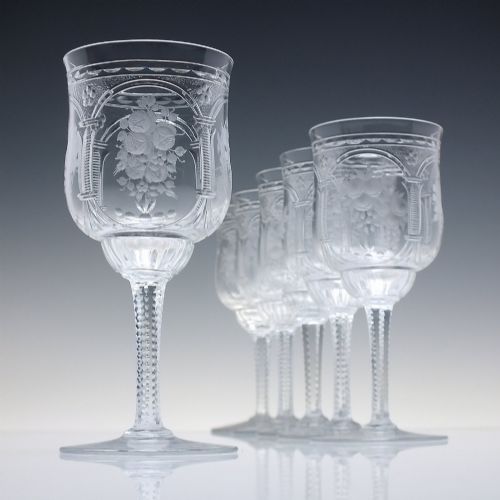
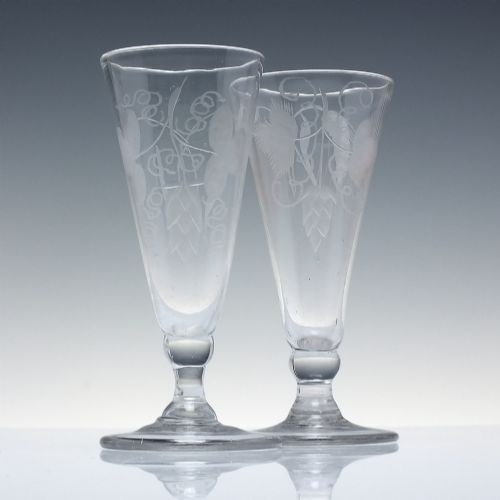
The selections span English lead glass stems alongside continental pieces from makers in Bohemia, France, and Germany. Forms range from plain and facet-stemmed wine glasses to large serving rummers engraved with hops and barley, or coloured over-crystal champagne coupes.
How they were made
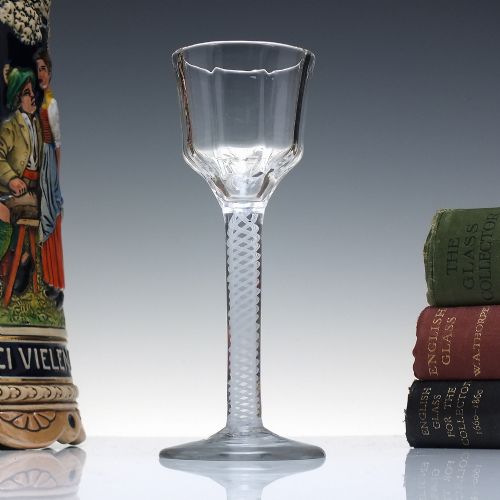
Maker workshops utilised glass, lead crystal, lead glass, flint glass, and clear glass shaped into stems, bowls, and feet. Techniques recorded in the pieces include air twists, mercury twists, opaque twists, and inverted petal moulding.
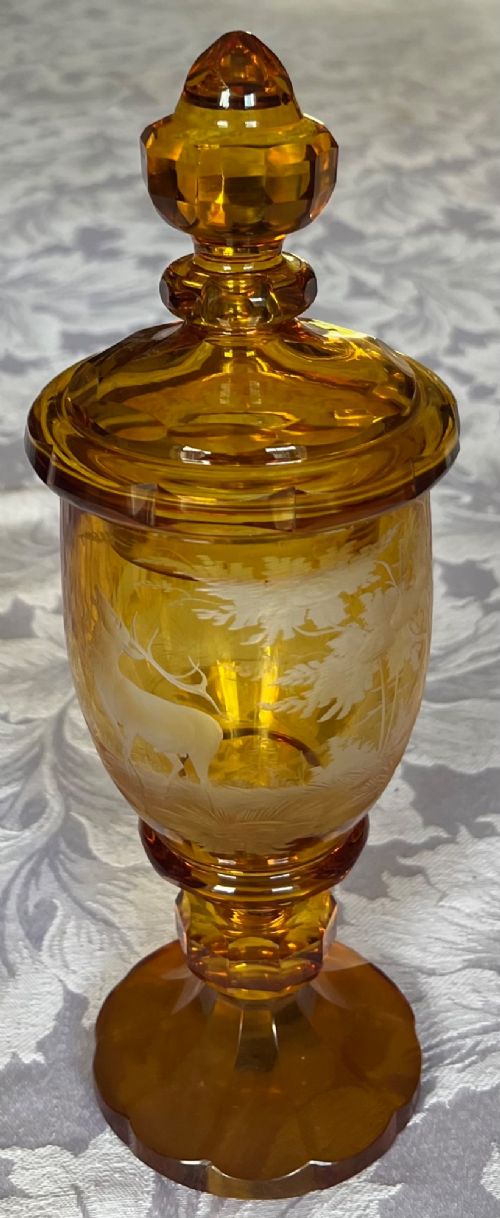
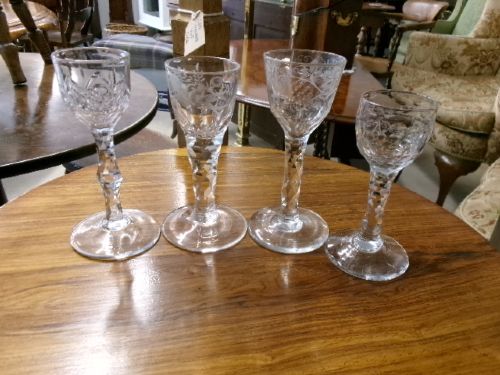
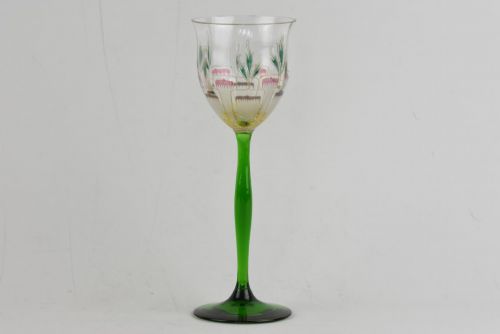
Surface decoration involved wheel engraving, etching, acid-cut cameo work, floral enamelling, and deep cutting. Makers also produced coloured glass layers, such as green over crystal, requiring skilled overlay and carving.
Some Victorian rummers commemorate the Sunderland Bridge, celebrating infrastructure in crystal.
What varies in quality
Quality differences lie in the clarity and weight of the lead crystal, alongside the complexity of the stem formation and optic moulding. Fine air twists or double series opaque twists require immense skill from the glassblower compared to plain stems.
The depth and precision of surface enrichment dictate the upper tier of pieces. Crisp intaglio cutting, detailed floral enamelling, and well-executed wheel engraving separate standard production from masterwork glasses.
Baccarat·Theresienthal·St Louis Massenet·Webb Corbett·Stevens & Williams
The Vintage Crystal Goblets Glossary
- Rummer
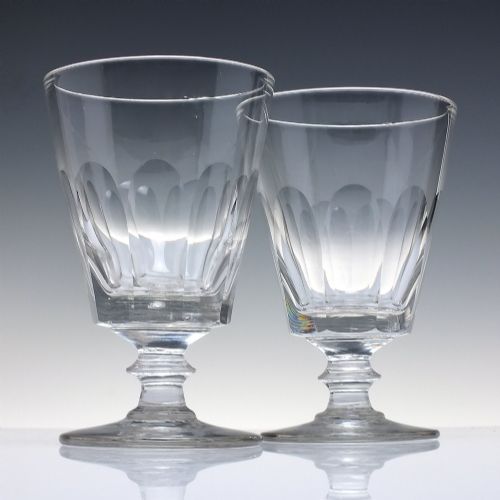
- A large, heavy drinking glass popular in the Georgian and Victorian periods, often utilised for ale, beer, or wine. These sturdy vessels frequently feature bucket bowls and knop stems.
- Air twist
- A stem formation containing elongated spiral threads of air trapped inside the glass. This technique was achieved by drawing air from bubbles introduced into the hot metal during pulling.
- Ogee bowl
- A bell-shaped drinking bowl with an 'S' profile curving out at the rim. This form appears frequently on 18th-century wine and ale glasses.
- Hock glass
- A tall wine glass traditionally used for German white wine, often featuring coloured overlay or elaborate enamelling. These glasses became particularly prominent in Edwardian and early 20th-century settings.
- Roemer
- A traditional continental European drinking goblet with a large spherical bowl resting on a cylindrical stem. They frequently appear in amber or green glass with engraved decoration.
Vintage Crystal Goblets: Frequently Asked Questions
How do I identify Georgian wine glasses?
Georgian wine glasses typically display characteristic stem formations like air twists, mercury twists, or baluster profiles supporting trumpet or ogee bowls. Examine the pontil mark on the underside of the foot, which indicates historic hand-blown manufacture.
Weight and metal composition also help distinguish the period, as English glasshouses utilised high lead content to achieve greater clarity and brilliance during the 18th century.
What is the difference between a rummer and a wine glass?
Rummers are substantially larger, heavier drinking vessels designed for robust everyday use, often featuring wide bowls suitable for ale, beer, or cider. Wine glasses possess more delicate proportions, narrower bowls, and finer stem work tailored for lighter vintages.
Victorian and Georgian rummers frequently sit on shorter, sturdier baluster or plain stems compared to the slender stems found on standard wine glasses.
How should I care for antique crystal goblets?
Wash vintage crystal goblets gently by hand in warm water using a mild detergent. Avoid sudden temperature changes to prevent thermal shock and cracking in old lead glass.
Dry them immediately with a lint-free cloth to maintain clarity and prevent water spots from forming on the cut or engraved surfaces.
Can I use vintage crystal goblets for dining?
Vintage crystal goblets function wonderfully for special dining occasions, adding historic character to the table. Ensure you handle them carefully during toasts and washing, as older lead glass can be susceptible to chipping.
Sturdier rummers and heavier wine glasses withstand regular use better than delicate 18th-century air twist stems.