





Vintage Convex Wall Mirror
A vintage convex wall mirror bends light across a room, creating a deep circular perspective that draws the eye.

Vintage Convex Wall Mirror
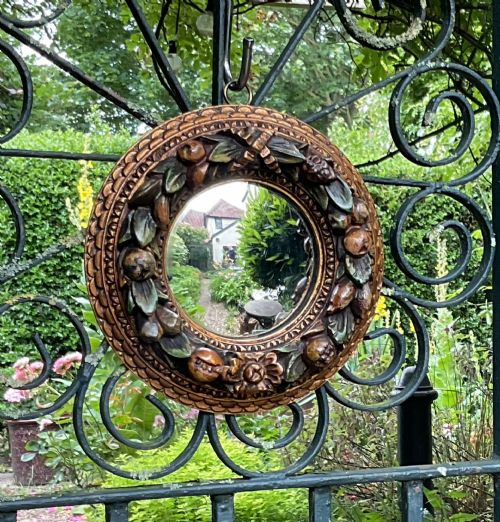
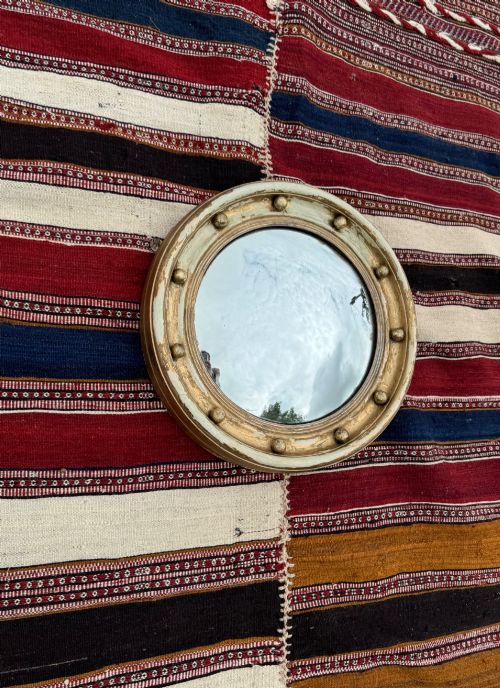
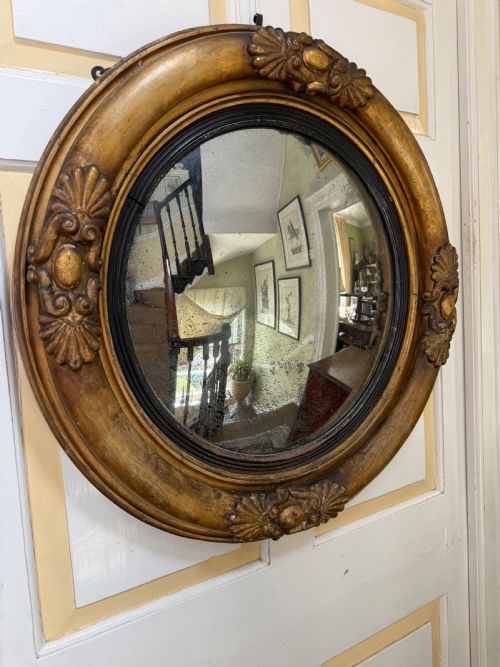
When you search for a vintage convex wall mirror, you encounter circular looking glasses designed to project a wide, spherical reflection of an interior space. These pieces capture light differently than flat glass, offering a distinctive curved view that distorts the edges while sharpening the centre.
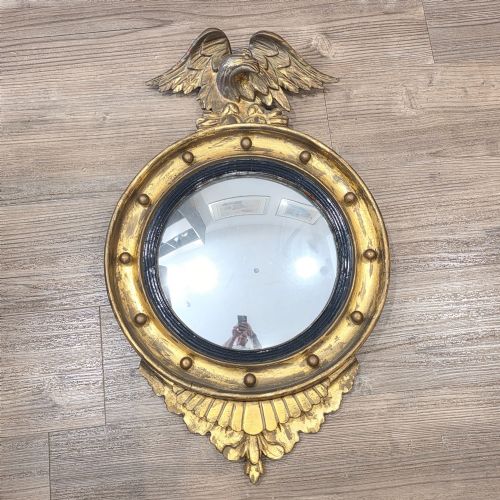
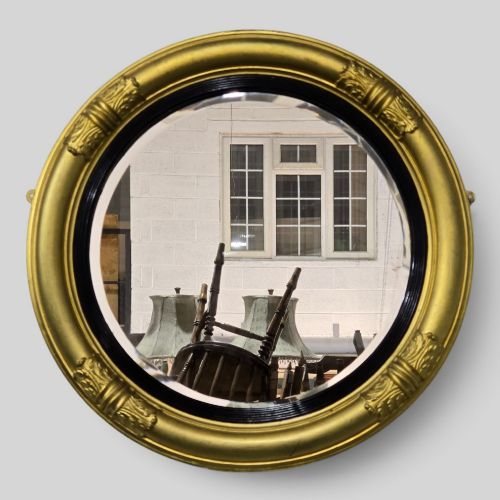
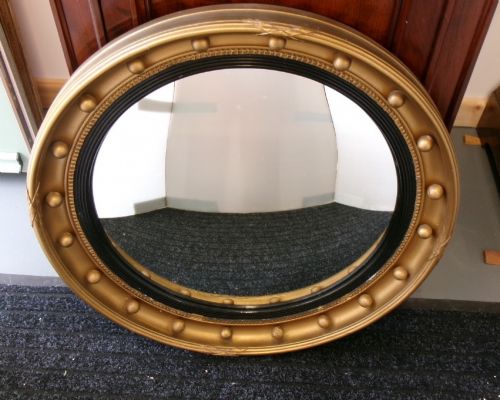
The selections span distinct periods including the Regency era, Victorian decades, and the early twentieth century. You are most likely to meet circular giltwood frames topped with carved eagles, alongside simpler wooden frames and occasional circular porthole formats.
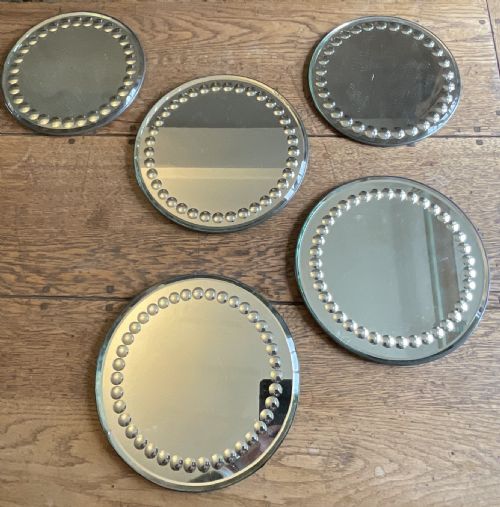
Beyond standard domestic mirrors, the grouping includes related circular variants known as sorcerer mirrors, circus mirrors, and sunburst designs. These varied forms share the defining curved glass plate that marks the category.
How they were made
Craftsmen built these frames primarily from wood, applying layers of gesso to carve intricate surface details before finishing the surface. Giltwood and gold leaf finishes provide the characteristic metallic sheen seen across the majority of surviving examples.
Makers set curved glass plates into circular housings, sometimes incorporating brass fittings or ebonised wood elements to contrast with the primary gilding. Larger scales required robust internal wooden structures to support the substantial weight of the curved glass.
Some nineteenth-century examples feature perched eagles glaring down at guests, keeping a watchful glass eye on the room below.
What varies in quality
Quality rests in the crispness of the carved woodwork and the depth of the original gilding on the frame. Finer examples display masterly hand-carved ornaments, such as detailed eagle crests or symmetrical foliate scrolls, rather than heavy or flattened plaster mouldings.
The clarity and condition of the curved glass plate determine the visual impact of the reflection. Superior pieces retain original silvering that ages gracefully without excessive foxing or dark degradation obscuring the curved view.
W.E. Pain of Cambridge·J C Moretti of King's Lynn·Joseph Biel
The Vintage Convex Wall Mirror Glossary
- Convex mirror
- A circular looking glass with an outward-curving surface that produces a wide-angle reflection of the surrounding room. This optical property made them popular in grand reception rooms for monitoring activity.
- Giltwood
- Timber coated with gold leaf over a prepared gesso base. This traditional finish gives frames a brilliant metallic lustre that catches interior candle or daylight.
- Gesso
- A plaster mixture applied to wood frames to create a smooth surface for fine carving and gilding. It allows craftsmen to fashion elaborate relief decorations.
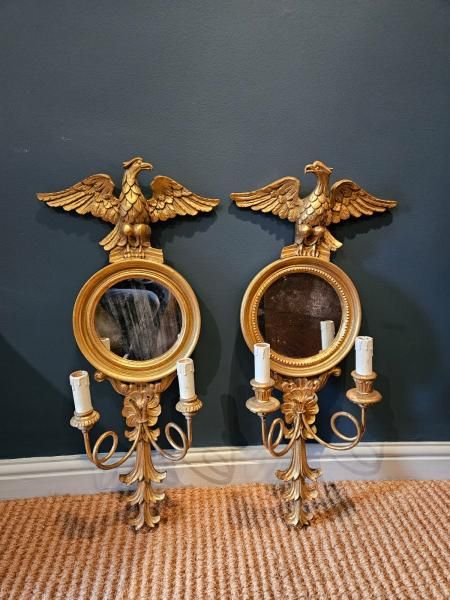
- Girandole
- A wall mirror featuring attached candle sconces designed to reflect and multiply candlelight. These optical arrangements illuminated dark hallways in earlier centuries.
- Sorcerer mirror
- An alternative name for a convex mirror, traditionally associated with magical scrying or folklore. The distorted perspective inspired curious domestic displays.
Vintage Convex Wall Mirror: Frequently Asked Questions
Where should I hang a convex mirror?
These mirrors function best opposite a window or in a narrow hallway where the curved glass can capture and project maximum light. Their wide-angle perspective makes small spaces feel considerably larger.
Because they concentrate light, avoid placing them in direct, harsh afternoon sunlight to protect the aged silvering on the glass plate.
How do I date a convex mirror?
Examination of the wood construction, gesso application, and the style of any carved surmounts provides the clearest indication of age. Regency and nineteenth-century pieces often feature distinct hand-carved wooden frames rather than mass-produced composition ornaments.
Checking the backboards and fixings can also reveal historical methods of construction that align with specific Victorian or earlier manufacturing periods.
Why are some called sorcerer mirrors?
The curved surface creates a fish-eye effect that distorts perspective, leading historical owners to associate them with alchemy and divination. Victorian interiors embraced this mystical reputation.
Over time, the label became synonymous with decorative convex looking glasses regardless of their original domestic purpose.
How do I clean the curved glass?
Dust the surface gently with a soft, dry microfibre cloth to remove loose particles without disturbing the antique frame. Avoid spraying liquids directly onto the glass, as moisture can seep behind the plate and damage the original silvering.
Apply mild cleaning solutions sparingly to the cloth rather than the mirror itself when tackling stubborn marks.