





Vintage Commercial Display
Vintage commercial display pieces bring authentic retail heritage into domestic spaces through glazed cabinets, fitted counters, and trade signs.
Vintage Commercial Display
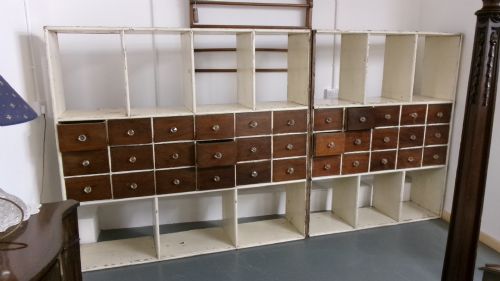
When you search for vintage commercial display, you encounter trade furnishings and retail fixtures drawn from nineteenth and twentieth-century commerce. These items include haberdashery cabinets, shop counters, chemist drawers, and advertising signs originally built for high street shops and emporiums.
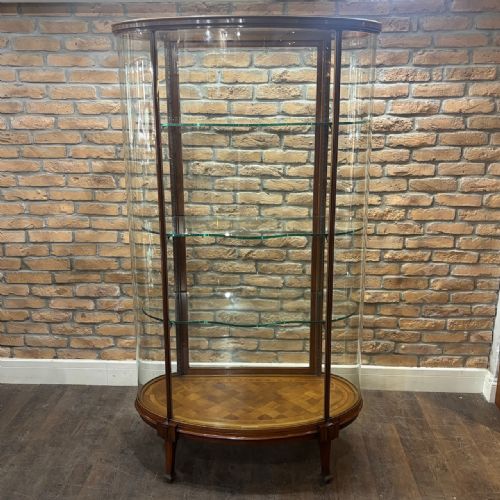
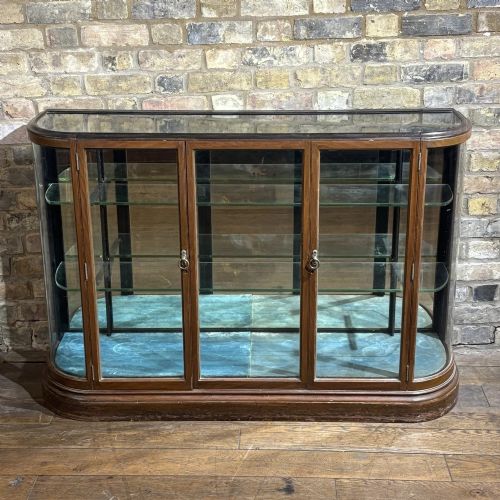
The selections available here lean heavily toward sturdy mahogany and oak display cabinets alongside specialised shop fittings from the Victorian, Edwardian, and 1930s periods. You will frequently find glazed countertop cases, large display counters, and trade signs constructed for specific merchants.
Many of these fixtures served practical roles in drapery, grocery, and apothecary settings before finding new purpose in contemporary interiors. Their utilitarian origins dictate their robust proportions and functional layouts.
How they were made
Makers relied on durable timbers such as mahogany, oak, pine, and walnut to withstand daily retail traffic, often incorporating glazed panels to showcase merchandise securely. Metal elements like brass, iron, chrome, and aluminium appear in framing, handles, and structural supports.
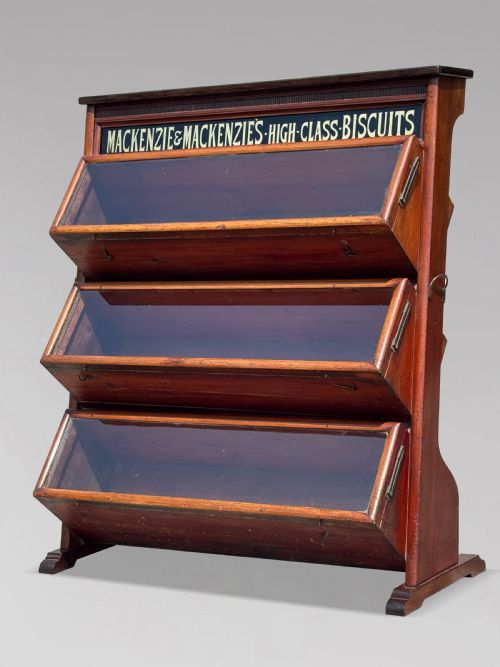
Construction techniques prioritized visibility and accessibility, utilising multi-drawer banks, mirrored interiors, and sliding glass doors to maximise product display. Signage and branding applied via hand-lettering, painted finishes, and cast metal added commercial identification to counters and cabinets.
Listings feature items spanning from the nineteenth century through the 1930s, utilising materials like mahogany, oak, brass, iron, and glass.
What varies in quality
The distinction between standard commercial joinery and superior cabinet-making rests in the selection of timbers, such as solid mahogany versus secondary pine, and the intricacy of glazed framing. Pieces retaining original hardware, functional drawers, and intact manufacturer branding demonstrate higher integrity.
The survival of original painted finishes, hand-lettered trade signs, and specialised internal fittings like needle trays or mirrored backs elevates an item's historical completeness. Structural adaptation over time alters the original character, whereas unaltered examples maintain their commercial authenticity.
F. Sage & Co·Dubois of Lyon·Dudley & Co·Manoah Rhodes & Sons Ltd·Saml. Elliott & Sons
The Vintage Commercial Display Glossary
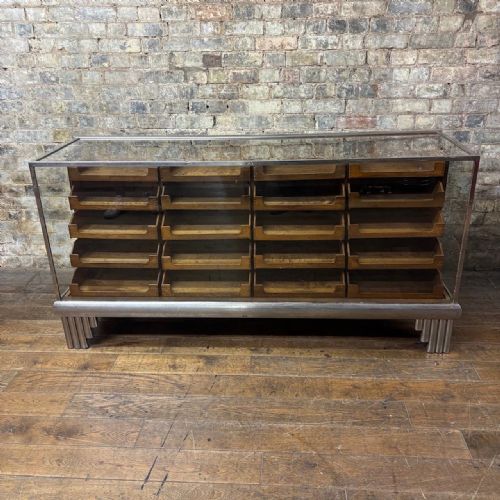
- Haberdashery cabinet
- A multi-drawer retail unit traditionally used for storing sewing threads, buttons, and ribbons, typically featuring glass fronts for easy stock viewing. These fixtures are prized for their numerous small drawers.
- Chemist shop fitting
- Specialised cabinetry and drawer banks designed for pharmacies and apothecaries to organise medicines and botanical ingredients. They frequently incorporate numerous small labeled compartments.
- Countertop display case
- A smaller glazed cabinet designed to sit upon a shop counter to encourage impulse purchases of confectioneries or small goods. They offer high visibility to customers at the point of sale.
- Baker's rack
- A heavy-duty metal or wooden shelving unit utilised in bakeries for cooling and storing bread and pastries. Their open framework suits modern storage requirements.
Vintage Commercial Display: Frequently Asked Questions
How were haberdashery cabinets used?
Haberdashery cabinets served in drapers and fabric shops to organise small sewing goods like buttons, ribbons, and threads within shallow, glass-fronted drawers.
Shop assistants could view contents quickly without opening every compartment, keeping delicate textiles clean and sorted behind glass.
What are chemist drawers?
Chemist drawers formed part of apothecary shop fittings used to store dry ingredients, herbs, and medical compounds safely in pharmacies.
These banks of small drawers often featured porcelain labels to identify contents, ensuring rapid access during dispensing.
How do I style a display counter?
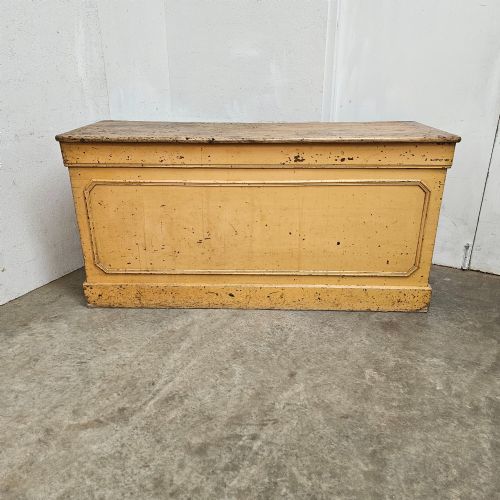
Display counters work well as kitchen islands, sideboards, or retail display units, utilising their deep storage and top-view glazing to exhibit collections.
Their substantial timber frames and glass panels introduce historical character and practical surface space into modern rooms.
What is a trade sign?
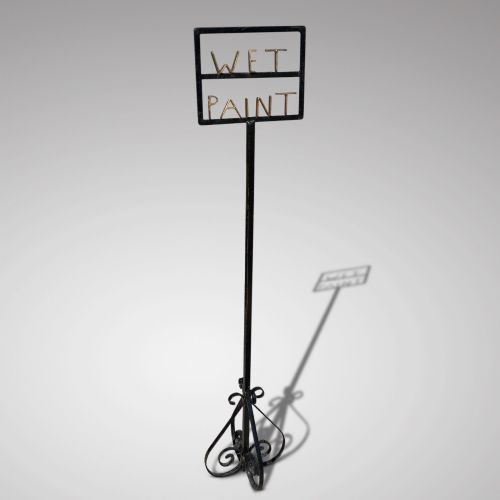
Trade signs were mounted outside or inside shops to advertise specific merchandise or services, ranging from painted metal to carved wooden figures.
These functional markers communicated a merchant's trade visually to the public before modern illuminated signage became common.