
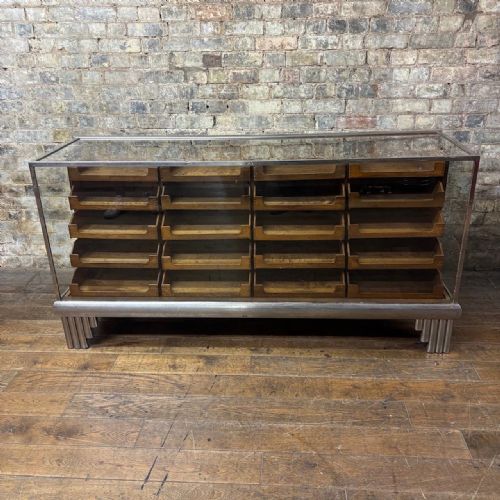


Art Deco Retail Fitting
An art deco retail fitting brings distinct period geometry and architectural metalwork into domestic spaces, offering both practical display and striking modernist design.
Art Deco Retail Fitting
When you search for an art deco retail fitting, you encounter commercial furniture and display items designed to showcase merchandise with functional elegance. These pieces originate primarily from the 1920s and 1930s, reflecting the streamlined aesthetics of the period.
The selections available on this page most commonly include haberdashery counters, display cabinets, brass-framed display counters, and shop window display stands. You also find specialised items such as hat stands, countertop shelves, and shop display mannequins.
Materials span timber, oak, mahogany, and burr walnut alongside modern industrial elements like chrome, aluminium, and brass. Many examples combine glass with metal framing to maximise visibility for retail goods.
How they were made
Makers constructed these fittings using robust hardwoods like oak and mahogany, often enhanced by decorative veneers such as burr walnut. Timber frames were combined with structural metals including brass, bronze, aluminum, and chrome to create clean lines and durable commercial fixtures.
Glass panels were integrated extensively into cabinets and counters to provide clear display surfaces, while specialised stands utilised shaped metal and fabric for specific retail functions.
The listings on this site span the 1900s through the 1930s, utilising materials such as brass, chrome, oak, and burr walnut.
What varies in quality
The distinction between standard commercial pieces and finer examples rests on the sophistication of the metalwork and the choice of timbers. Pieces featuring specialised bronze or brass framing, alongside well-figured burr walnut veneers, demonstrate superior craftsmanship.
Manner of construction and attributed workshop execution also separate basic utility fittings from branded retail pieces designed by established shopfitters.
Dudley & Co·Saml. Elliott & Sons·Pollards
The Art Deco Retail Fitting Glossary
- Haberdashery counter
- A long shop counter typically featuring multiple glass-fronted drawers or display compartments originally used for selling small sewing goods and accessories.
- Display cabinet
- An enclosed piece of furniture with glass panels designed to showcase merchandise while protecting it from dust and handling.
- Burr walnut
- A highly decorative wood veneer taken from the burl growths of walnut trees, prized for its swirling grain patterns.
- Display stand
- A freestanding or countertop structure utilised to elevate and present specific items effectively to viewers.
Art Deco Retail Fitting: Frequently Asked Questions
What is an art deco retail fitting?
An art deco retail fitting is a commercial display piece, such as a counter, cabinet, or stand, created during the 1920s or 1930s.
These items were originally built for shops to showcase goods using modern industrial materials and geometric design.
How were these shop counters used?
Shop counters and cabinets served to organise merchandise securely while offering customers a clear view of products.
Specialised fixtures like haberdashery counters held small items in dedicated drawers, whereas display stands highlighted feature products.
How do I date an art deco fitting?
Dating relies on identifying period characteristics, construction techniques, and specific framing materials like chrome or brass.
Items from this era typically exhibit streamlined forms, rectilinear geometry, or distinct 1920s and 1930s architectural styling.
How do I live with shop display furniture?
These pieces integrate well into modern interiors as storage cabinets, kitchen islands, or bookcase alternatives in living spaces.
Their glass and metal construction adds architectural contrast while providing functional display surfaces for collections.