



Art Deco Showcase
An art deco showcase gives any room strong geometric presence while putting your collection on proper display.
Art Deco Showcase
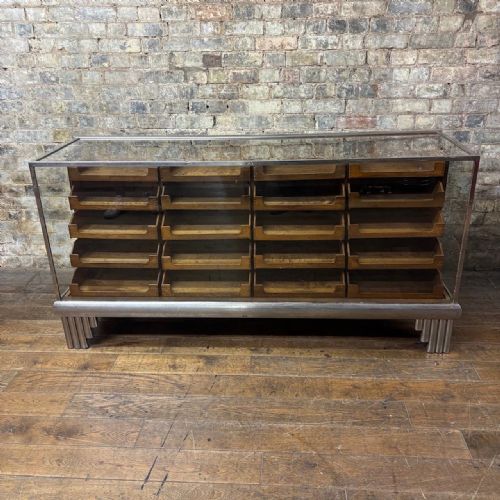
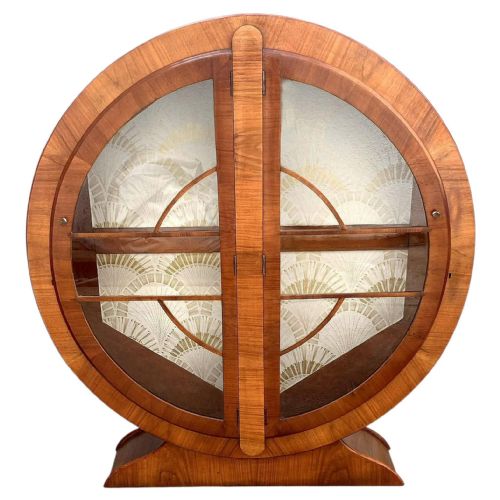
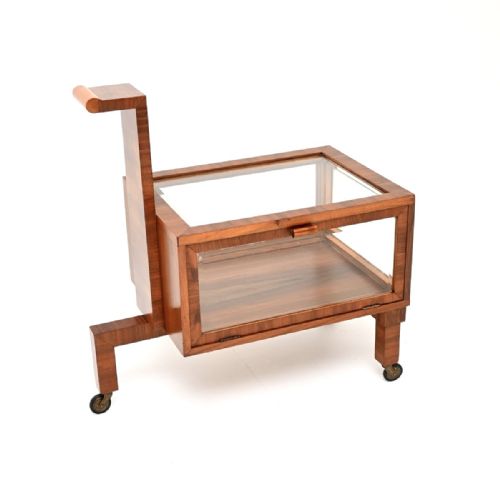
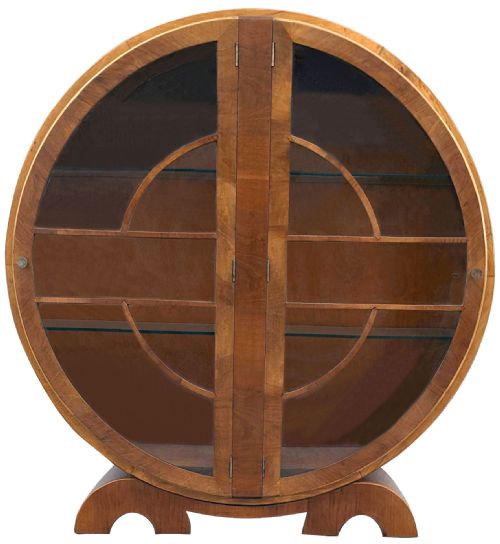
When you search for an art deco showcase, you are looking at furniture designed to display merchandise or personal collections with distinct period character. The pieces available on this page span the 1920s and 1930s, taking forms such as circular cabinets, serving carts, tower cabinets, and shop counters.
You are most likely to meet walnut display cabinets and shop counters featuring the signature lines of the era. Origins range from English workshops to commercial outfitters, utilising glass panels to give maximum visibility to the interior.
How they were made
These pieces rely on a combination of warm timbers like walnut, mahogany, oak, and birch, often paired with industrial metals including chrome, aluminium, steel, and brass. Wood is worked into curved forms and circular shapes, sometimes ebonised for a sharp contrast.
Glazing is central to the construction, creating protective enclosures for merchandise or delicate items. Structural frames incorporate leather, fabric, and specialised shop-fitting hardware to withstand commercial or domestic use.
Cadbury's once commissioned specialised sweet shop cabinets to tempt customers with confectionery behind pristine glass.
What varies in quality
Quality in an art deco showcase rests on the ambition of its form and the execution of its materials. Pieces with unusual shapes, such as circular profiles or clove-shaped designs, demonstrate a higher level of cabinet-making skill than standard rectangular boxes.
The integration of mixed media also separates the ordinary from the exceptional. The clever pairing of figured walnut with gleaming chrome or polished steel marks out the work of specialised makers and commercial outfitters.
Dudley & Co·Pollards·Rurka
The Art Deco Showcase Glossary
- Art Deco
- A design style of the 1920s and 1930s characterised by sleek geometric shapes, streamlined forms, and modern industrial materials. It replaced the flowing curves of earlier decorative arts with bold symmetry.
- Haberdashery counter
- A long shop display unit typically fitted with numerous glass-fronted drawers or compartments. Originally used in drapery shops to display small items, they now function as practical home storage.
- Ebonisation
- A wood-finishing process that stains timber to resemble ebony. It creates a deep black, uniform surface popular on 1920s furniture for high-contrast visual effects.
- Display cabinet
- A glazed freestanding piece of furniture designed to exhibit collectibles or retail goods. They feature glass panels on multiple sides to let light reach the objects within.
Art Deco Showcase: Frequently Asked Questions
Where should I place an art deco showcase?
These cabinets suit living rooms, dining spaces, or hallways where their distinctive geometry can anchor the room. Freestanding circular and tower designs look particularly striking when positioned to allow light through their glass panels.
Ensure there is enough floor space around the piece to open doors or drawers fully. Their commercial origins mean they also function well in kitchens or studies for storing tableware and books.
How do I clean the glass and metal?
Use a soft, lint-free cloth with a mild glass cleaner for the viewing panels. Avoid harsh ammonia sprays that can damage older wooden frames or metal platings.
Polish chrome and steel elements gently with a dry microfibre cloth to maintain their shine. Keep wood surfaces treated with appropriate natural waxes to preserve the finish.
What is the difference between a tower cabinet and a counter?
A tower cabinet is a tall, vertical piece designed to maximise display space while occupying a small floor footprint. They often feature multiple glass shelves to showcase items at eye level.
By contrast, a counter is lower and wider, originally intended for shop assistants to serve customers across. Counters provide a solid top surface alongside glazed display areas.
Are these pieces suitable for everyday use?
Built for commercial shops or refined domestic interiors, these cabinets and counters were constructed to withstand daily handling. The robust combination of hardwoods and metal framing provides solid structural integrity.
Careful handling of original glass and sliding mechanisms ensures these pieces remain practical for modern storage and display needs.