


Mirror Back Display Case
A mirror back display case bounces light through glass and timber, turning shelves of small objects into bright tableaux.
Mirror Back Display Case
A mirror back display case gathers glass, timber, and reflected light to showcase ornaments and tableware. The form appears across Victorian and Edwardian decades, as well as the 1920s and 1930s, taking shapes from wall cabinets and corner units to countertop shop cases and freestanding vitrines.
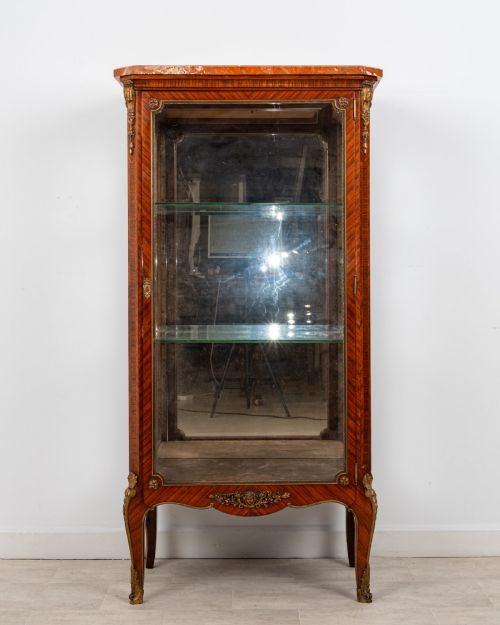
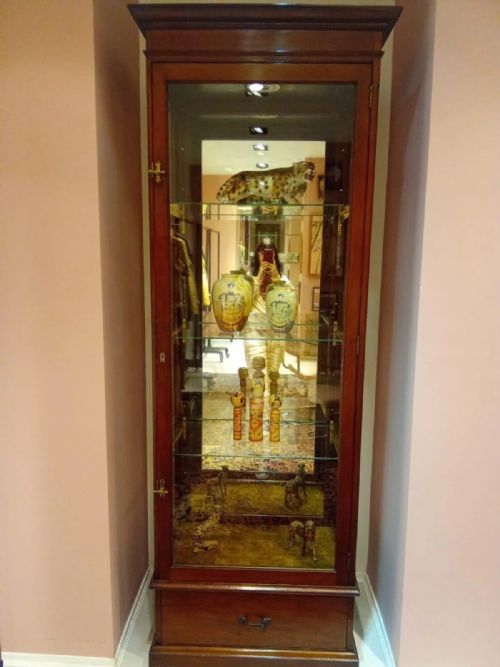
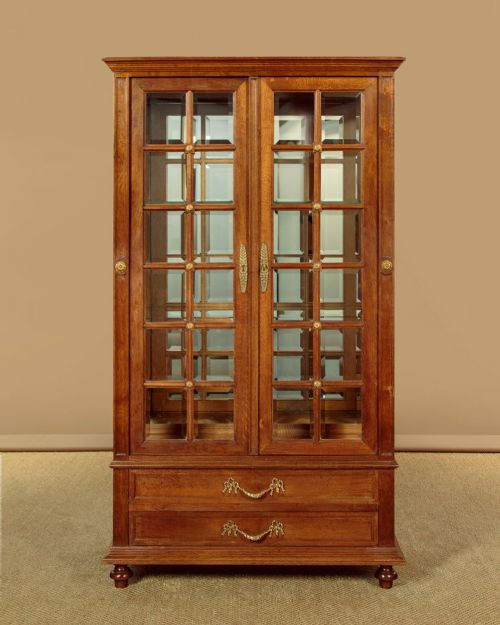
The version most commonly met on this page is the Edwardian or early twentieth-century mahogany cabinet, often featuring glazed panels and adjustable glass shelves alongside the reflective backing. Makers such as François Linke and G. Durand also produced grander French-influenced pieces in kingwood with ormolu mounts.
How They Were Made
Cabinetmakers built these pieces using timbers like mahogany, kingwood, walnut, and oak, frequently applying intricate inlay work or ebonising to the surfaces. Ormolu mounts and brass hardware provided decorative accents, particularly on French style vitrines from the nineteenth and early twentieth centuries.
Interiors relied on glass for shelves and mirrored panels at the rear to maximise illumination, while shop counters and wall units utilised hinged or glazed doors to secure the contents.
Cadbury’s sweet shop cabinets once tempted shoppers with chocolate bars reflected proudly in the glass.
What Varies in Quality
The distinction between standard commercial cabinets and exceptional pieces lies in the choice of veneers, such as figured kingwood or mahogany, and the precision of inlaid details. Ormolu mounts cast with sharper definition and heavier gilt bronze elevate the stature of a vitrine considerably.
Structural refinement also marks the upper tier, visible in the integration of original mirrored glass, adjustable glass shelving systems, and signed maker plaques that indicate workshop pedigree.
François Linke·G. Durand·Town and Emanuel
The Mirror Back Display Case Glossary
- Ormolu
- Gilt bronze mounts applied to furniture for decoration. This technique gained particular favour in French Louis XV revival pieces.
- Vitrine
- A glass-sided display cabinet designed to show off porcelain and curiosities. These freestanding pieces often feature mirrored interiors.
- Kingwood
- A dense, richly figured exotic timber used extensively for fine veneering. It frequently appears on nineteenth-century French style cabinets.
- Inlay
- Contrasting woods or materials set into the surface of a cabinet to create decorative patterns. Edwardian examples often display fine stringing and floral motifs.
Mirror Back Display Case: Frequently Asked Questions
What is a mirror back display case used for?
These cabinets serve to display collections of small ceramics, glassware, and treasured ornaments while protecting them from dust. The reflective backing panel increases the internal light and makes objects visible from multiple angles.
Shop versions were originally built for commercial trading counters to present confectionery or small goods to customers. Domestic pieces found their place in parlours and drawing rooms to exhibit family possessions.
How do I date an antique display cabinet?
Dating relies upon timber choices, construction methods, and stylistic revival markers seen across Victorian, Edwardian, and Art Deco eras. Mahogany and walnut dominate the nineteenth century, whereas kingwood and ormolu often point to French influenced workshops around nineteen hundred.
Shop cabinets from the nineteen twenties and thirties introduce ebonised finishes and specialised branding suited to twentieth-century retail environments. Secondary evidence like hinges, locks, and glass thickness help confirm the period of manufacture.
Where should I place a wall cabinet?
Hanging wall cabinets require a secure fixing to solid wall studs because the combination of timber, glass, and stored items creates substantial weight. Positioning them at eye level ensures the mirrored interior can capture and reflect ambient room light effectively.
They work well above sideboards or in corners where floor space is limited, turning an empty wall into a functional display area.
How do I care for antique glass and mirrors?
Cleaning requires soft cloths and minimal moisture to prevent liquid from seeping behind old mirror silvering or timber joints. Avoid harsh chemical sprays that can damage original polished wood surfaces or corrode antique metal mounts.
Gentle dusting of the glass shelves and interior mirrors preserves the reflective quality without risking scratches to the historic materials.