


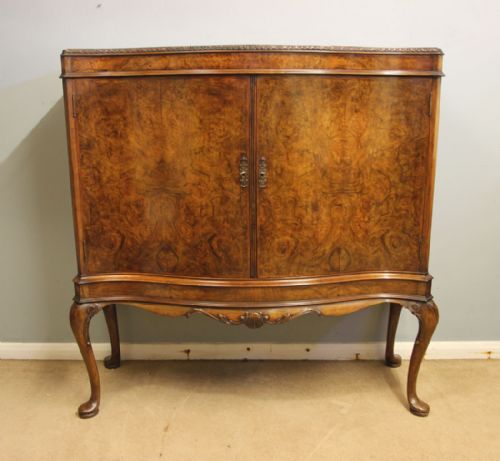


Vintage Cocktail Credenza
These vintage cocktail credenza pieces bring serious style to home entertaining, merging sophisticated period joinery with dedicated storage for your glassware and bottles.

Vintage Cocktail Credenza
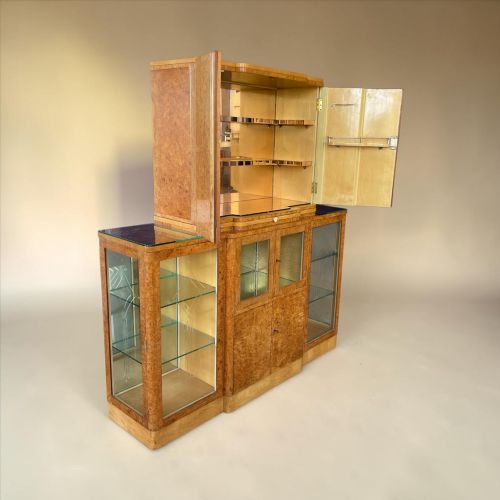
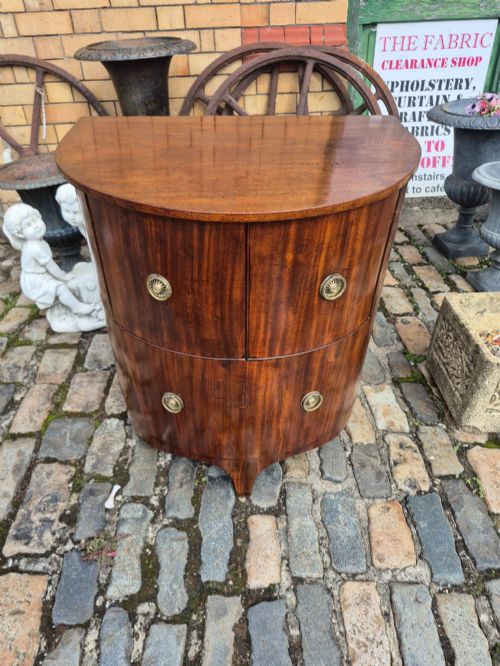
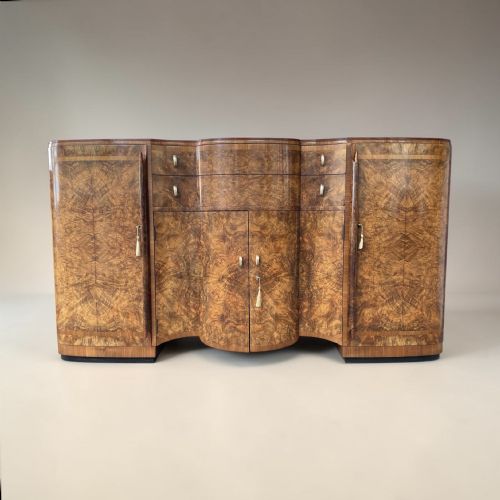
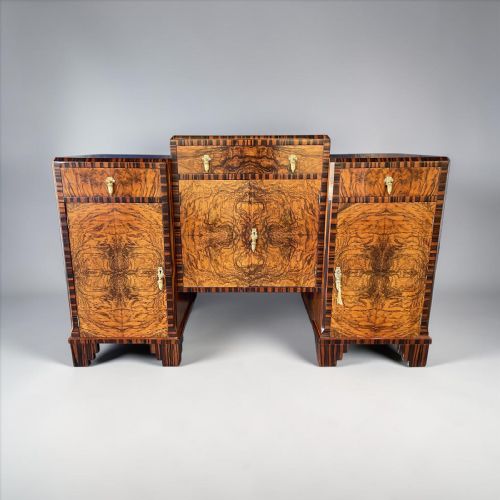
A vintage cocktail credenza combines the low-profile storage of a traditional sideboard with the specialised interior fittings needed for hosting. These pieces emerge predominantly from the Art Deco period of the 1930s, alongside notable examples from the 1920s, Edwardian era, 19th Century, and 1960s. You will find them appearing under various historical names such as cocktail cabinets, drinks cabinets, sideboards, and side cabinets.
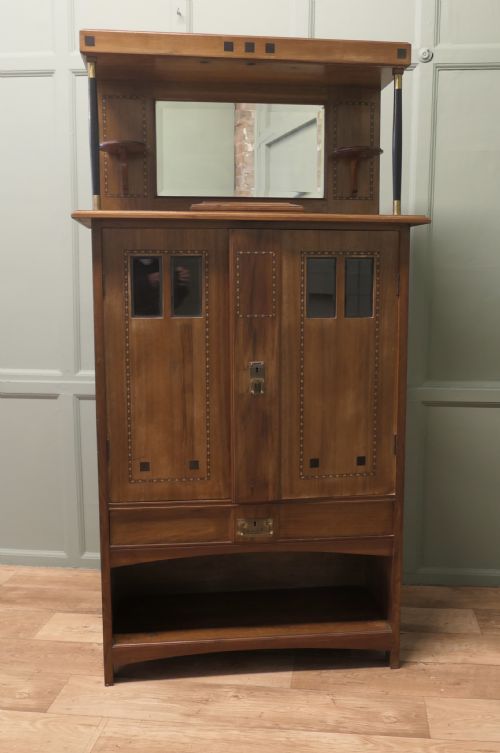
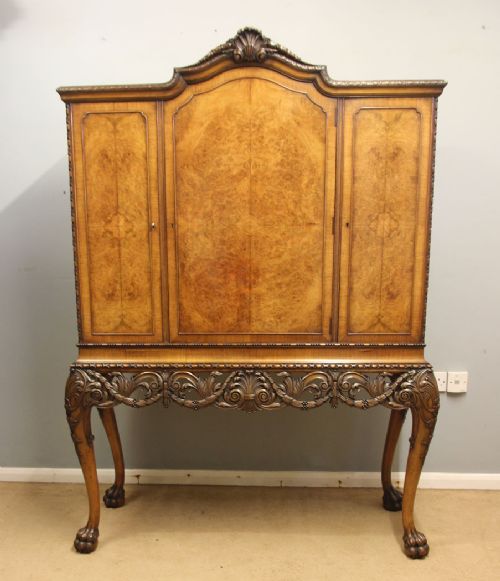
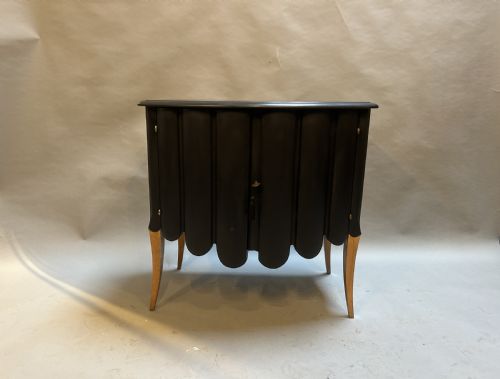
The Art Deco examples dominate the selection, bringing characteristic geometric lines and figured veneers to the form. Alongside these, you encounter revival styles like Queen Anne, Jacobean, and French, as well as distinct Secessionist and Mid-Century Modern designs. They function equally well as living room focal points and practical serving stations for modern dining spaces.
Materials and construction
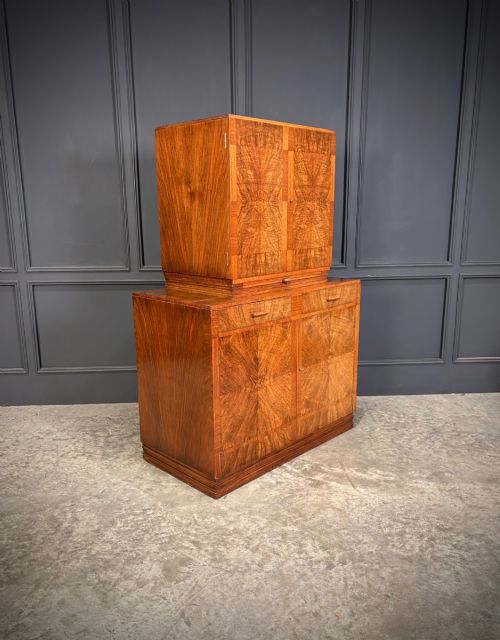
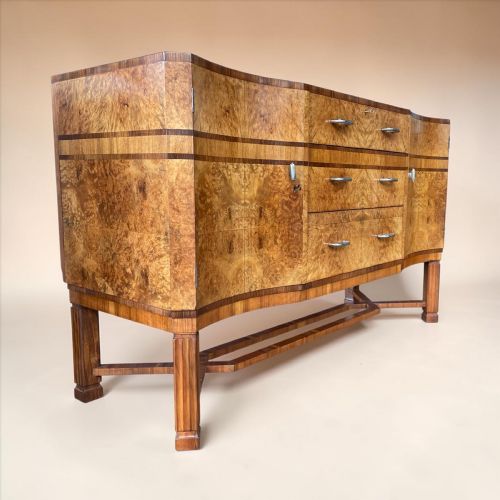
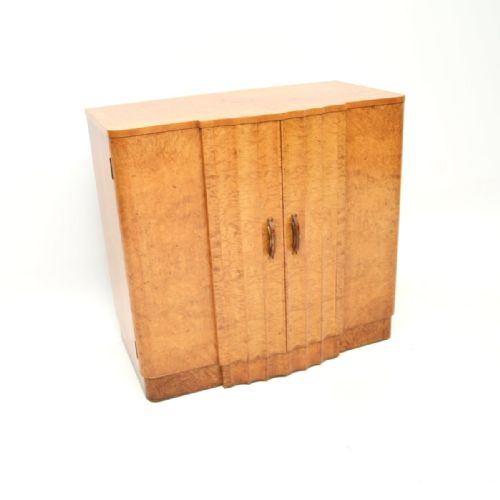
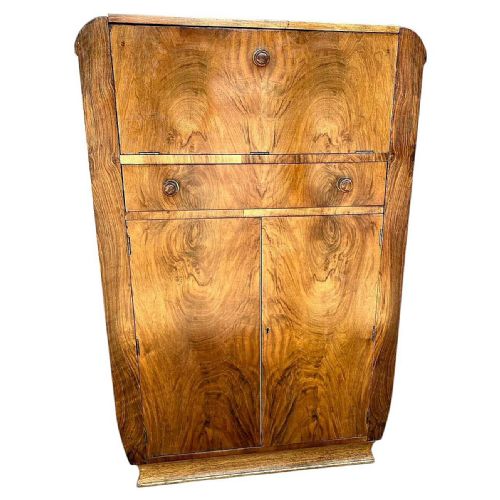
Cabinet makers relied heavily on rich hardwoods, utilising solid walnut, oak, and mahogany for structural integrity. They often applied burr walnut and walnut veneer to exterior surfaces to create striking, figured grain patterns that caught the light.
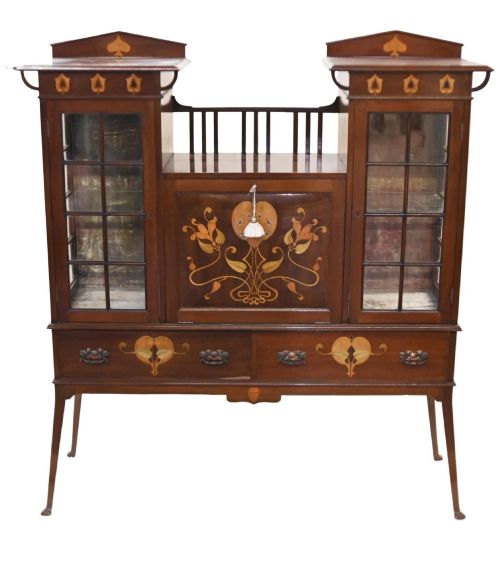
Makers integrated functional decorative elements including brass hardware, mirrored interior backings, and glass panels. Marquetry inlay work and serpentine shaping also appear on select pieces, demonstrating advanced woodworking techniques from the period.
Vintage Cocktail Credenza Retail Price Guide 2026
Typical asking prices for vintage cocktail credenza among the pieces listed under this phrase on Sellingantiques today, from the lower quarter to the upper quarter. They describe what is for sale here now, not the wider market.
Some cabinets hide their contents behind respectable sideboards, ready to drop open for an impromptu jazz-age gin fizz.
Distinctions in quality
The grade of a piece rests largely on the selection of its veneers and the reputation of its maker. Cabinets featuring book-matched burr walnut and signed by prominent firms command greater attention from collectors than standard commercial builds.
Internal joinery and the preservation of original mirror glass and specialised bottle racks also dictate overall standard. Pieces retaining their original fitted interior compartments and functioning drop-down mixing shelves represent superior craftsmanship.
Maurice Adams·Harry and Lou Epstein·Hamptons of Pall Mall London·Reno Wahl Iversen·Dyrlund
The Vintage Cocktail Credenza Glossary
- Burr walnut
- A figured wood grain harvested from the wart-like growths on walnut trees, prized for its swirling, organic patterns. Cabinet makers prized this timber for creating decorative exterior panels.
- Credenza
- A low-standing storage cabinet traditionally used in dining rooms for serving food and holding tableware. In modern contexts, the term frequently overlaps with sideboards and side cabinets.
- Marquetry
- The art of applying pieces of veneer to a structure to form decorative patterns and pictures. Skilled craftspeople used contrasting wood types to achieve intricate surface designs.
- Demi-lune
- A half-moon shape used for furniture designed to sit flush against a wall. This profile appears on select early twentieth-century drinks cabinets.
- Secessionist
- A design movement focusing on clean lines and geometric forms that broke away from traditional historicism. Pieces in this style emphasise structural honesty and simplified ornamentation.
Vintage Cocktail Credenza: Frequently Asked Questions
What is a vintage cocktail credenza?
A vintage cocktail credenza is a low storage cabinet designed specifically to hold bottles, glassware, and mixing equipment. These pieces date primarily from the early twentieth century and merge decorative cabinetry with practical entertaining storage.
They often feature drop-down serving flaps, mirrored interiors, and specialised compartments. The form borrows heavily from traditional sideboards while adapting internal spaces for modern barware.
How do I identify Art Deco pieces?
Art Deco cabinets are defined by geometric symmetry, streamlined silhouettes, and the prominent use of figured veneers. You will frequently spot highly figured burr walnut grain patterns combined with polished brass details.
These designs emerged strongly around 1930 and favored clean architectural lines over fussy ornamentation. Many incorporate curved serpentine fronts or stepped cornices characteristic of the era.
Where were these cabinets made?
The selections available originate from British workshops, French studios, Italian makers, and Danish manufacturers. London firms and continental European cabinet makers produced the majority of these designs.
Regional differences show up clearly in the choice of wood veneers and the specific revival styles applied. British makers often favoured walnut and oak, while continental makers experimented more freely with curved forms and marquetry.
How do I care for burr walnut?
Burr walnut veneer requires protection from direct sunlight and excessive moisture to prevent fading and warping. Regular dusting with a soft, dry cloth keeps the surface clean without damaging the polished finish.
Apply a quality furniture wax sparingly when the wood appears dry, following the direction of the grain. Avoid placing hot glasses or wet cocktail shakers directly on the wooden surfaces.