






Vintage Coastal Watercolour
A vintage coastal watercolour captures maritime life and shorelines on paper through the hands of British and international artists.
Vintage Coastal Watercolour
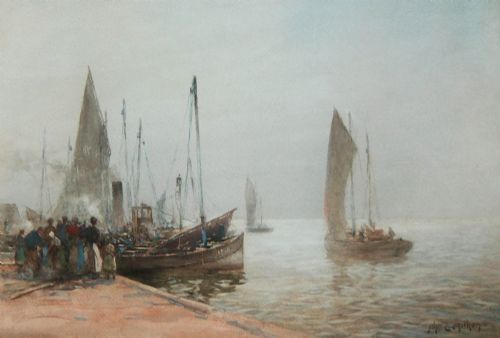
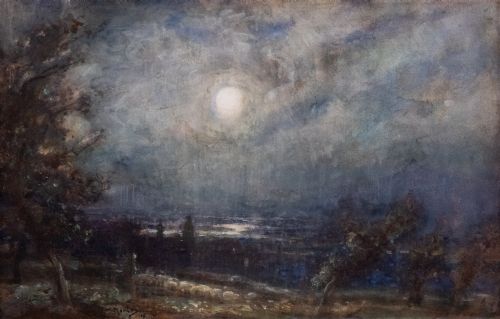
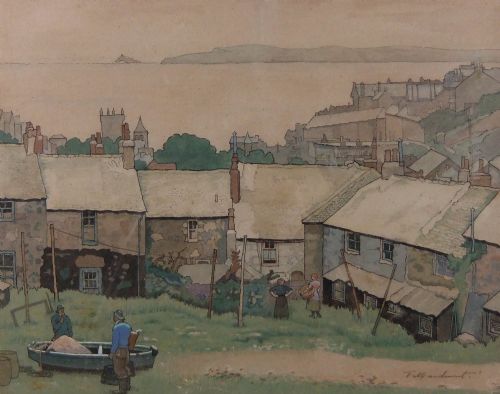
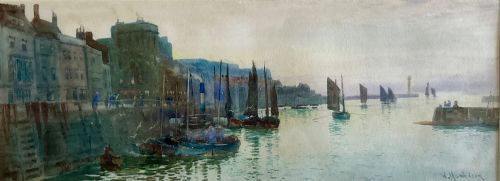
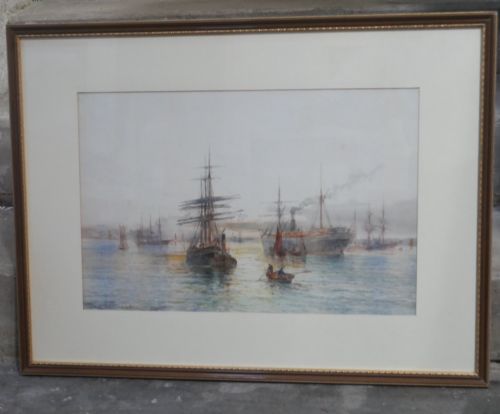
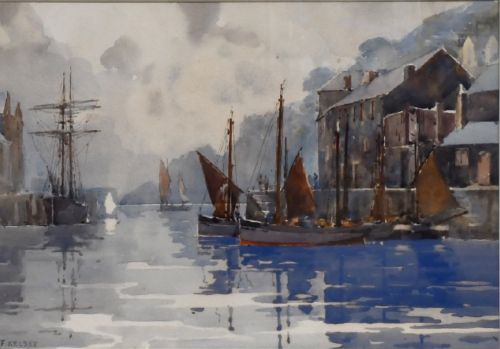
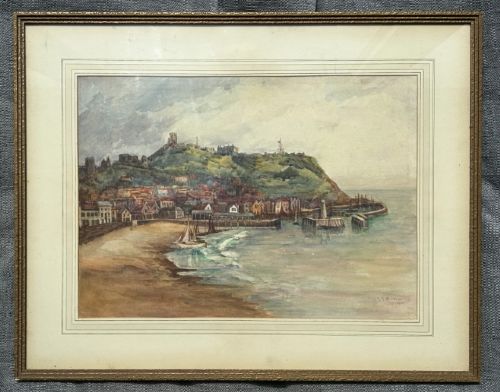
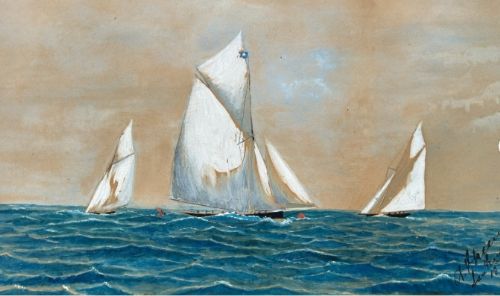
When you search for a vintage coastal watercolour, you find paper works depicting harbours, fishing ports, and sea views. The examples seen on this page span the nineteenth century through to the mid-twentieth century, capturing historical vessels and shorelines.
Most pieces date from the Edwardian era and the early twentieth century, showing bustling northern English fishing ports like Whitby and St Ives alongside quiet estuaries.
Artists record specific locations from Cornwall, Yorkshire, Scotland, and overseas harbours, framed behind glass in wood or gilt surrounds.
How They Were Made
Painters applied watercolour pigment directly onto paper sheets, occasionally combining the medium with gouache for opaque highlights.
Finished works received mounts and wood frames, frequently protected behind glass to preserve the delicate water-soluble pigments.
Makers utilised gilt wood frames to finish exhibition pieces, while simpler wooden mouldings suited smaller landscape views.
Framing materials recorded across the collection include plain wood, gilt wood, and glass.
What Varies In Quality
The strength of composition and the artist's ability to capture light on water distinguish finer works from standard topographical records.
Skilled handling of pigment creates atmospheric depth in skies and sea states, whereas lesser examples rely on rigid line work.
Original framing and well-documented provenance relating to recognised marine artists elevate the desirability of individual paintings.
James E. Aitken·Thomas William Morley·William Matthison·Thomas Bush Hardy·Sir William Russell Flint
The Vintage Coastal Watercolour Glossary
- Watercolour
- A painting method where fine pigment is suspended in a water-based solution and applied to paper. It allows for translucent washes and delicate tonal shifts.
- Gouache
- An opaque water-based paint composed of pigment and binder, often mixed with watercolour to add solid highlights to a paper surface.
- Coble
- A traditional type of open fishing boat native to the north-east coast of England, frequently appearing in regional maritime art.
- Lugger
- A small sailing vessel rigged with lugsails, commonly depicted in nineteenth and early twentieth-century coastal scenes.
- Provenance
- The documented history of a painting's ownership and origin, which helps verify its authenticity and creator.
Vintage Coastal Watercolour: Frequently Asked Questions
What subjects appear in these watercolours?
The artworks display harbour docks, sailing ships, fishing boats, and coastal cliffs. Scenes often record specific ports in Yorkshire, Cornwall, and Scotland.
Artists also documented rivers, estuaries, and overseas coastal landscapes during the nineteenth and twentieth centuries.
How should I display them at home?
Paper watercolours require protection from direct sunlight to prevent the pigments from fading over time. Hang them in rooms with stable humidity and away from damp walls.
Use professional framing with acid-free mounts to keep the paper separated from the glass surface.
How do I date an early painting?
Signatures, dates inscribed by the artist, and framing materials offer the clearest chronological clues. Subject matter, such as specific types of shipping vessels or clothing styles, also helps narrow down the period.
Victorian works often feature heavier gilt framing, while 1930s and 1940s pieces tend towards simpler wooden surrounds.
Are these works original paintings?
Every piece listed is a unique, hand-painted artwork created directly on paper rather than a mechanical print or reproduction. Artists applied pigment by hand, meaning no two coastal views are identical.
Monograms or full signatures usually confirm the artist's hand on the paper.