



Vintage Circular Coffee Table
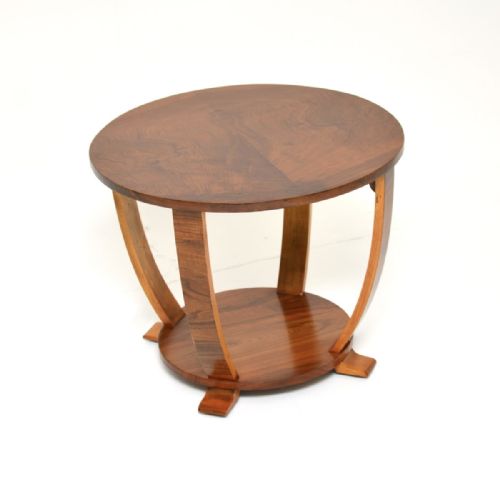
A vintage circular coffee table brings a clean, sociable geometry to a room, uniting diverse seating arrangements with practical, rounded form.
Vintage Circular Coffee Table
A vintage circular coffee table takes many forms across the decades, appearing frequently as streamlined Art Deco designs from nineteen-thirty alongside earlier Edwardian and Victorian iterations. These low tables serve utilitarian and decorative purposes in domestic spaces, functioning as central hubs for everyday rooms.
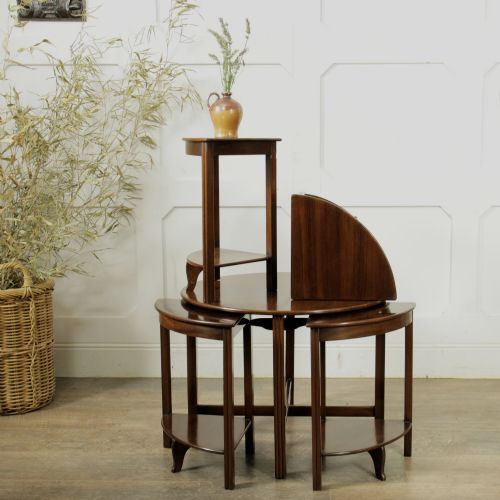
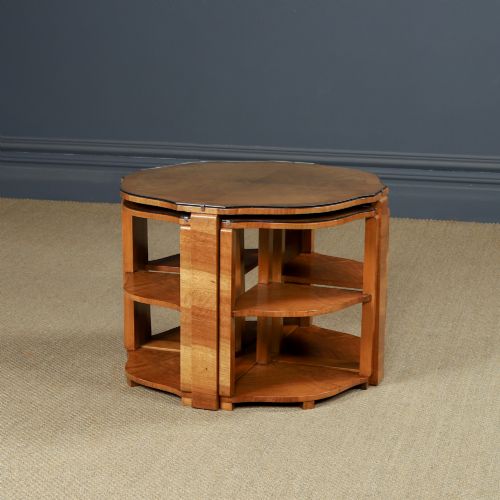
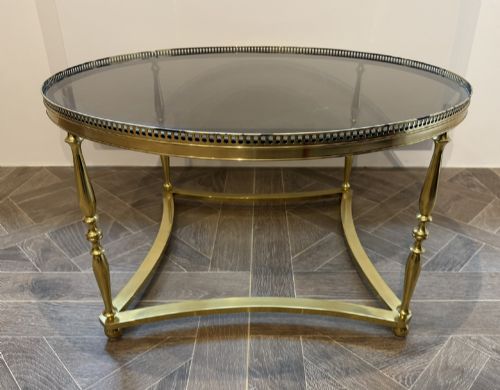
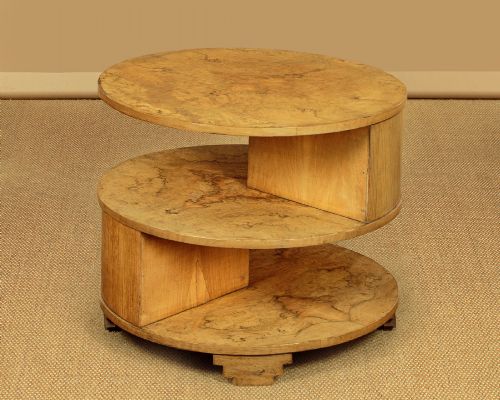
Makers often constructed these pieces to double as occasional tables, side tables, or nests of tables, providing flexible surface areas. Examples range from simple wood designs to elaborate multi-tiered or brass-trimmed surfaces originating from English, French, and Asian workshops.
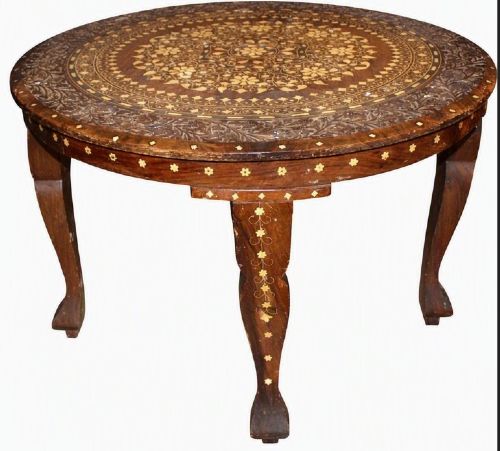
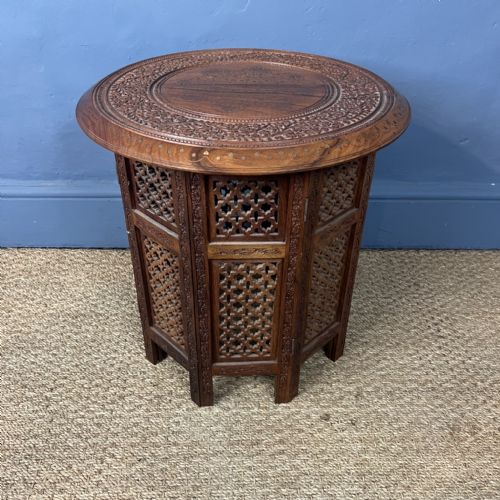
Buyers encounter substantial variety in wood types and stylistic revivals, including Queen Anne style curves, Anglo-Indian carvings, and Chinese export craftsmanship. The common thread across these periods remains the round top configuration designed to sit centrally within a seating group.
Materials and construction methods
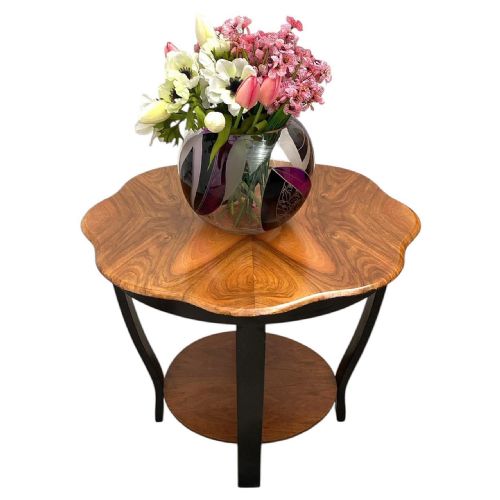
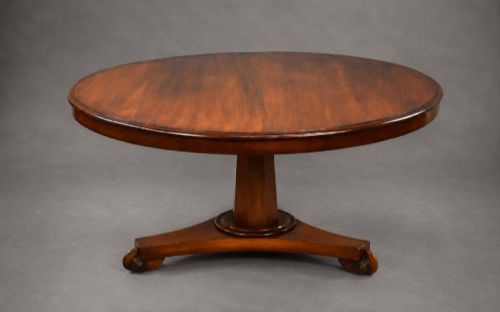
Craftsmen utilised timbers such as walnut, burr walnut, mahogany, oak, and teak, frequently applying striking veneers to achieve rich grain patterns on the circular tops. Specialised pieces incorporate exotic woods like birds eye maple, rosewood, birch, and elm.
Construction techniques combine traditional cabinetmaking with decorative metalwork, integrating brass, chrome, marble, glass, bone inlay, and lacquer work. Carved details appear across regional styles, from European floral motifs to intricate Anglo-Indian and Oriental woodwork.
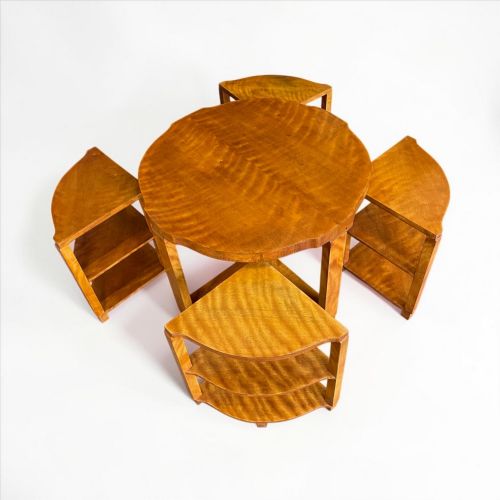
Some tables hide their numerical ambition entirely, functioning simultaneously as a single coffee table and a secret family of five.
Assessing quality in round tables
Quality separates through the selection and matching of veneers, particularly on figured walnut, burr walnut, and maple surfaces where grain symmetry dictates the visual appeal. Superior examples demonstrate precision in inlay work, bone placement, and carved ornamentation.
The integrity of the structural joinery, the weight and finish of applied metals like brass and chrome, and the depth of the polish define the tier of the piece. Master workshops executed multi-tiered designs and complex nesting mechanisms with tighter tolerances and more durable materials.
Harry and Lou Epstein·Liberty and Co
The Vintage Circular Coffee Table Glossary
- Burr walnut
- A prized wood veneer harvested from walnut tree growths, notable for its swirling, highly figured grain patterns. It forms the defining decorative surface on many nineteen-thirty examples.
- Art Deco
- A design movement spanning the nineteen-twenties and nineteen-thirties characterised by geometric symmetry, streamlined shapes, and modern material combinations. Tables from this era often feature stepped bases and contrasting veneers.
- Nest of tables
- A set of graduated tables designed to slide neatly underneath one another when not in use. They offer flexible surface space in compact sitting areas.
- Occasional table
- A small, lightweight table intended for periodic use rather than permanent placement. These pieces easily move about a room to hold lamps, drinks, or books.
- Chinoiserie
- European decorative style reflecting Chinese artistic motifs, often rendered in lacquer. Edwardian examples utilise this technique on round table tops.
Vintage Circular Coffee Table: Frequently Asked Questions
How do I style a round table?
A circular surface breaks the linear rigidity of standard sofas and rectangular rooms by softening traffic flows. Position the table centrally within your seating group to maintain equal access from all surrounding chairs.
Layer items with varying heights, such as low bowls paired with taller reading lamps or vases, to create visual balance. The curved edge naturally encourages conversational groupings and intimate room layouts.
What periods do these tables span?
The selection encompasses pieces ranging from the Victorian and Edwardian eras through the nineteen-twenties and nineteen-thirties. Art Deco designs from nineteen-thirty represent a dominant portion of available round formats.
Earlier nineteenth-century examples sit alongside mid-century and international styles, including Anglo-Indian and Chinese export work. Each era brings distinct timber choices and decorative treatments to the circular top.
Are these tables practical for daily use?
These tables function reliably for holding everyday items, beverages, and decorative objects in domestic spaces. Two-tiered models and nesting variations offer supplementary surface area when entertaining guests.
Care requirements depend on the surface finish, with wood veneers and lacquered tops benefiting from coasters and gentle cleaning methods. Their sturdy timber construction ensures durability across decades of household traffic.
How do I identify Art Deco pieces?
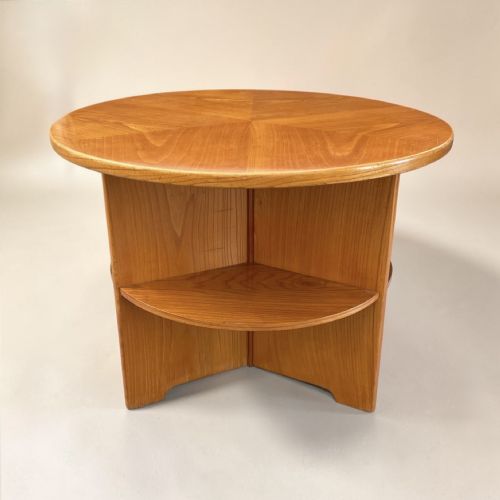
Art Deco round tables typically feature geometric silhouettes, contrasting wood veneers like walnut and maple, and metallic accents in brass or chrome. Many incorporate stepped bases or multi-tiered structures designed around nineteen-thirty.
Look for symmetrical grain patterns in burr walnut and clean, unadorned lines that reject Victorian ornamentation. French and Swedish workshops frequently utilised exotic woods and marble inserts during this period.