

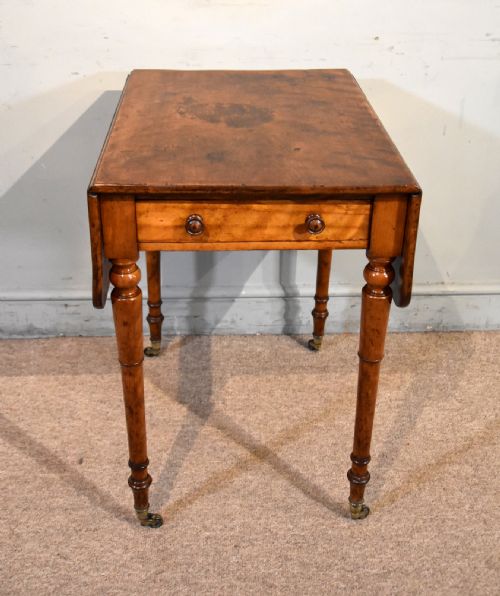


Birch Wood Side Table
A birch wood side table brings pale timber and varied grain into a room, spanning nineteenth-century Scandinavian design to Art Deco forms.
Birch Wood Side Table
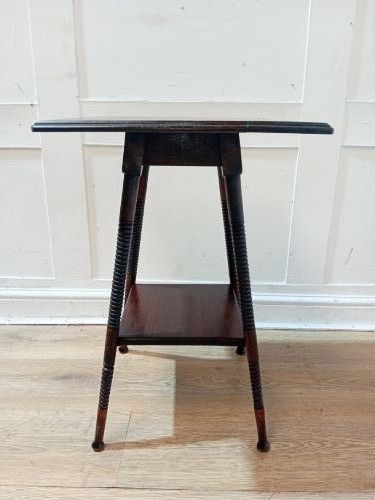
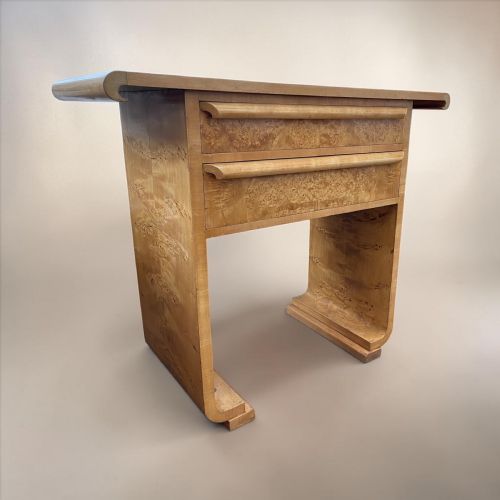
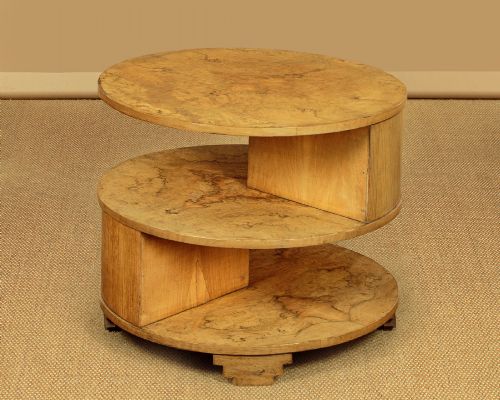
A birch wood side table covers a wide span of domestic furniture, from nineteenth-century Scandinavian occasional tables to Art Deco coffee and console tables.
Buyers encounter numerous regional variations on this page, particularly Swedish Biedermeier and nineteenth-century pieces alongside early twentieth-century designs.
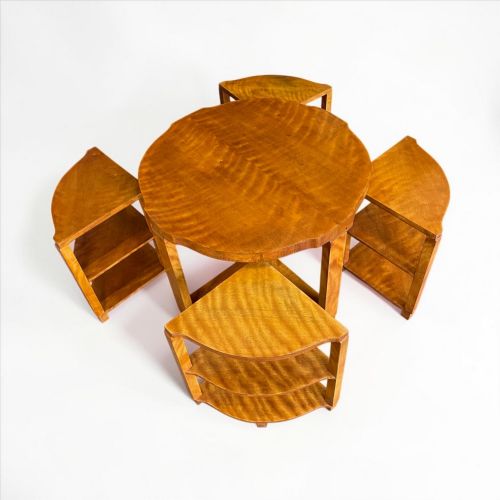
The selection ranges through occasional, lamp, and bedside tables, incorporating related forms such as writing desks, Pembroke tables, and nests of tables.
Materials and construction
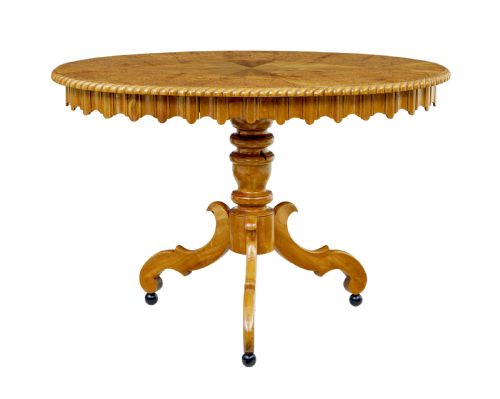
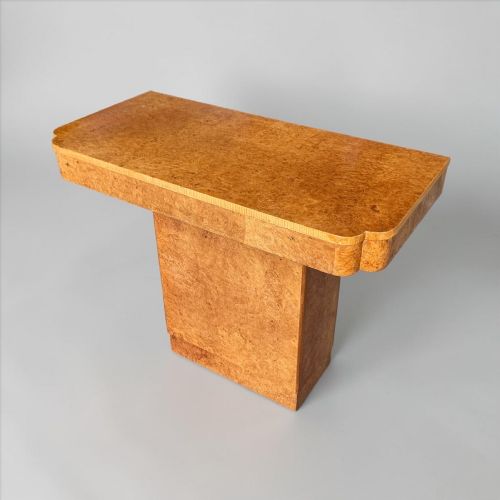
Cabinetmakers select standard birch, burr birch, satin birch, and karelian birch, often applying veneers to achieve striking grain patterns across table tops.
Construction frequently incorporates inlay work, contrasting ebonised wood, and cast solid brass sabots to accent the pale timber.
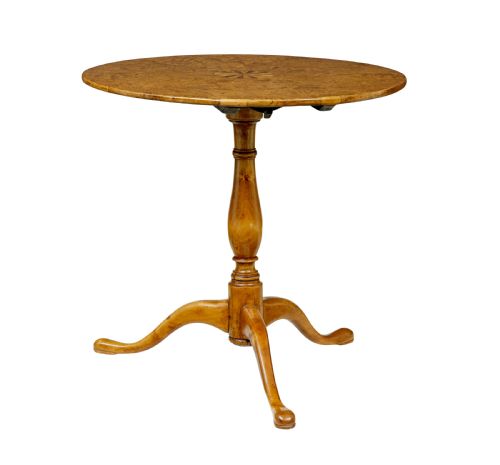
Solid supports include turned pedestals, tripod bases, and lyre forms, grounding the lighter upper sections.
Even a modest birch table manages to make a dark corner look as though someone just opened a window.
Craftsmanship and distinction
Quality rests upon the selection of the timber, where figured burr or satin varieties display superior natural movement and depth compared to plain stock.
Joinery precision and the integration of delicate inlay or brass mounts separate standard utilitarian pieces from high-workshop production.
Liberty of London·Fortnum and Mason·Johnstone and Jeanes·Daniel Cottier
The Birch Wood Side Table Glossary
- Burr birch
- A timber cut from a tree growth or burl, yielding swirling, knotty grain patterns prized for decorative table tops.
- Satin birch
- A smooth, reflective variety of birch timber with a lustrous sheen resembling satin, common in nineteenth-century furniture.
- Pembroke table
- A small rectangular table with hinged drop flaps on either side, often fitted with a single drawer.
- Tripod base
- A three-legged support structure commonly found beneath circular occasional and tilting tables.
- Sabot
- A protective metal sleeve or shoe fitted to the foot of a table leg, frequently cast in brass.
Birch Wood Side Table: Frequently Asked Questions
How do I identify Swedish pieces?
Swedish pieces often display pale burr or masur birch veneers with minimal ornamentation, relying on the natural grain for visual impact.
Many examples date from the nineteenth century and reflect Biedermeier or Empire Revival design influences.
Are these tables sturdy enough for daily use?
Most occasional and side tables function well for holding lamps, books, or drinks in a modern room.
Tripod and pedestal forms require sensible placement to ensure stability on uneven floor surfaces.
How do Art Deco models differ from nineteenth-century ones?
Art Deco tables from the nineteen-twenties and thirties favour geometric simplicity and sleek veneers over carved details.
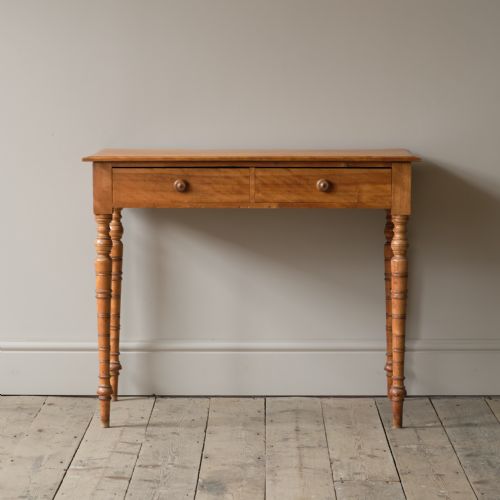
Nineteenth-century examples tend towards turned legs, occasional tilting tops, and visible inlay work.