
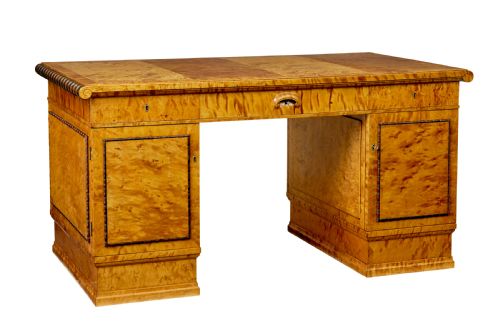


Scandinavian Art Deco Table
A scandinavian art deco table brings clean geometric lines and pale northern timbers directly into a modern room.
Scandinavian Art Deco Table
When you search for a scandinavian art deco table, you encounter practical forms designed during the interwar decades from the nineteen twenties to nineteen forties. These pieces bridge classical Swedish Grace proportions and the functional modernism that followed shortly after in the north.
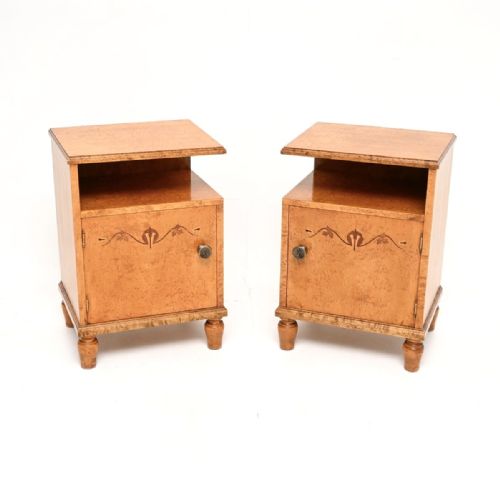
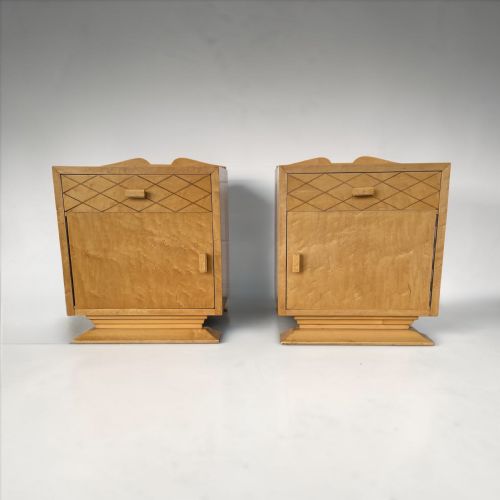
The most frequent examples appearing on this page take the form of coffee tables, centre tables, and bedside tables constructed from native Scandinavian hardwoods. They rely on architectural silhouettes rather than heavy carving to establish presence in a room.
Makers working within this idiom paired straightforward structural mass with carefully chosen surface patterns. The resulting furniture balances geometric rigour with the natural warmth of timber.
Materials and Construction
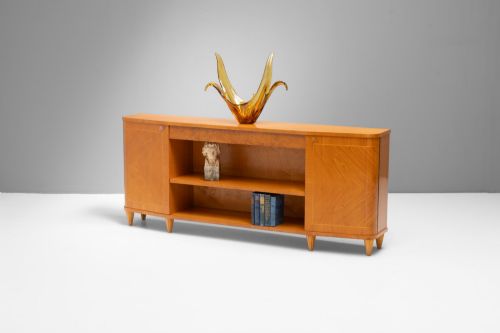
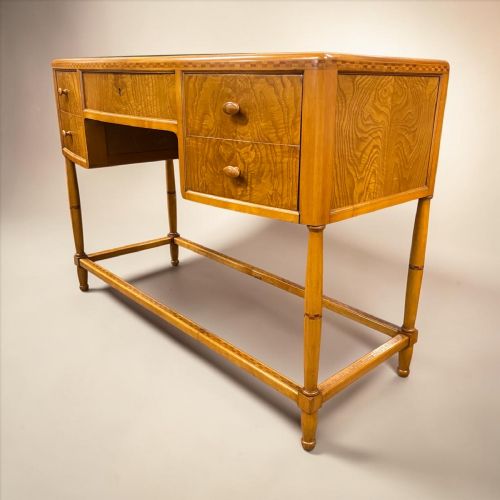
Makers built these tables primarily using birch, flame birch, and satin birch veneers laid over sturdy core timbers to create striking grain patterns across flat surfaces. Secondary woods such as elm appear in contrasting details or structural framing.
The technique relies heavily on book-matching and contrasting veneer work to animate simple geometric planes without relying on applied ornament. Surfaces receive smooth polishing that highlights the pale figure of the birch.
Current listings feature birch veneer, flame birch, and elm across coffee tables and centre tables from the nineteen twenties and thirties.
Judging Quality and Execution
Quality rests on the selection and symmetry of the wood grain across the main plane of the top. Master cabinetmakers aligned flame and satin birch figures with absolute precision to create natural optical patterns.
Construction standards depend on the integrity of the underlying joinery and the preservation of the original surface finish. Examples with well-maintained veneer work and balanced proportions represent the upper tier of the range.
Georg Jensen·Sigvard Bernadotte·David Andersen
The Scandinavian Art Deco Table Glossary
- Veneer
- A thin layer of choice wood applied to a base material. This technique allowed makers to utilise decorative flame birch across large tabletops.
- Swedish Grace
- A neoclassical style bridging traditionalism and early modernism in Sweden during the nineteen twenties. It influences the proportion and restraint seen in many tables from this period.
- Book-matching
- A veneer technique where adjacent slices of wood are opened like a book to mirror each other. This creates symmetrical patterns on console and coffee table tops.
- Satin birch
- A northern European hardwood with a lustrous, light-reflecting grain. Cabinetmakers prized this material for its bright surface character.
Scandinavian Art Deco Table: Frequently Asked Questions
What woods were used for these tables?
Makers relied heavily on birch, flame birch, satin birch, and elm for these designs.
These pale northern timbers were chosen for their natural grain patterns and light colour.
How do I date these tables?
Most examples originate from the nineteen twenties, nineteen thirties, and early nineteen forties.
Stylistic shifts from Swedish Grace to geometric Art Deco help narrow down the production era.
Are these tables suitable for daily use?
Coffee tables and bedside tables from this tradition were built for practical domestic function.
Their sturdy core construction allows them to withstand regular everyday handling.
How do I care for birch veneer?
Keep finished wooden surfaces away from direct sunlight and excessive moisture.
Regular dusting with a soft cloth preserves the original polish of the wood.