

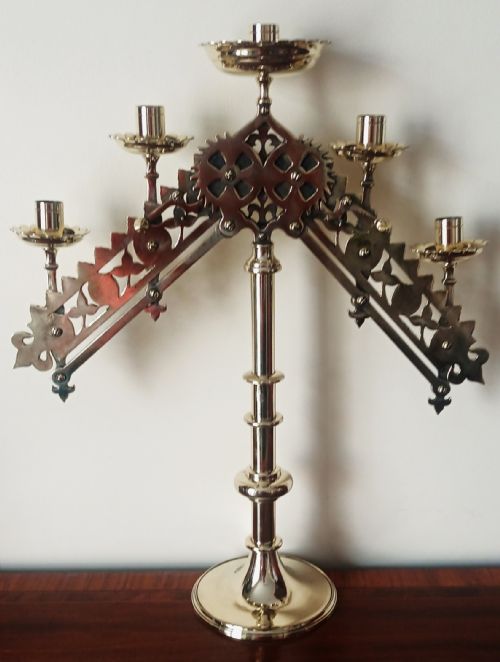


Vintage Church Altar
These pieces for a vintage church altar bring centuries of solemn craft and liturgical presence into domestic interiors.
Vintage Church Altar
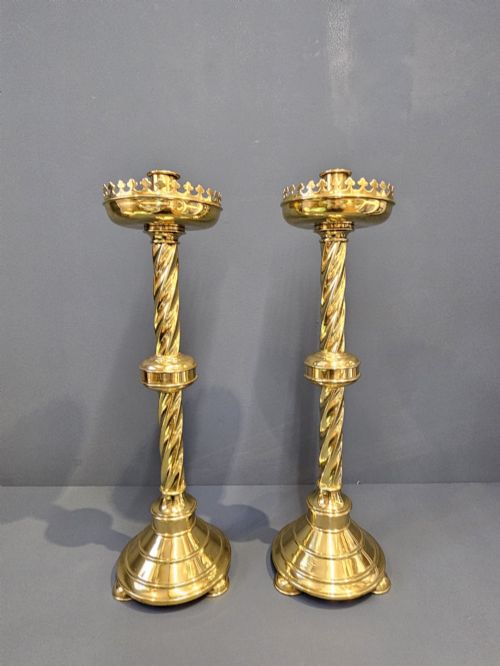
When searching for a vintage church altar, buyers typically encounter liturgical furnishings and ecclesiastical metalwork spanning the nineteenth and early twentieth centuries. The selection most commonly includes tall brass and bronze candlesticks, pricket candle holders, altar tables in solid oak, and devotional crosses or lamps.
These items originate from various European traditions, incorporating styles such as Gothic Revival, Victorian, and Amsterdam School designs. Alongside substantial wooden tables and side furniture, smaller ritual objects like chalices, cruets, and decorative frames appear frequently.
How they were made
Makers utilised heavy cast brass, bronze, and copper, often combining metals with carved oak, giltwood, and silver plating to achieve durability and visual weight. Turning, casting, and hand-chasing formed the primary methods for shaping metal candle holders and liturgical vessels.
Wooden furniture pieces demonstrate traditional joinery techniques applied to solid oak, while giltwood frames and decorative angels rely on carved timber substrates finished with gold leaf or polychrome paint.
Listings span the nineteenth and twentieth centuries, featuring materials such as solid oak, cast brass, silver plate, and giltwood.
What varies in quality
Substantial weight and gauge of metal distinguish superior cast brass and bronze pieces from lighter, hollow alternatives. Superior items show crisp detail in chasing, well-balanced proportions in tall columns, and sound structural integrity in wooden tables.
The refinement of surface finishes, whether original fire gilding, silver plating quality, or hand-carved wood details, determines the relative distinction of each piece.
Elkington Mason
The Vintage Church Altar Glossary
- Pricket
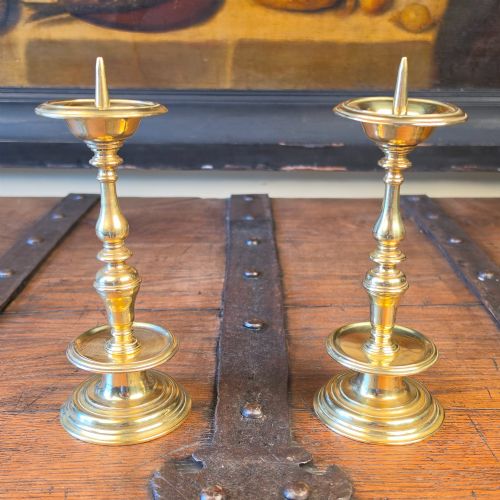
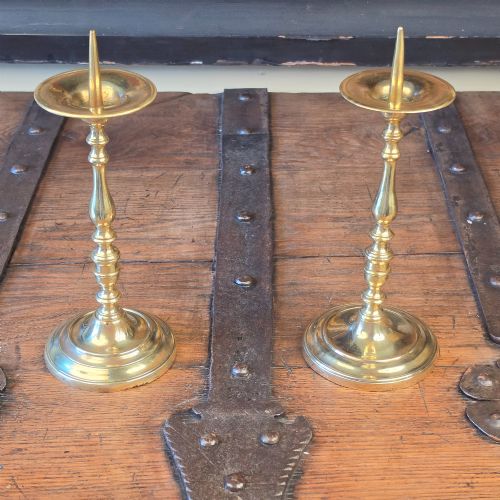
- A sharp metal spike on a candlestick designed to secure a large wax taper or candle. This form is typical on ecclesiastical altars.
- Giltwood
- Timber that has been coated with a thin layer of gold leaf or powder. It appears frequently on frames and decorative altar fittings.
- Chalice
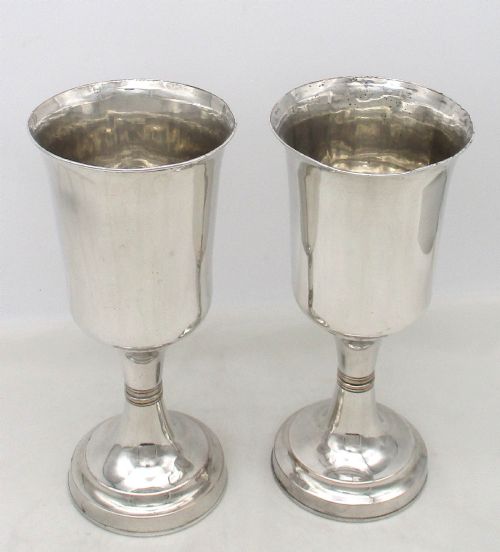
- A stemmed liturgical cup used to hold sacramental wine during communion services. These vessels often feature silver plating or interior gilding.
- Cartagloria
- An altar card or framed text placed on the altar for the priest to read during services. They typically feature ornate giltwood or wooden frames.
- Gothic Revival
- An architectural and decorative style drawing inspiration from medieval design. It dominates nineteenth-century ecclesiastical metalwork and furnishings.
Vintage Church Altar: Frequently Asked Questions
How were church candlesticks used?
These candlesticks stood upon or beside the altar to hold wax tapers during religious services and ceremonies. Their height ensured light reached across the chancel.
Over time, many of these lighting fixtures moved from active worship spaces into secular architectural interiors as decorative lamps or statement objects.
How do I identify Gothic Revival pieces?
Gothic Revival items display pointed arches, trefoils, quatrefoils, and architectural tracery motifs borrowed from medieval stone buildings. These decorative elements appear cast into brass bases or carved directly into oak panels.
Such characteristics date the metalwork and woodwork securely to the nineteenth or early twentieth centuries.
What is the difference between a candlestick and a pricket?
Standard candlesticks feature a socket designed to cup the base of a candle cylinder. Pricket sticks utilise an upward-facing spike that impels the base of a large wax candle directly.
Pricket forms are more commonly associated with traditional church altars and heavy metal ecclesiastical fittings.