


Vintage Chinoiserie Wall Mirror
These vintage chinoiserie wall mirror pieces bring hand-decorated motifs and striking frames into a room, offering an instant focal point with distinct character.
Vintage Chinoiserie Wall Mirror
A vintage chinoiserie wall mirror is an ornamental looking glass defined by decorative themes inspired by East Asian art, often housed in distinct frames. When you search for this phrase, you will encounter wall mirrors spanning from the nineteenth century through the Edwardian era and into the early twentieth century.
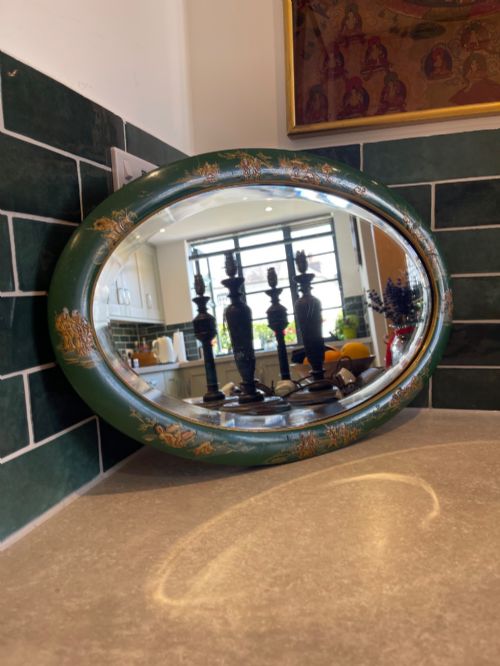
The selections on this page encompass various forms, including oval wall mirrors, rectangular frames, and paired candle sconces or girandoles. Many pieces embrace the Chinese Chippendale style or George I revival, showcasing distinctive silhouettes and ornate detailing.
Origin influences span broadly, featuring British Edwardian interpretations alongside pieces with French provincial or Victorian sensibilities. You are most likely to meet wall-mounted configurations designed to catch the light and add depth to an interior space.
Materials and construction
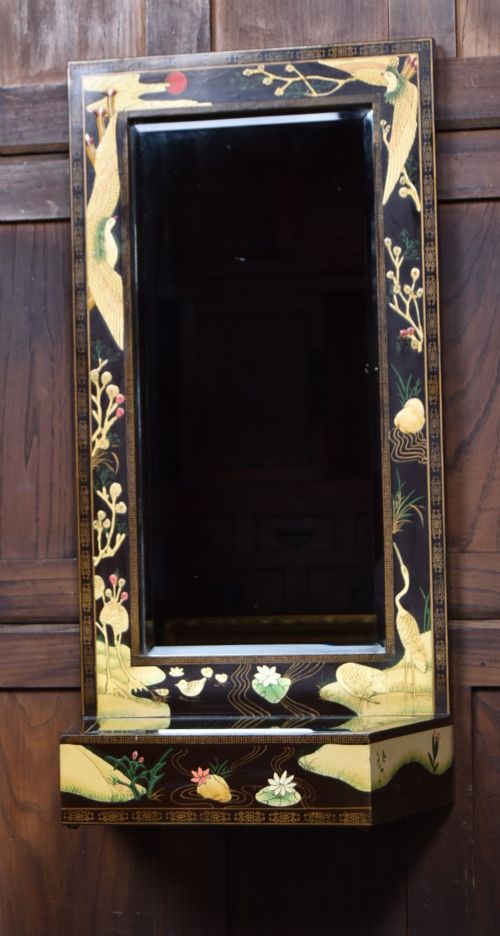
Makers utilised wood, glass, and mirror glass as foundational elements, shaping robust structures that supported intricate surface work. Lacquer and lacquered wood frequently provide the dark or coloured backdrops essential to the aesthetic.
Gilt and gold leaf application brings luminosity to carvings, highlighting the raised motifs and sculptural details of the frames. Brass components occasionally appear in hardware or structural accents, complementing the reflective surfaces.
Several mirrors come with built-in candle sconces, designed so flickering candlelight could dance across the glass during long Victorian evenings.
Quality and execution
The distinction between standard examples and finer pieces often rests on the depth and complexity of the frame carving, such as intricate giltwood work versus simpler mouldings. Hand-applied lacquer and the crispness of painted decorative scenes also separate mass-produced items from superior craftsmanship.
The integrity of the original mirror glass and the preservation of the surface finish contribute significantly to a piece's standing. Well-preserved frames retain their structural firmness and the original lustre of their gilding or painted decoration.
The Vintage Chinoiserie Wall Mirror Glossary
- Chinoiserie
- European decorative style reflecting Chinese artistic influences, popular across various periods. It manifests in motifs depicting landscapes, figures, and floral patterns.
- Giltwood
- Wood that has been treated with gold leaf or gold paint, frequently used for ornate frames. This technique adds brightness and highlights carved details.
- Japanned
- European work imitating Japanese and Chinese lacquer finishes, typically using a dark background with raised gilt decoration. It is commonly found on period pier mirrors and cabinets.
- Girandole
- A decorative wall-mounted mirror featuring attached candle sconces to reflect light. These pieces combine functional illumination with ornamental framing.
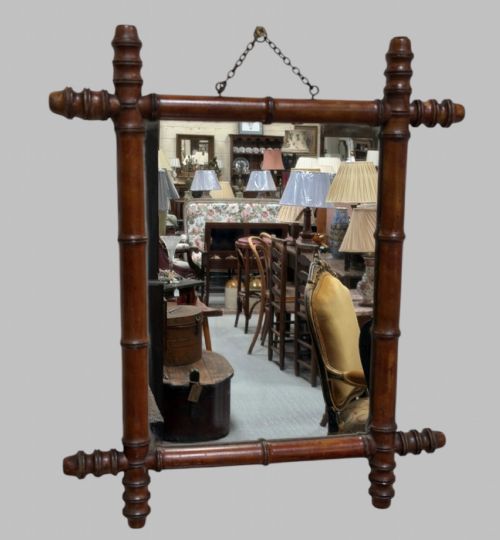
- Faux bamboo
- Wood turned or carved to imitate natural bamboo stalks, seen on frames from the nineteenth century. This technique introduced an exotic, organic texture to furniture design.
Vintage Chinoiserie Wall Mirror: Frequently Asked Questions
What is a chinoiserie wall mirror?
A chinoiserie wall mirror is a looking glass set within a frame decorated with European interpretations of East Asian art, motifs, and landscapes. These pieces range from simple painted surfaces to elaborately carved giltwood designs.
They serve as decorative wall hangings that combine reflective utility with distinct historical style, often becoming the visual centrepiece of a room.
How do I date an antique mirror?
Dating relies on examining the materials, construction methods, and framing styles characteristic of specific eras such as the Victorian period or Edwardian times. Subtle clues in the backing, the bevel of the glass, and the type of lacquer or gilding help establish age.
Comparing the decorative motifs against known revival styles like George I or Chinese Chippendale also provides a reliable timeframe for manufacture.
Where should I hang a wall mirror?
These mirrors work effectively above mantelpieces, in hallways, or across from windows to maximise natural light and create a sense of space. Their decorative frames demand a wall space where they can be viewed without heavy visual competition from surrounding furniture.
Ensure the wall structure safely supports the weight of heavier wood and glass constructions before mounting.
How do I care for antique lacquer?
Maintain lacquered and gilded surfaces by dusting gently with a soft, dry cloth to prevent the accumulation of abrasive particles. Avoid using chemical cleaners, water, or abrasive polishes that can damage the delicate historic finish.
Keep the piece away from direct sunlight and extreme temperature fluctuations to protect the wood and prevent the lacquer from cracking.