


Vintage Chinese Lamp Bases
These vintage chinese lamp bases bring together centuries of craftsmanship and domestic illumination, offering distinct decorative forms for the home.
Vintage Chinese Lamp Bases
Vintage chinese lamp bases comprise converted vases, ginger jars and carved timber structures adapted for lighting across various periods. Buyers encountering these pieces will find porcelain bodies decorated with famille rose, famille verte, blue and white pigments, alongside cloisonné and carved root wood. The selection spans the nineteenth century up through the Edwardian era and into the nineteen-twenties, incorporating both imported items and domestic chinoiserie interpretations.
Forms include baluster vases, twin-handled vessels and crackleware bodies fitted with brass or ormolu mounts. Many examples reflect nineteenth-century production, while others date from nineteen-hundred to nineteen-thirty, sometimes pairing Asian porcelain with European metalwork mountings. The primary focus rests on the vessel itself, whether rendered in celadon, sang de boeuf, or flambe glazes.
Materials and Construction
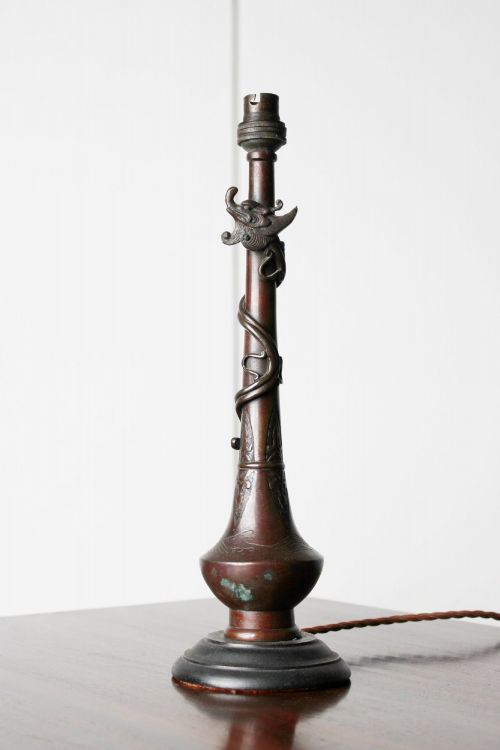
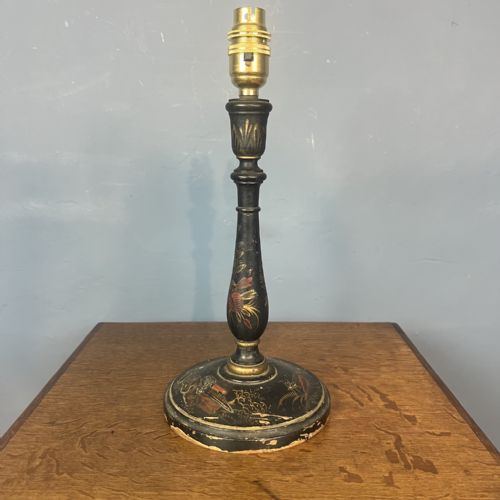
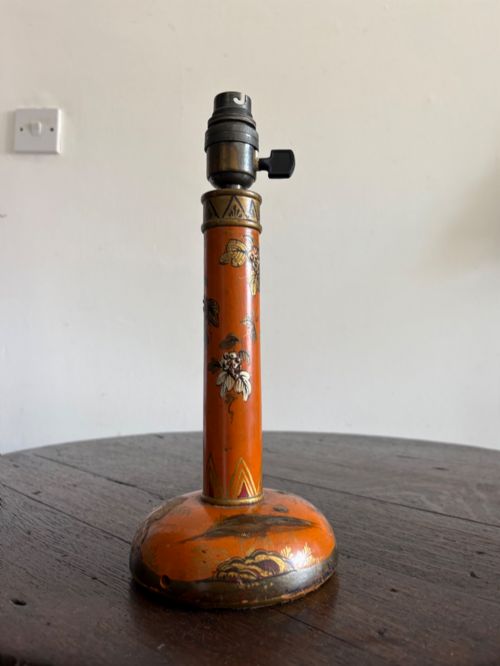
Makers utilised porcelain, ceramic, root wood, lacquer and brass to construct these lamps, often mounting Asian vessels onto metal bases. Porcelain pieces feature hand-painted or glazed surfaces such as famille rose, famille verte and blue and white designs, while cloisonné examples display applied wirework enclosing enamel cells. Wood elements involve carved root wood and lacquered finishes, occasionally incorporating chinoiserie detailing.
Metalwork components include brass and ormolu mounts that secure the body and house electrical fittings. Artisans combined imported ceramic vessels with European or domestic mounts, transforming traditional ginger jars and vases into functional lighting fixtures through careful adaptation.
Listings feature pieces spanning the nineteenth century, the Edwardian era, and the nineteen-twenties, utilising porcelain, brass, wood, and lacquer.
Assessing Quality and Execution
Quality in vintage chinese lamp bases resides in the precision of the hand-painted decoration, the depth of the porcelain glaze, and the integrity of the material. Superior examples display finely rendered enamel work in famille rose or famille verte palettes, sharp detailing in cloisonné cells, or deeply articulated carving in root wood. Lesser pieces present simpler glazed surfaces or standard production finishes with less intricate handwork.
The sophistication of the mounting also distinguishes the range, particularly where brass, ormolu, or gilt bronze fittings complement the ceramic body. Harmonious integration between the original Asian vessel and the subsequent metal mounts indicates thoughtful conversion and superior craftsmanship.
The Vintage Chinese Lamp Bases Glossary
- Famille rose
- A porcelain palette dominated by opaque pink enamel, introduced during the Qing dynasty and widely used on decorative vessels.
- Cloisonné
- An enamel technique where metal wire is soldered to a base to form compartments filled with coloured paste and fired.
- Ginger jar
- A storage jar with a wide shoulders and a domed cover, frequently converted into a table lamp base.
- Chinoiserie
- European artistic style reflecting Chinese motifs and techniques, prevalent in Edwardian and nineteenth-century decorative arts.
- Sang de boeuf
- A rich ox-blood red glaze originating from Chinese ceramic traditions, prized for its deep mottled colouration.
Vintage Chinese Lamp Bases: Frequently Asked Questions
How do I date a lamp base?
Dating relies on stylistic clues within the porcelain decoration, the type of glaze used, and the accompanying metal mounts. Nineteenth-century examples often show specific hand-painted palettes or deep crackleware glazes.
Later pieces from the Edwardian period or the nineteen-twenties may incorporate European brass fittings alongside traditional Asian bodies. Comparing the vessel form and mounting style helps place the piece within its historical bracket.
What is root wood?
Root wood involves the gnarled underground growth of a tree, shaped and polished to create rustic stands and lamp bases. Artisans select sections with natural knots and twists to highlight organic textures.
These pieces were carved during the nineteenth century, resulting in sculptural supports that contrast with smooth porcelain.
Are these lamps converted vases?
Many lamp bases started life as ginger jars, baluster vases, or twin-handled vessels before receiving electrical fittings. This adaptation preserved decorative ceramics by giving them a practical domestic purpose.
Mounts in brass or ormolu were frequently added during the conversion process to secure the ceramic body.
What is crackleware?
Crackleware refers to ceramic glazes intentionally patterned with a network of fine microscopic cracks. This effect occurs during the cooling process as the glaze contracts at a different rate from the clay body.
Seen on nineteenth-century pieces, the texture adds visual depth to the surface of the lamp base.