


Chinese Export Vase Lamps
Chinese export vase lamps combine historic porcelain bodies with period lighting conversions to brighten a room.
Chinese Export Vase Lamps
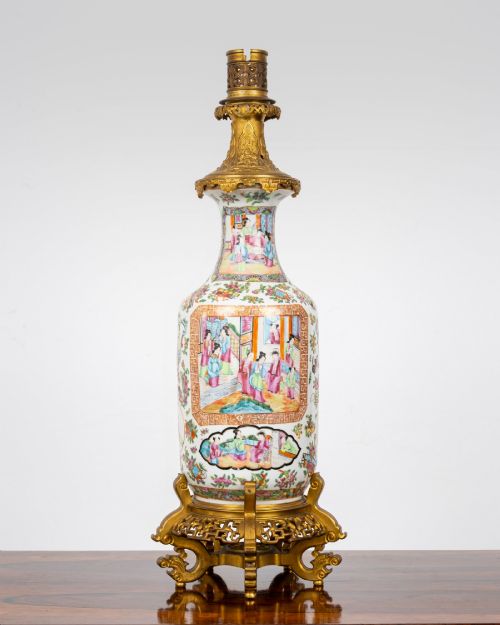
When you search for chinese export vase lamps, you encounter transformed vessels that once served other decorative functions. The majority of pieces on this page date from the nineteenth century, alongside eighteenth-century examples.
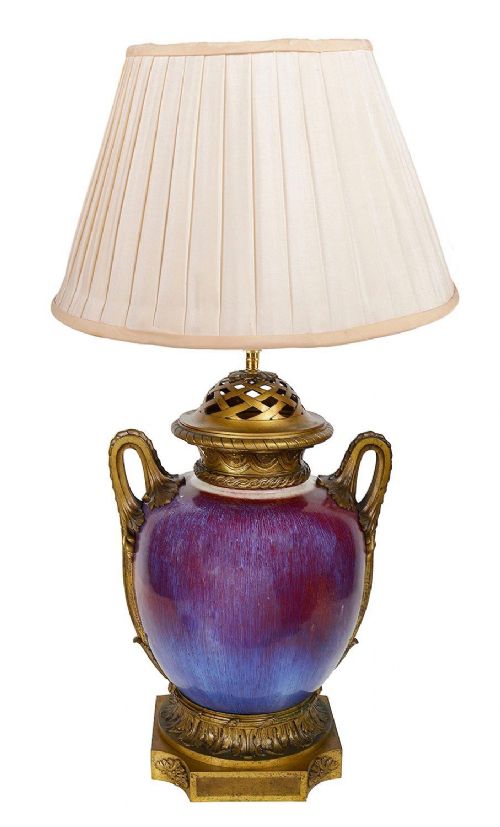
Vases, ginger jars and oil lanterns form the core of these listings, often appearing as matched pairs. Makers adapted these porcelain and cloisonné bodies into table lamps, incorporating wiring and mounts.
The aesthetic bridges eastern production and western interior taste, encompassing famille rose, rose medallion, celadon and blue and white colourways. Forms range from large palace vessels down to smaller table lamps.
Materials and construction
The foundation rests on hard-paste porcelain or cloisonné enamel bodies, decorated with hand-painted enamels, underglaze blue or applied wirework. These ceramic and metal vessels originated in China, or occasionally emerged from European imitation workshops.
Mounts in ormolu, gilt bronze, brass and wood secure the porcelain to a stable base and accommodate electrical or oil-burning fittings. Fabric and silk shades often complete the assembly, matching the scale of the ceramic body.
Some vases spent a century holding chrysanthemums before an electrician got hold of them.
Assessing quality
Quality rests upon the crispness of the porcelain painting, the depth of the enamel palette, and the integration of the metal mounts. Hand-painted details with fine brushwork distinguish superior pieces from simpler output.
The harmony between the original vase and the applied mounts dictates visual success. Solid brass or ormolu fittings that complement the proportions of the ceramic body elevate the entire object.
The Chinese Export Vase Lamps Glossary
- Famille rose
- A palette dominated by opaque pink enamel, introduced during the Qing dynasty. It allowed artists to render soft gradients on porcelain vessels.
- Rose medallion
- A distinct decorative scheme featuring panels filled with figures, birds and flowers, arranged around a central medallion. This style became immensely popular for export wares.
- Celadon
- A transparent pale green glaze over a porcelain body, prized for its jade-like appearance. It often appears on vessels with subtle carved or moulded patterns.
- Cloisonné
- A metalwork technique where flat wires form raised barriers on a surface, creating cells that are filled with enamel paste and fired. These pieces present colourful geometric and floral motifs.
- Ormolu
- Gilt bronze mounts applied to furniture and porcelain. The technique involves treating brass or bronze with a gold amalgam to achieve a rich golden surface.
Chinese Export Vase Lamps: Frequently Asked Questions
How do I date a chinese export vase lamp?
Dating relies on examining the characteristics of the porcelain body, the style of the hand-painted enamels, and the nature of any metal mounts. Nineteenth-century examples often display vibrant famille rose or rose medallion palettes.
Later conversions may incorporate nineteenth-century or twentieth-century electrical fittings, while the underlying ceramics follow earlier Qing dynasty aesthetic traditions.
Are these lamps supplied with shades?
Certain examples retain fabric or silk shades added during past conversions or recent updates. The shade helps balance the height and visual weight of the porcelain base.
Buyers often select shades that complement the colours present in the hand-painted ceramic decoration.
What is the difference between Canton and rose medallion pieces?
Canton porcelain encompasses broader decorative styles originating from the port of Canton during the nineteenth century. Rose medallion represents a specific subset featuring segmented panels of figures and botanicals.
Both categories frequently overlap in export listings due to shared nineteenth-century production origins.
Can these lamps be used safely in modern homes?
Many items feature historical wiring or recent rewiring to meet contemporary standards. Consulting a professional electrician ensures the internal components suit current household use.
The structural integrity of the porcelain and the security of the brass or ormolu mounts provide a stable base for daily illumination.