

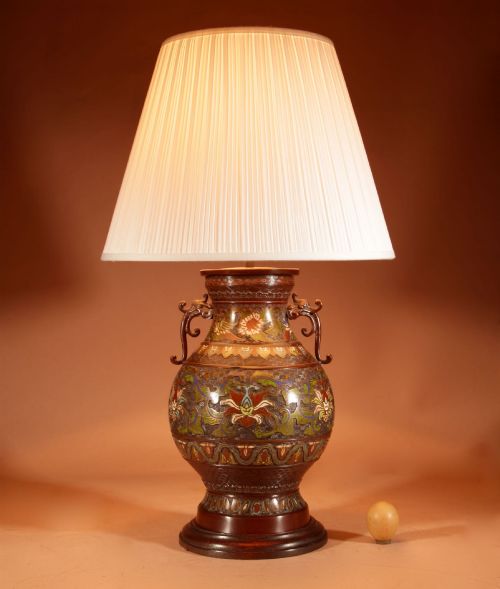


Oriental Enamel Desk Lamp
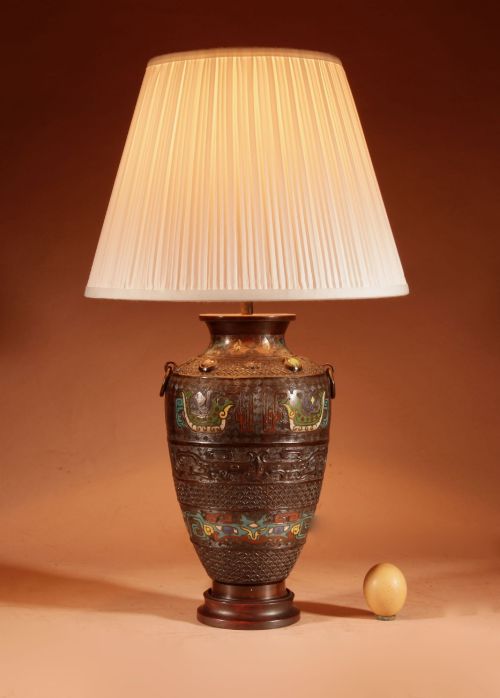
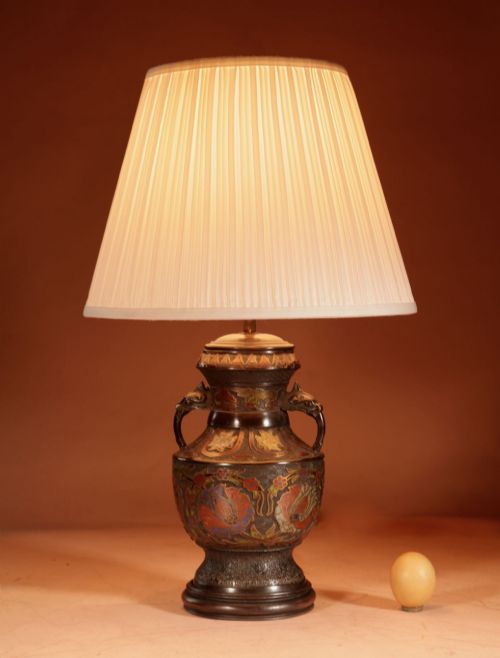
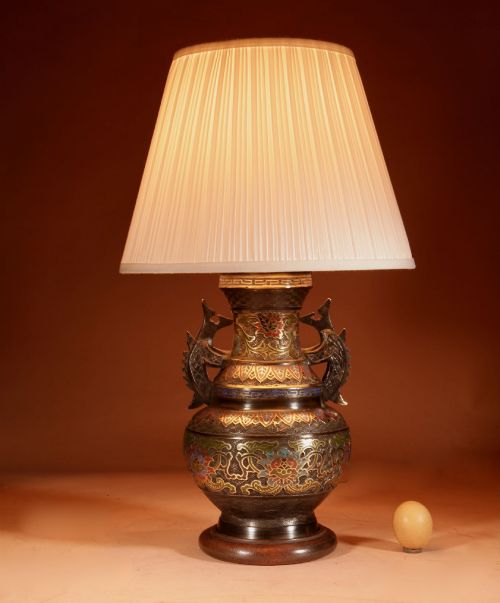
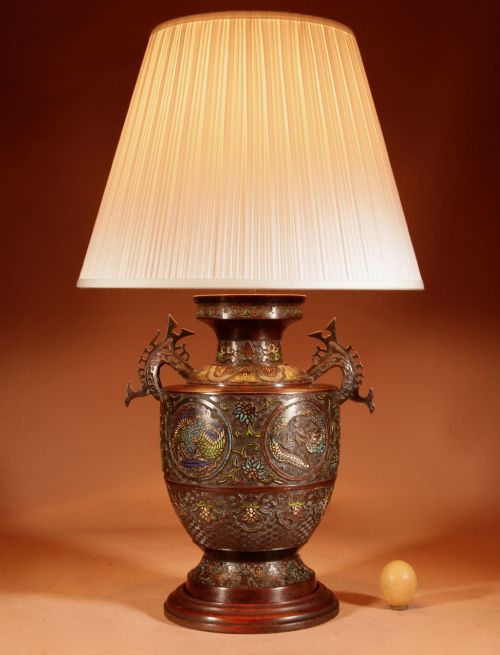
These oriental enamel desk lamp designs bring vibrant colour and intricate metalwork to a room.
Oriental Enamel Desk Lamp
When you search for an oriental enamel desk lamp, you are looking at table lights fashioned from Chinese and Japanese vases, often converted from earlier vessels. The selections here span the Victorian era, the nineteenth century, and the early decades of the twentieth century, including Meiji period and Qing dynasty pieces.
You are most likely to meet bronze and brass table lamps decorated with champlevé or cloisonné enamel. Many examples take the form of converted vases paired with fabric or silk shades.
The assortment includes individual table lights and matched pairs. These items merge traditional Asian metalwork with functional lighting from the nineteenth and early twentieth centuries.
How oriental enamel desk lamps were made
The foundational bodies utilise cast bronze and brass, sometimes shaped as vases before later conversion into lamps. Artisans applied vitreous enamel using cloisonné techniques, where thin wire partitions create cells for coloured pastes, or champlevé methods, where troughs are gouged directly into the metal.
Surface decoration often draws upon Chinese Qing dynasty and Japanese Meiji period motifs. Completed metal vessels were subsequently adapted to house electrical fittings and paired with silk or fabric shades.
Oriental Enamel Desk Lamp Retail Price Guide 2026
Typical asking prices for oriental enamel desk lamp among the pieces listed under this phrase on Sellingantiques today, from the lower quarter to the upper quarter. They describe what is for sale here now, not the wider market.
Several of these heavy bronze vessels started life as quiet Chinese vases before spending their retirement holding up lightbulbs.
What varies in quality
The refinement of the enamelwork determines the distinction between standard vessels and superior examples. Crisp wirework in cloisonné and deep, clean channels in champlevé separate finer pieces from simpler productions.
The weight and finish of the underlying bronze or brass casting also influence the character of the object. Substantial metal mounts and well-integrated conversion work elevate the overall presence of the lamp.
The Oriental Enamel Desk Lamp Glossary
- Cloisonné Enamel
- A technique where thin metal wires are soldered to a metal base to form compartments filled with enamel paste. This method creates detailed patterns across the surface of the vessel.
- Champlevé Enamel
- A process where troughs or cells are carved directly into a bronze or brass base and filled with enamel. The metal walls remain visible between the coloured areas.
- Meiji Period
- A Japanese historical era spanning from eighteen sixty-eight to nineteen twelve. Pieces from this time often exhibit highly intricate metalwork and decorative finishes.
- Qing Dynasty
- The final imperial dynasty of China, lasting from sixteen forty-four to nineteen eleven. Items from this period display traditional motifs and rich enamel colour palettes.
- Famille Rose
- A palette of opaque enamels featuring predominant pink or rose hues. This ceramic and enamel style originated in China during the eighteenth century and continued through the nineteenth century.
Oriental Enamel Desk Lamp: Frequently Asked Questions
What is an oriental enamel desk lamp?
An oriental enamel desk lamp is a table light created by mounting a decorative Chinese or Japanese vase onto a metal base. These pieces combine historical Asian metalwork with functional illumination.
Most examples utilise nineteenth-century cloisonné or champlevé enamel vessels constructed from bronze or brass. They serve as decorative illumination sources for desks, sideboards, and tables.
How do I date a bronze enamel lamp?
Dating these lamps involves examining the style of the metalwork and the manufacturing techniques used on the original vessel. Nineteenth-century examples often display the characteristic weight and colour palettes of the Meiji period or Qing dynasty.
The conversion work itself, including wiring and fittings, also provides clues to the period of adaptation. Comparing the enamel patterns to documented historical pieces helps confirm the age.
Are these lamps converted vases?
Many of these lamps are indeed created from converted vases rather than being manufactured purely as lighting fixtures from the outset. Chinese and Japanese vessels were frequently adapted for Western domestic interiors during the Victorian era.
This conversion process typically involved drilling the base for electrical wiring and adding appropriate lamp holders. The original character of the vase remains the primary decorative element.
How do I style an antique enamel lamp?
These lamps function effectively as focal points on desks, sideboards, or occasional tables where their intricate metalwork can be appreciated. Pairing them with simple fabric or silk shades allows the colourful enamel body to stand out.
Consider placing them in rooms with neutral backdrops to highlight the rich tones of the bronze and enamel. They complement both traditional interiors and eclectic spaces.