





Japanese Enamel Lighting
Japanese enamel lighting brings intricate Meiji metalwork and rich enamels into interiors through table lamps and hanging lanterns.
Japanese Enamel Lighting
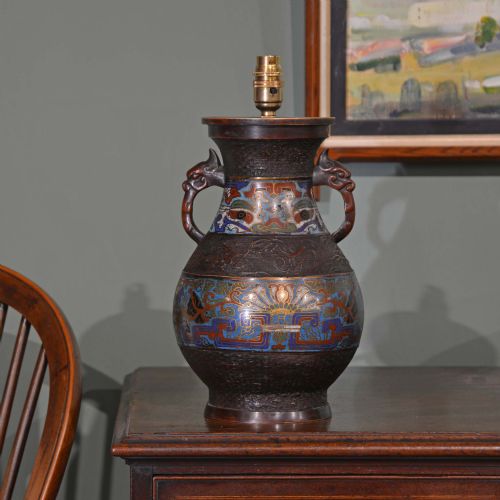
Japanese enamel lighting comprises table lamps and hanging lanterns fashioned from bronze or brass mounted with detailed enamel work. These pieces combine traditional Eastern metalworking techniques with Western domestic utility, emerging from the Victorian era into the early twentieth century.
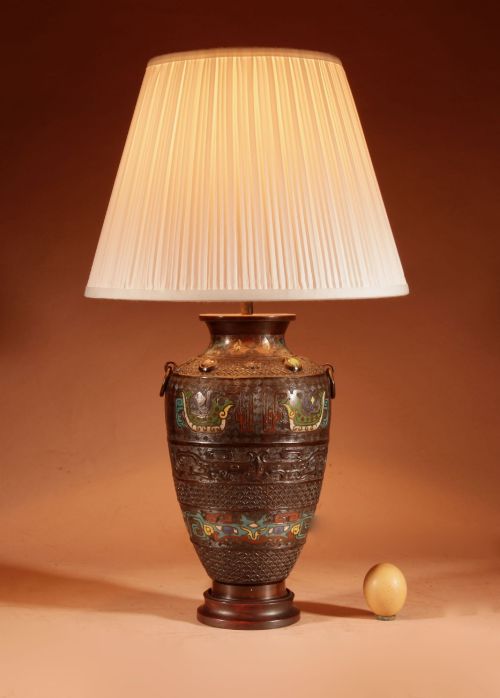
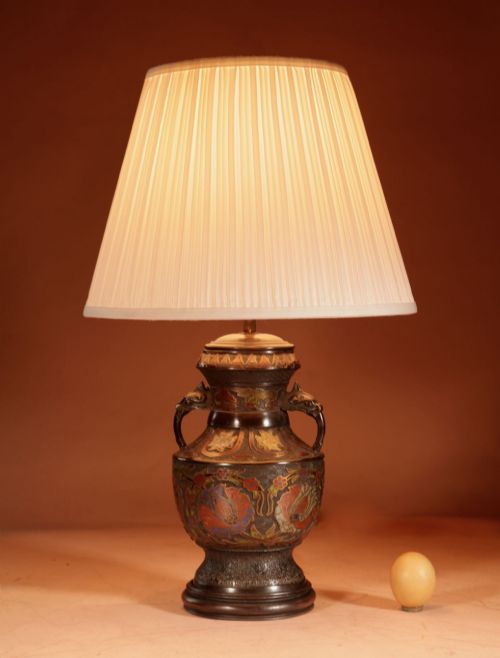
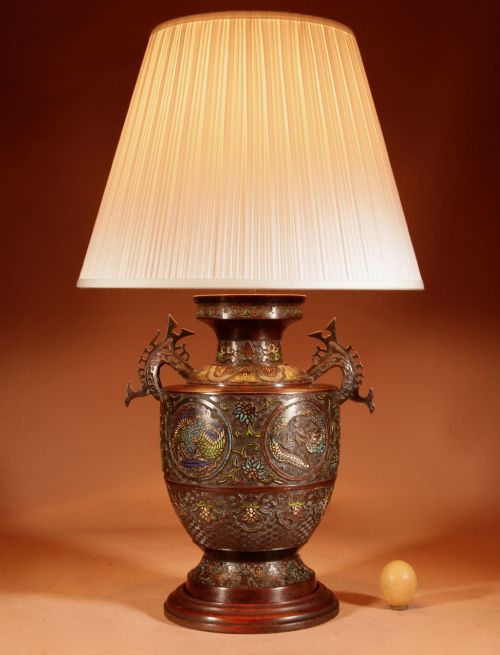
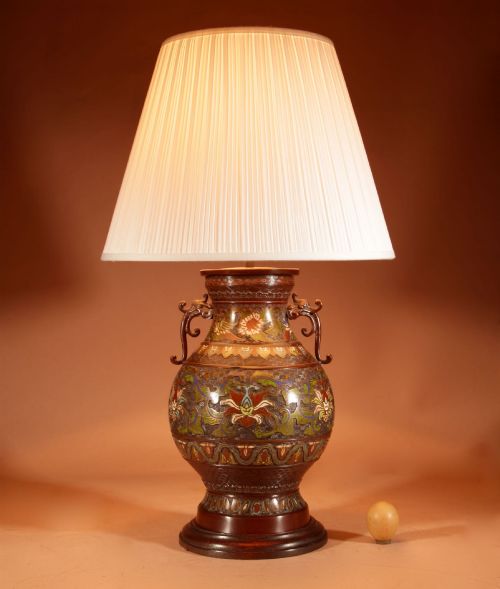
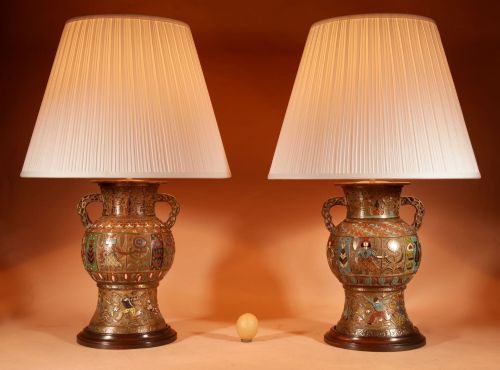
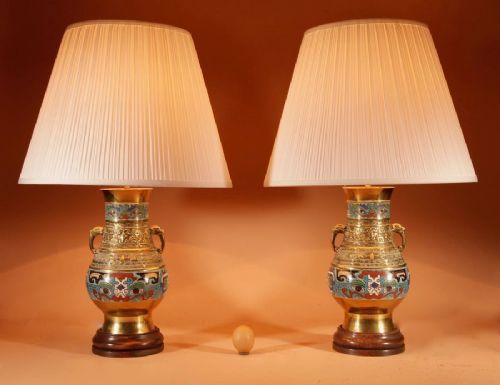
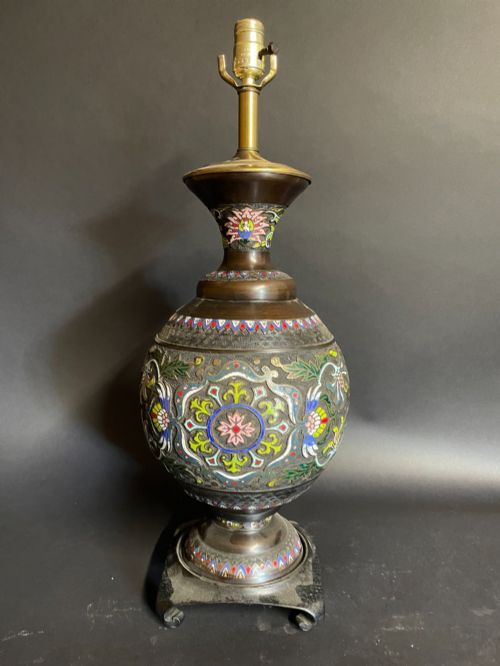
Buyers encountering this selection will predominantly find heavy table lamps utilising champlevé or cloisonné enamel on bronze bases. Forms range from converted vases to purpose-built lighting bodies reflecting Meiji period aesthetics and occasional Chinoiserie or Egyptian revival motifs.
How they were made
Makers formed the structural bodies primarily from cast bronze and brass, employing heavy metal foundations to support the weight of the piece. Artisans then applied intricate cloisonné or champlevé enamel decoration directly onto the metal surfaces.
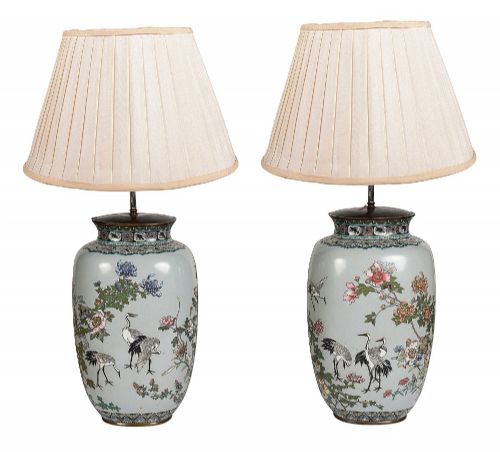
Cloisonné work involved soldering thin metal wires to outline patterns before filling the resulting cells with coloured glass paste and firing. Champlevé technique carved troughs directly into the bronze ground to receive the enamel before grinding and polishing the surface smooth.
Japanese Enamel Lighting Retail Price Guide 2026
Typical asking prices for japanese enamel lighting among the pieces listed under this phrase on Sellingantiques today, from the lower quarter to the upper quarter. They describe what is for sale here now, not the wider market.
Listings demonstrate a concentration of pieces from the Victorian era and the Meiji period, primarily utilising bronze, brass, and enamel.
What varies in quality
The sophistication of the enamel work dictates the distinction between standard production and exceptional examples. Crispness of wirework in cloisonné and depth of chasing in champlevé separate ambitious workshop output from simpler decorative items.
Substantial scale and matched pairs elevate the significance of individual items, particularly when combined with complex bronze casting. Integration of original mounting hardware and preservation of the polished bronze patination complete the assessment of superior specimens.
The Japanese Enamel Lighting Glossary
- Champlevé Enamel
- An enamelling technique where troughs are hollowed out of a metal surface and filled with enamel paste before firing. This method creates bold coloured designs bordered by raised metal lines.
- Cloisonné Enamel
- A decorative process using thin metal wires soldered to a metal base to create compartments for coloured enamel. The piece is subsequently fired and polished to a smooth finish.
- Meiji Period
- The era in Japanese history spanning from 1868 to 1912, characterised by extensive international trade and artistic exchange. Works from this time often exhibit exceptional metalworking and decorative skill.
- Bronze
- An alloy consisting primarily of copper, commonly used as the heavy structural foundation for Japanese enamel lamps and lanterns. It provides a durable base that accepts both chasing and patination.
- Lantern
- A fully enclosed lighting fixture designed for suspension rather than placement on a surface. These hanging pieces utilise metal framing and enamel panels to diffuse light.
Japanese Enamel Lighting: Frequently Asked Questions
What are Japanese enamel lamps made from?
These pieces combine heavy cast bronze or brass frames with detailed cloisonné or champlevé enamel decoration. Secondary materials such as wood and silk often appear in associated wiring or mounting elements.
Artisans relied on durable metal alloys to provide stability for table lamps and hanging lanterns, ensuring the heavy enamel bodies remained secure during domestic use.
How do I date a Japanese enamel lamp?
Dating relies on stylistic indicators such as Meiji period aesthetic conventions and Victorian mounting styles. Listings frequently reference periods spanning from the mid-nineteenth century through to the early twentieth century.
Examining the construction methods of the bronze chassis and the complexity of the enamel cells helps narrow down the manufacturing decade alongside historical design influences.
Were these originally made as lamps?
Many examples began life as decorative vases or ritual vessels before later conversion into functional lighting fixtures. Purpose-built table lamps and hanging lanterns also exist alongside these adapted decorative objects.
The integration of electrical wiring or burner fittings typically occurred either during the export process or as part of later domestic updates by collectors.
Where should I place these in a room?
Their substantial weight and decorative presence make them suited as focal points on sturdy side tables or pedestals. Hanging lanterns require secure ceiling fixings capable of supporting heavy bronze and enamel bodies.
Placing them away from direct sunlight helps preserve the rich tones of the coloured enamel and the patination of the underlying bronze metalwork.