


Meiji Period Lamps
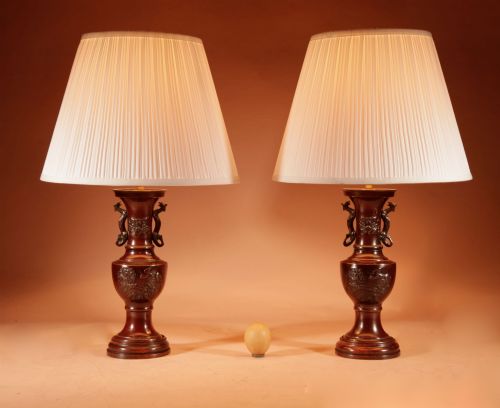
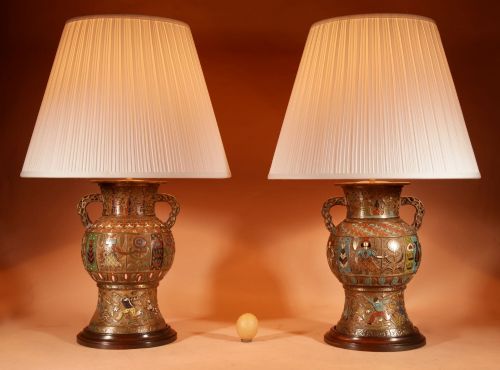
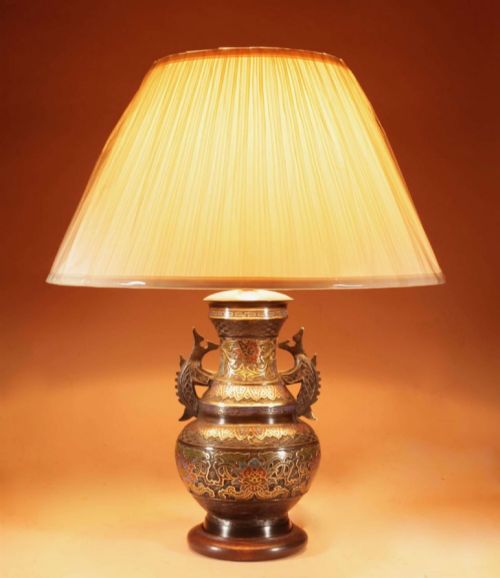
Meiji period lamps bring together cast bronze, intricate champlevé enamel and hand-painted porcelain to anchor a room with distinct nineteenth-century craftsmanship.
Meiji Period Lamps
When you search for meiji period lamps, you encounter decorative objects originating from Japan between eighteen sixty-eight and nineteen twelve, often adapted later for domestic lighting. These pieces span table lamps, floor lamps and oil lamps created from imported vases, vessels and carved elements.
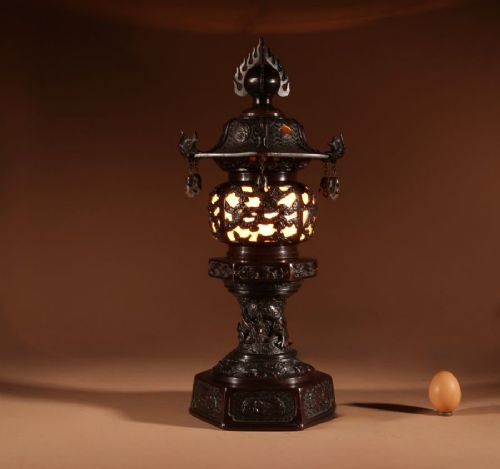
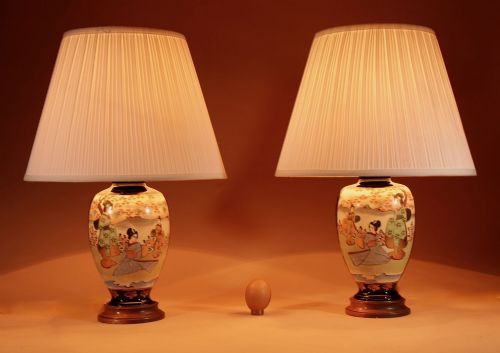
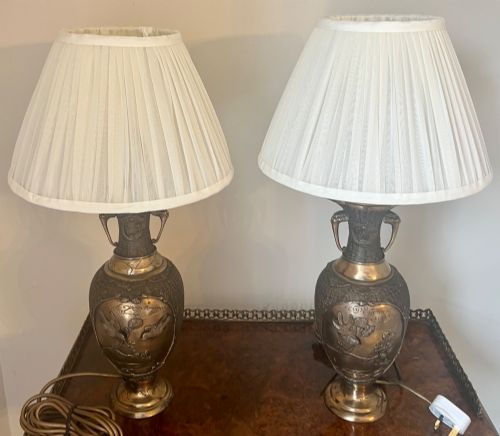
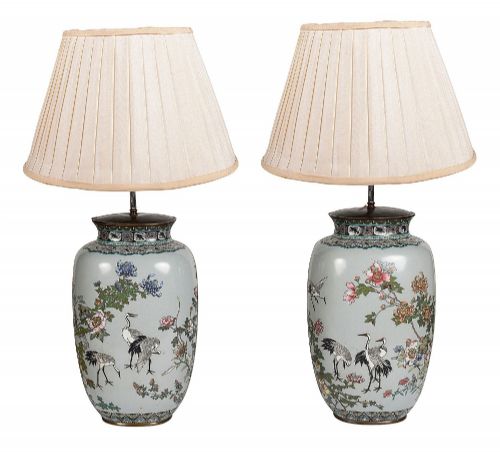
The selection on this page relies heavily on cast bronze bodies, champlevé enamel and Satsuma or Kutani porcelain vases mounted as lamps. Many examples date from the late nineteenth century and the early decades of the twentieth century, reflecting both native Japanese artistry and the export market of the period.
How they were made
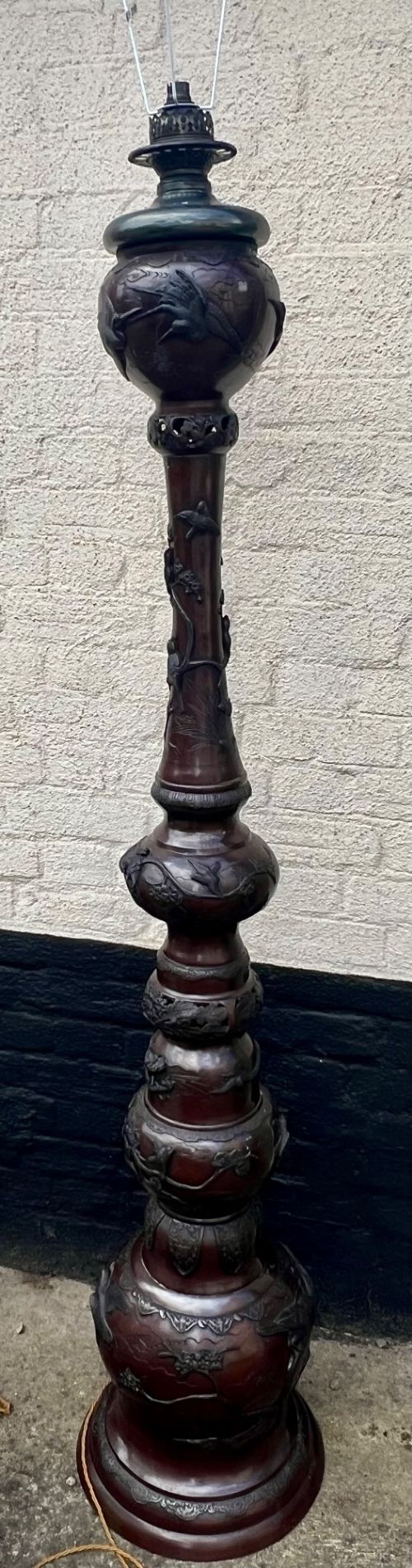
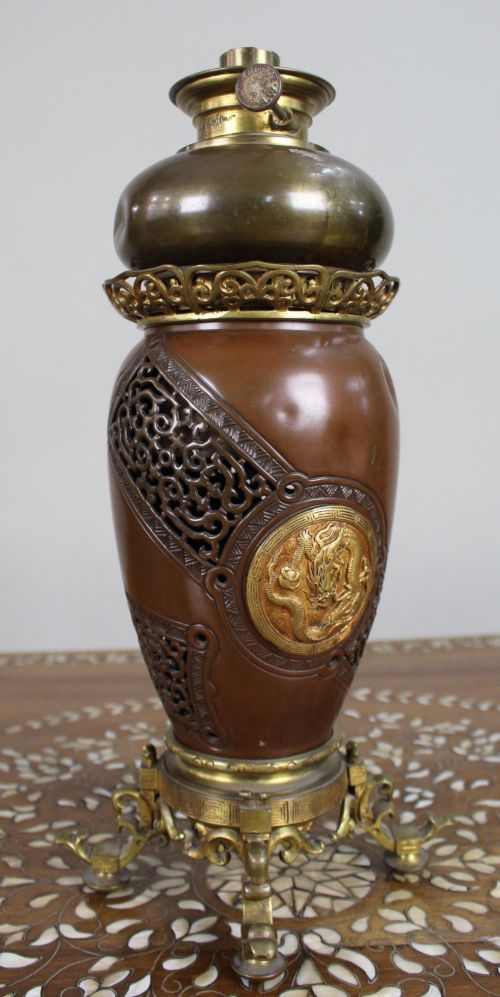
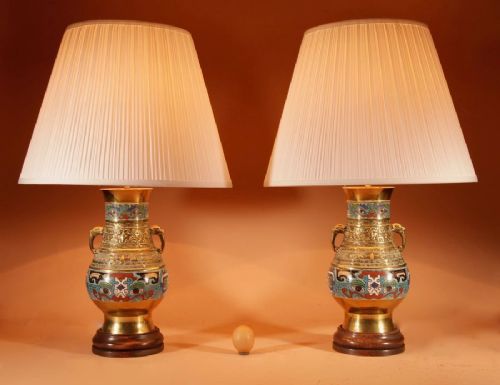
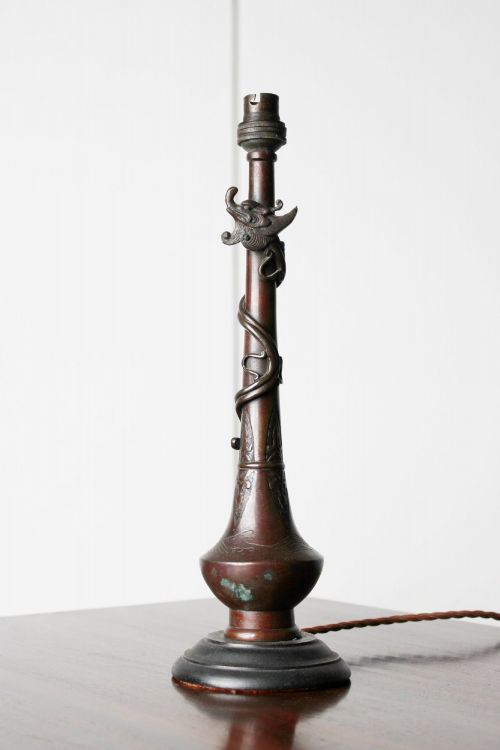
Maker workshops utilised lost-wax casting for bronze figures, dragons and urns, applying detailed surface carving and patination. Enamel work combined cloisonné cells with champlevé recesses, filling wire or carved channels with coloured vitreous pastes before firing and polishing.
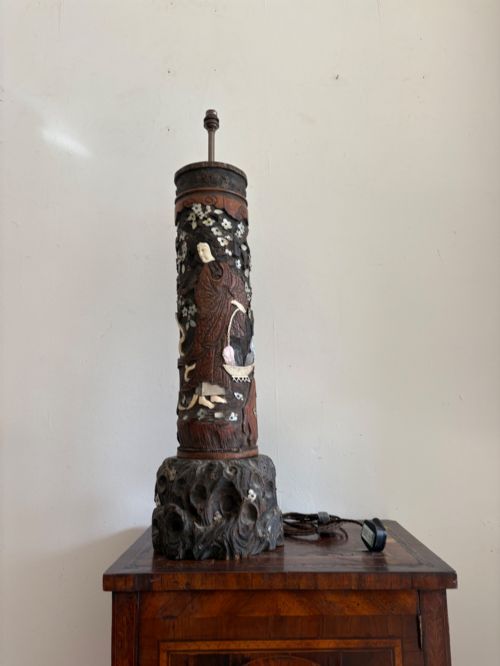
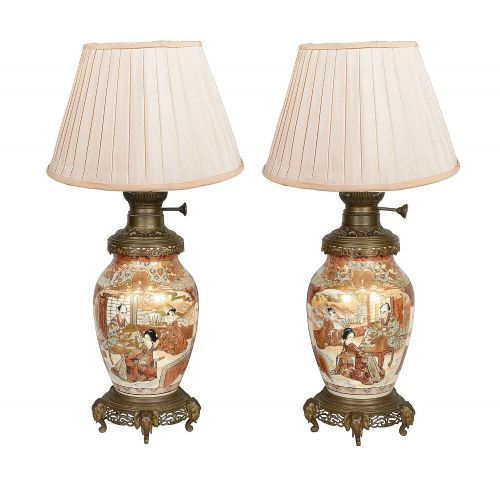
Porcelain bodies, including Satsuma earthenware and Kutani porcelain, received hand-painted pigments and gold leaf details, frequently fired multiple times. Artisans also worked with wood, such as ebonised elm and root carved elements, shaping organic forms to serve as lamp bases.
Several bronze dragons and at least one bemused elephant hold up the lighting duties on this page.
What varies in quality
Quality rests in the crispness of the bronze casting and the depth of the champlevé or cloisonné enamel work. Superior examples display sharply defined dragon scales, clean enamel borders without pitting, and balanced proportions between the vessel body and its mounts.
Porcelain lamps vary according to the fineness of the hand-painted detailing and the preservation of the original gilding. The integration of the lamp fittings into the antique ceramic or bronze body also dictates the overall standard of the piece.
Kyoto Satsuma·Yokohama Porcelain
The Meiji Period Lamps Glossary
- Champlevé
- An enamelling technique where depressions are carved into a bronze surface to hold coloured enamel paste. These recesses are filled, fired and polished flush with the surrounding metal.
- Satsuma
- A type of Japanese earthenware featuring a crackled ivory-coloured glaze painted with polychrome enamels and gilt. These ceramic vessels frequently form the bodies of decorative lamps.
- Kutani
- A style of Japanese porcelain known for bold pictorial designs and vibrant overglaze colours, particularly iron red and gold. Kutani vases are commonly adapted into table lamps.
- Cloisonné
- A method of decorating metal objects by soldering flat metal wires to the surface to create compartments that receive enamel paste. The piece is then fired and polished.
- Imari
- A traditional style of Japanese porcelain decorated in underglaze blue and overglaze red, green and gold. These pieces date across the nineteenth century and appear frequently in lamp adaptations.
Meiji Period Lamps: Frequently Asked Questions
Are meiji period lamps converted from old vases?
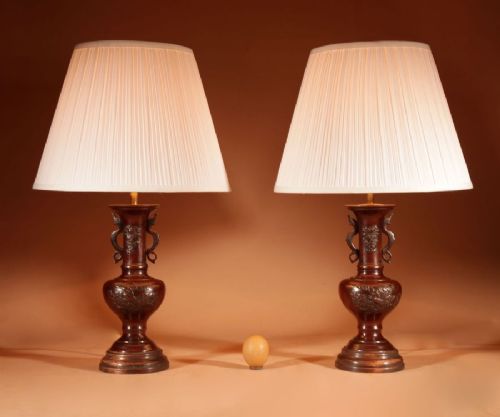
Many examples began as traditional Japanese bronze vases, ginger jars or brush pots before receiving electrical fittings. Some adaptations occurred decades after the original manufacture during the late nineteenth or early twentieth century.
This conversion process preserves the artistic integrity of the original vessel while updating the object for modern domestic interiors.
How do I identify Satsuma porcelain lamps?
Satsuma pieces feature a characteristic warm, ivory-coloured earthenware body covered in a fine network of crackled glaze. They are typically decorated with detailed hand-painted figures, flowers and heavy gold embellishments.
These ceramic bodies provide a distinct textured surface that separates them from smoother porcelain types like Kutani or Yokohama ware.
What is the difference between bronze and brass lamps?
Bronze objects from this era generally exhibit a deeper, warmer metallic tone with sophisticated patination applied by the maker. Brass components tend to appear brighter and harder in colour, often utilised for structural mounts rather than main sculptural bodies.
Examining the weight and surface texture helps distinguish heavy cast bronze dragons and urns from lighter brass elements.
Where should I place a floor lamp?
Tall bronze floor lamps suit corners of reception rooms or beside heavy wooden furniture where their height balances surrounding proportions. Their substantial presence requires adequate floor space to display the cast details properly.
Pairing these taller pieces with simple fabric shades lets the intricate metalwork remain the focal point of the room.