

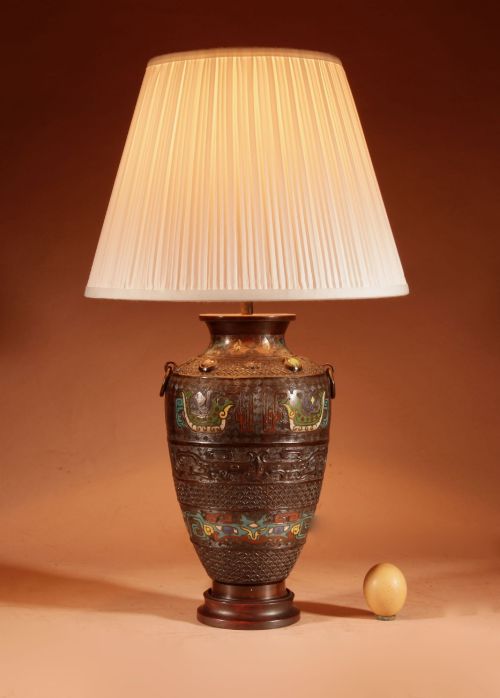
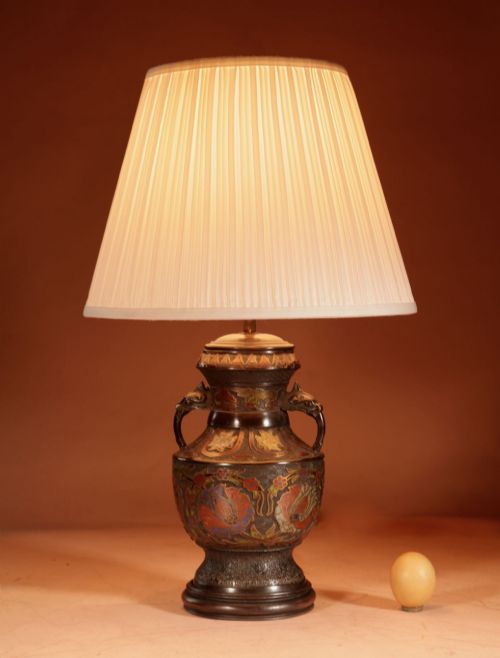
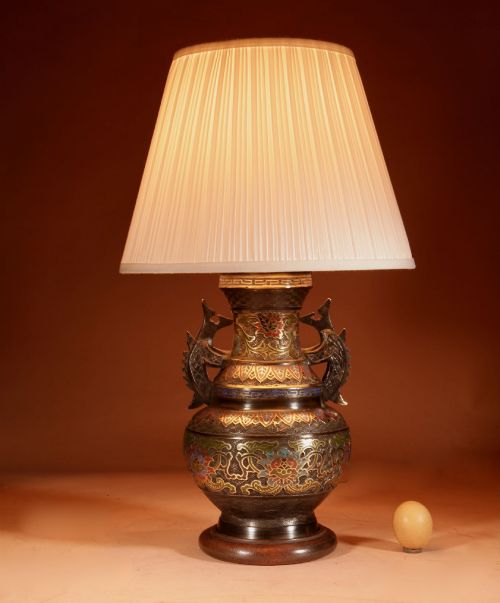
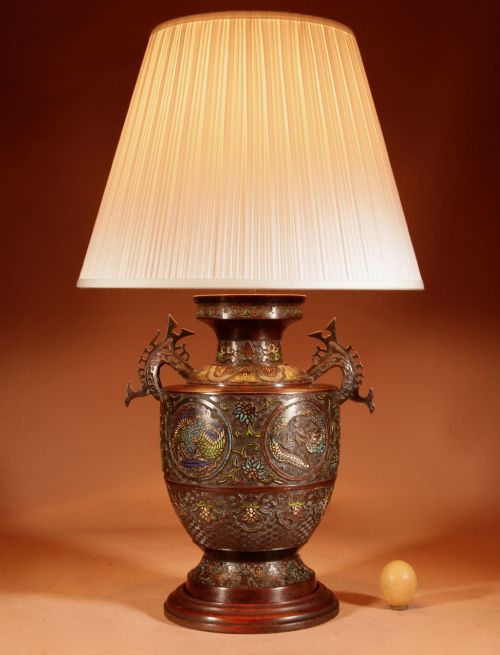


Enamel Bronze Vase Lamp
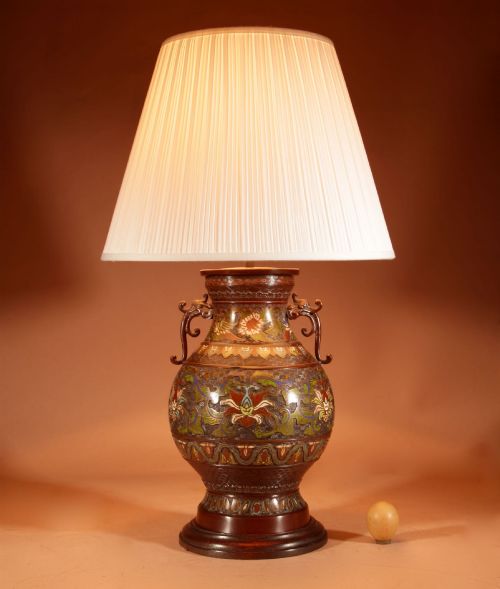
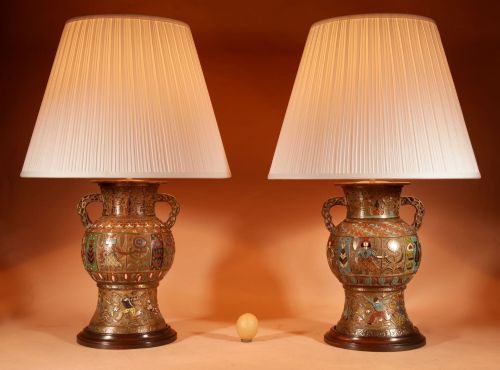
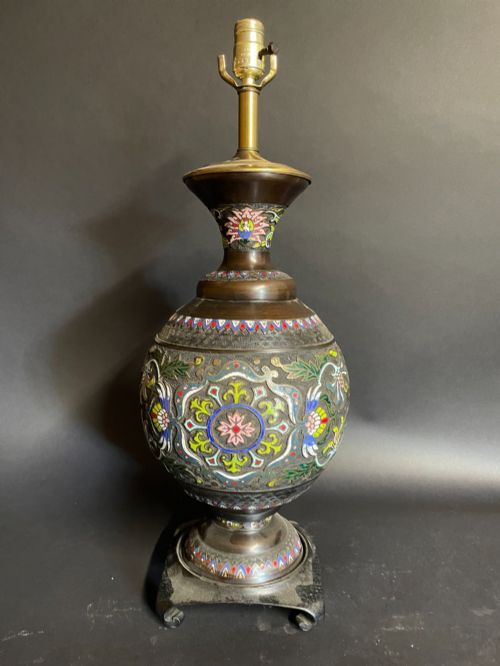
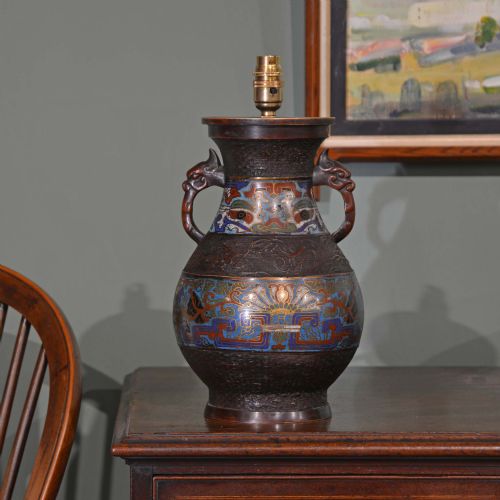
These enamel bronze vase lamp examples combine cast metal and coloured glass decoration to light a room with striking oriental character.
Enamel Bronze Vase Lamp
An enamel bronze vase lamp transforms an existing decorative vessel into a functional table lamp, drawing on Japanese Meiji period and Chinese export traditions. These pieces originate predominantly from the nineteenth century, utilising imported forms from Qing Dynasty and Meiji workshops.
Most examples encountered here are converted vases featuring intricate metalwork and glazed compartments. They combine traditional far eastern aesthetics with nineteenth century European lighting adaptations, creating substantial decorative objects for interiors.
How they were made
The foundation relies on cast bronze or gilt bronze, sometimes supplemented by brass fittings and fabric components. Artisans shaped these heavy metal bases to support the weight of ceramic or metallic bodies.
Surface decoration employs cloisonné enamel and champlevé enamel techniques, where glass pastes are fused into wire cells or recessed channels. Certain versions incorporate porcelain elements such as Famille Verte and Rose Medallion glazes.
Enamel Bronze Vase Lamp Retail Price Guide 2026
Typical asking prices for enamel bronze vase lamp among the pieces listed under this phrase on Sellingantiques today, from the lower quarter to the upper quarter. They describe what is for sale here now, not the wider market.
Listings feature nineteenth century dates alongside Japanese Meiji and Chinese export styles, utilising bronze, brass, cloisonné, champlevé, and porcelain.
What separates the best from the rest
Quality rests in the precision of the enamel work and the crispness of the bronze casting. Pieces with sharply defined cell work and deeply saturated colour display superior workshop execution.
The integration of the mountings determines structural harmony. Finer examples maintain a seamless balance between the original vessel body and the later electrical or oil lamp adaptations.
The Enamel Bronze Vase Lamp Glossary
- Cloisonné enamel
- A technique where thin metal wires are soldered to a metal base to form compartments filled with enamel paste before firing. This method creates detailed patterns defined by thin metallic lines.
- Gilt bronze
- Bronze that has been coated with a thin layer of gold to give a rich metallic sheen. This finish protects the underlying metal while enhancing decorative splendour.
- Famille Verte
- A palette of green enamels used on Chinese porcelain during the Qing Dynasty. It frequently appears alongside other colours to depict traditional floral and figural scenes.
- Rose Medallion
- A distinct style of Chinese export porcelain featuring panels filled with figures and flowers dominated by pink enamel tones. These vases were frequently mounted as lamps for Western markets.
Enamel Bronze Vase Lamp: Frequently Asked Questions
What is an enamel bronze vase lamp?
These objects are decorative nineteenth century vases, primarily of Chinese or Japanese origin, which have been adapted into table lamps. They merge traditional oriental metalwork with functional interior lighting.
Craftsmen mounted these vessels using bronze, gilt bronze, and brass components, often pairing them with fabric shades. Each piece serves as both a structural light source and a sculptural centrepiece.
How do I date an enamel bronze vase lamp?
Dating relies on stylistic clues from the nineteenth century, including Meiji period Japanese motifs and Qing Dynasty Chinese export styles. The specific enamel technique and metal patination provide further chronological context.
Earlier examples from the eighteen-eighties often display heavier casting and traditional champlevé work. Later nineteenth century pieces introduce diverse porcelain bodies like Famille Verte and Rose Medallion.
Where were these lamps made?
The underlying vases originate from East Asian workshops, specifically Japanese Meiji period studios and Chinese export centres. These vessels were later fitted as lamps for international markets.
The metal mounts and electrical conversions typically occurred in Western workshops upon arrival. This blending of Eastern manufacturing and Western mounting defines the category.
How do I style an enamel bronze vase lamp in a room?
These substantial table lamps suit studies, drawing rooms, and hallways where their height and rich colour palettes command attention. They pair well with traditional wooden furniture and neutral interior backgrounds.
Allowing the lamp to stand as a focal point highlights the detailed cloisonné or champlevé enamel work. Complementary fabric shades help balance the heavy bronze and porcelain bases.