


Vintage Chinese Flower Table
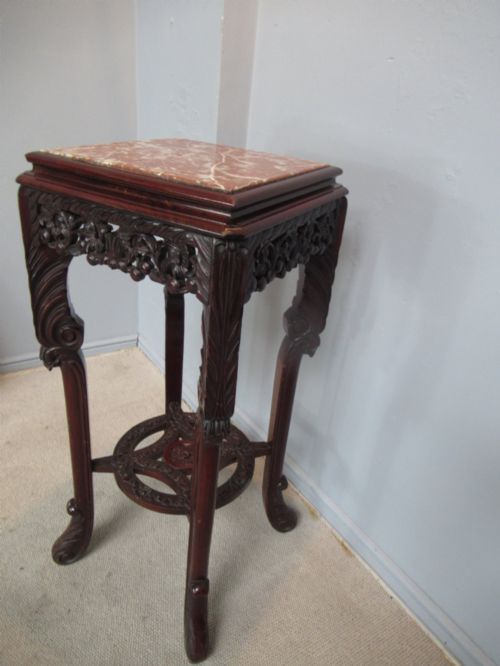
A vintage chinese flower table brings organic form and intricate carving into a room, offering a sturdy yet graceful perch for plants and ornaments.
Vintage Chinese Flower Table
When you search for a vintage chinese flower table, you are looking at plant stands, jardiniere stands, pedestals, and occasional tables designed to elevate plants and display objects. These pieces originate from the late nineteenth century through to the early twentieth century, spanning the Victorian era, the Qing Dynasty, and the Chinese Republic period.
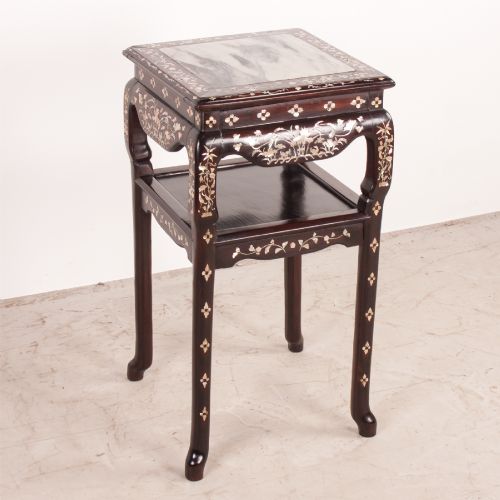
The versions you are most likely to meet on this page take the form of compact wood stands topped with inset marble or decorated with mother of pearl inlay. They function equally well as wine tables, side tables, or small coffee tables in contemporary rooms.
The styles range from traditional Chinese export and Qing Dynasty designs to Chinoiserie and Oriental interpretations. Their compact footprints make them versatile for placing in corners, beside seating, or in hallways.
How they were made
Carpenters constructed these tables using dense timbers such as hardwood, rosewood, and ebonised wood, often employing traditional joinery alongside hand carving. Selected pieces feature lacquered and painted surfaces that show meticulous attention to decorative detail.
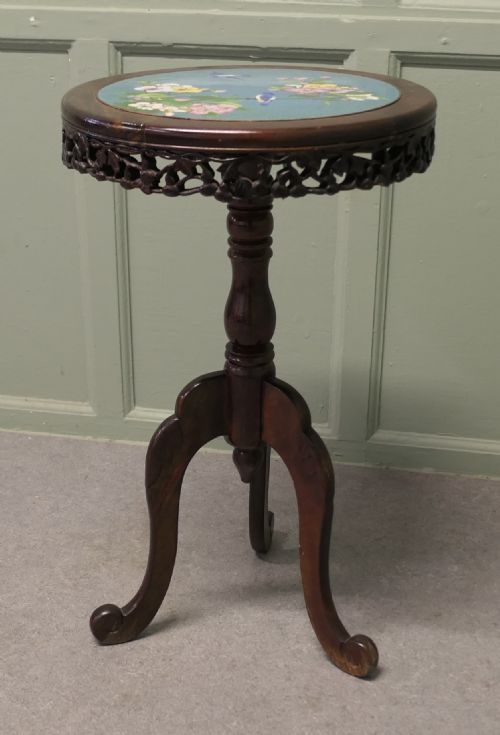
Insets of white or coloured marble provide a cool, durable surface resistant to water from plant pots, while mother of pearl inlay creates luminous floral and geometric patterns across the wood. Certain examples incorporate cloisonné enamel panels or brass elements to enrich the overall design.
Certain stands feature hand-carved birds and flowers frozen in perpetual spring, ready to host your favourite fern.
What varies in quality
The distinction between standard examples and superior pieces lies in the depth and crispness of the wood carving, particularly around the aprons and cabriole legs. Sharp, undercut details and balanced proportions demonstrate a higher level of workshop skill.
Materials also dictate the tier of the piece, with dense Hongmu or heavy rosewood frames holding greater substance than simpler turned wood. The snugness of the marble fit and the precision of inlaid mother of pearl or cloisonne work mark out the finer productions.
The Vintage Chinese Flower Table Glossary
- Jardiniere stand
- A tall, slender table specifically built to hold a ceramic flower pot or plant bowl. These stands usually feature a circular or square top raised on high legs.
- Cloisonne
- A decorative metalwork technique where thin wire creates partitioned cells filled with coloured enamel paste. These panels are then fired and polished smooth.
- Chinoiserie
- European artistic interpretation of Chinese decorative motifs and styles. This aesthetic gained popularity through trade and export wares during the nineteenth century.
- Mother of pearl
- The iridescent inner layer of mollusc shells, harvested and cut into thin pieces for inlay. Craftsmen set these gleaming segments into wooden channels to form floral patterns.
Vintage Chinese Flower Table: Frequently Asked Questions
What is a chinese flower table used for?
These tables were originally built to elevate potted plants, ceramic jardinieres, and decorative items to a comfortable viewing height within a room. Their elevated platforms protected wooden floors from dampness and allowed trailing foliage to drape gracefully.
Today, they serve equally well as bedside tables, wine tables, or small display pedestals for lamps and sculptures. Their compact sizes allow them to fit easily into narrow hallways and awkward corners.
Are marble top tables practical for plants?
The stone inset provides a cool, moisture-resistant surface that tolerates occasional water spills from watering plants. It protects the surrounding wooden structure from damp rot and staining.
Wipe the marble surface dry after watering to prevent mineral deposits from settling into the porous stone. Placing a protective pad underneath heavy ceramic pots further safeguards the finish.
How do I care for rosewood and hardwood stands?
Maintain the timber by dusting regularly with a soft, dry cloth and avoiding direct exposure to strong sunlight or heat sources. Excessive dryness can cause timber to split, while moisture can harm polished surfaces.
Apply a light application of appropriate furniture wax sparingly when the wood appears dry, buffing it gently to restore the natural sheen. Avoid silicone-based sprays, which build up a film over time.