
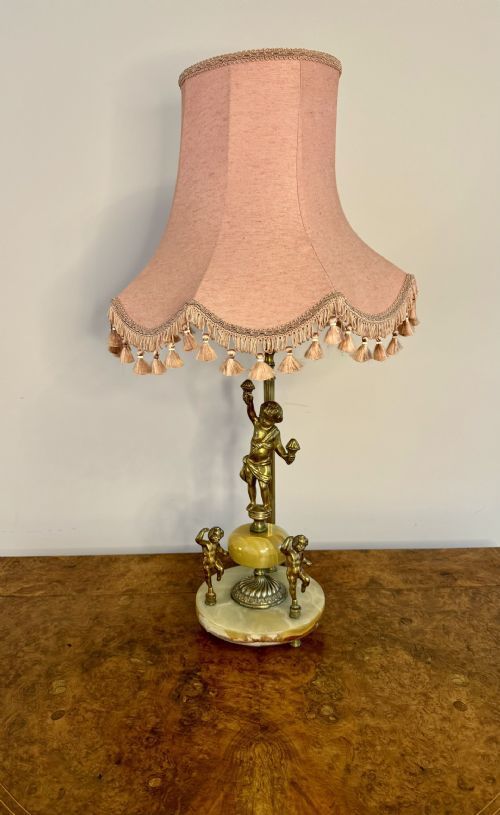


Vintage Cherub Desk Lamp
These vintage cherub desk lamp designs bring classical figural warmth to a workspace, offering sculptural presence alongside soft illumination.
Vintage Cherub Desk Lamp
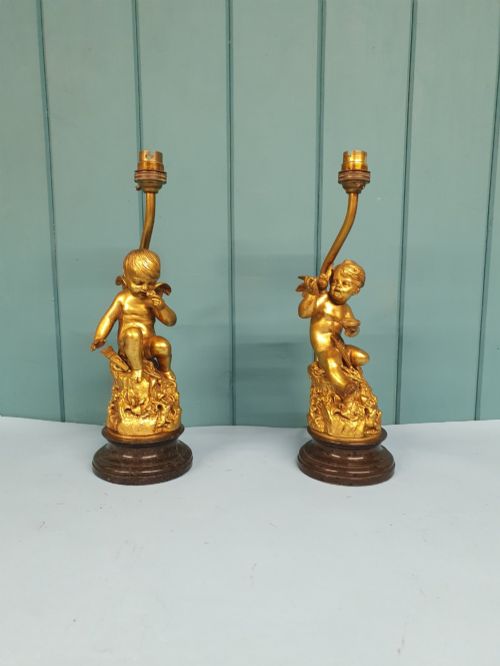
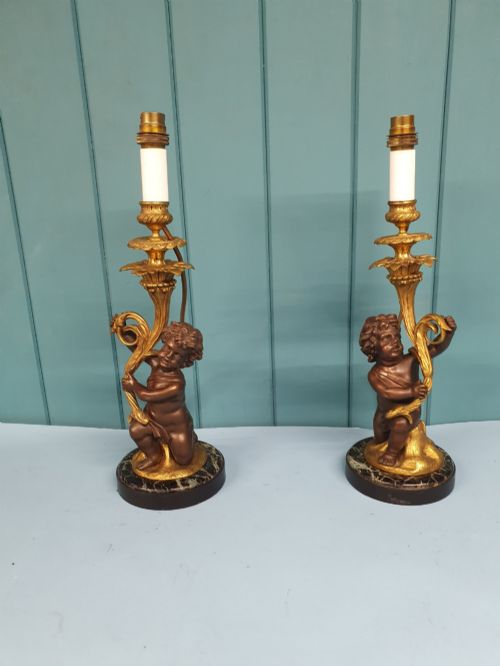
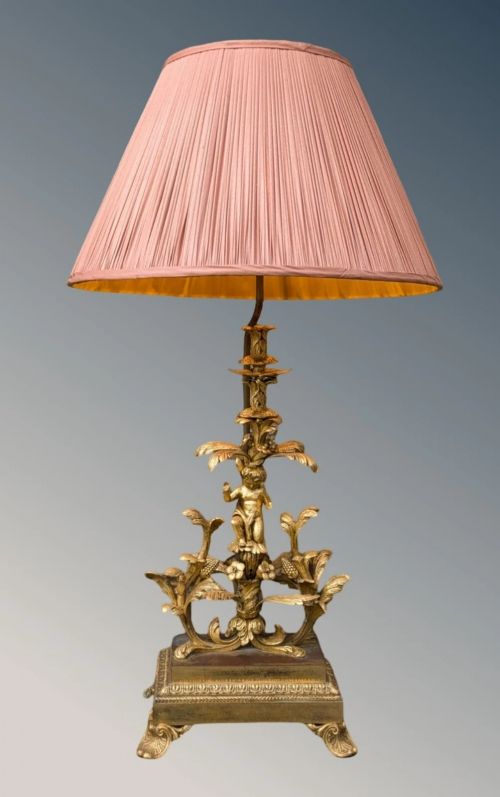
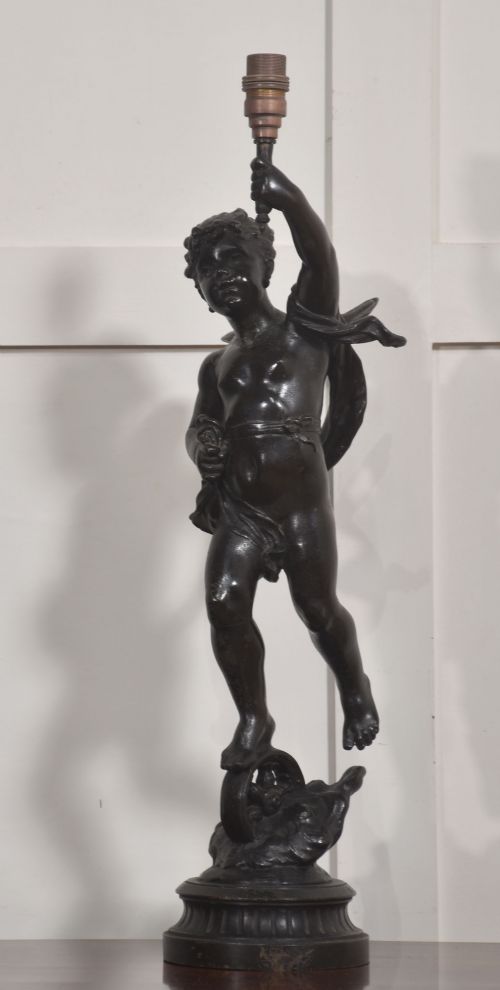
A vintage cherub desk lamp combines figural bronze, brass or spelter castings with functional lighting, often drawing inspiration from French Rococo Revival and Neoclassical styles. When searching for a vintage cherub desk lamp, buyers frequently encounter pairs or single figures cast in metal, sometimes paired with marble bases or fabric shades.
The pieces span periods from the Victorian era and the nineteenth century through the early twentieth century, including Edwardian and Art Deco examples. Many items originate from nineteenth-century oil lamps later converted to electricity, or statuettes adapted for household lighting.
Materials and construction methods
Foundry work relies on metal casting, utilising bronze, brass, spelter, and ormolu to shape the cherub figures and decorative mounts. Gilt finishes and patinated surfaces provide depth to the metalwork.
Plinths and columns incorporate heavy stones such as marble and onyx, secured beneath the metal figures. Fabric shades and painted tole peinte components complete the assembly of these lighting pieces.
Recorded styles span French Rococo Revival, Rococo Revival, French Chateau, Neoclassical Revival, Edwardian, French Empire, and Baroque Revival.
Evaluating the craftsmanship
The choice of foundation materials alters the character of the object, with solid bronze and heavy marble bases demonstrating superior substance compared to lighter spelter or plaster alternatives.
Moreau
The Vintage Cherub Desk Lamp Glossary
- Ormolu
- Gilded bronze produced through a mercury amalgamation process or electroplating. This finish imparts a warm, golden sheen to nineteenth-century metalwork.
- Spelter
- A zinc alloy frequently utilised as a cost-effective alternative to bronze in figural castings. It accepts patination and metallic paint finishes well.
- Tole Peinte
- Painted sheet metal used for lamp components and decorative shades. It provides a smooth surface for coloured floral or geometric decoration.
- Rococo Revival
- A nineteenth-century design movement favouring asymmetrical scrollwork, naturalistic foliage, and exuberant curves. It heavily influences nineteenth-century French lamp ornamentation.
Vintage Cherub Desk Lamp: Frequently Asked Questions
How are antique lamps wired?
Many older pieces have undergone conversion from oil or gas to electricity during past decades. Rewiring is often undertaken by contemporary owners to ensure safe modern operation.
Buyers should inspect the internal flex and plug configuration upon arrival, arranging for a qualified electrician to update components if necessary.
Can original oil lamps be converted?
Nineteenth-century lighting fixtures frequently started life as burning lamps or decorative bronze statuettes. Workshops later adapted these bodies to accept lamp holders and wiring.
Such conversions preserve the sculptural metalwork while making the objects practical for modern desks and side tables.
What metals are used?
Foundries employed a range of alloys depending on the intended weight and cost of the piece. Bronze, brass, and gilded metal appear regularly across the selection.
Heavier items utilise marble and onyx for stability, providing a solid foundation for the metal cherub figures.
How do I date these lamps?
Stylistic clues such as Rococo revival scrolls or Edwardian proportions help narrow down the period of manufacture. Cast bronze marks and material choices also point towards nineteenth or early twentieth-century origins.
Comparing the construction methods of the base and the wiring exit holes provides further context regarding the age of the conversion.