



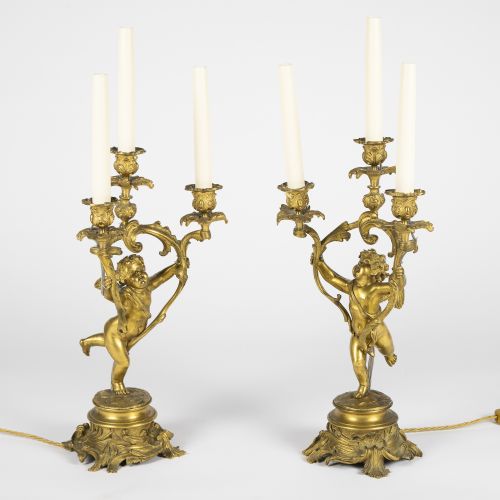


Cherub Side Lamps
Cherub side lamps bring figurative warmth to a room, cast in bronze, brass and ormolu from the Victorian era down to the Art Deco period.
Cherub Side Lamps
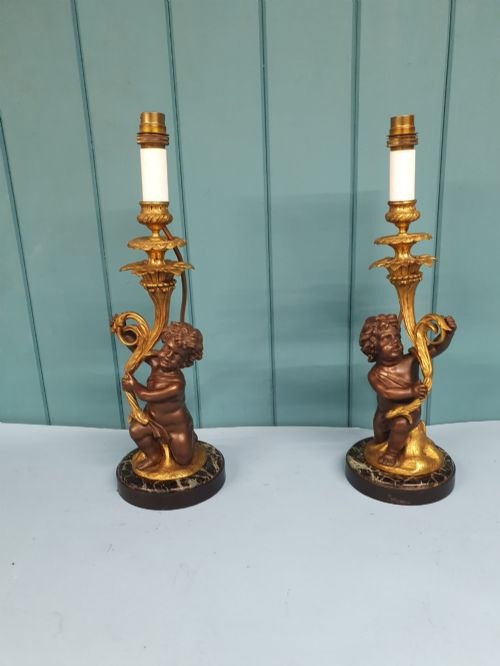
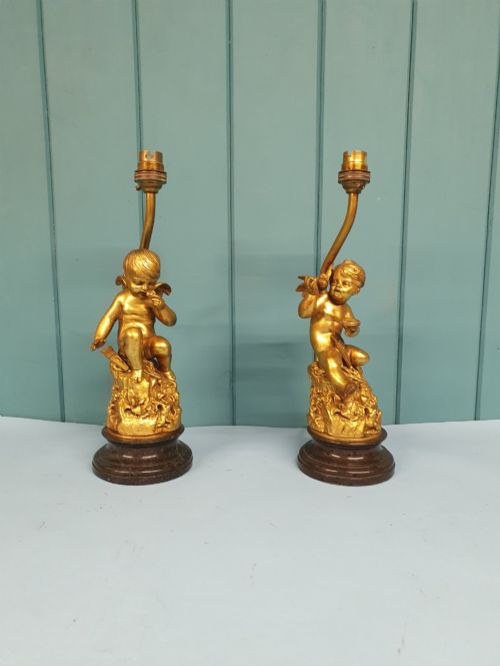
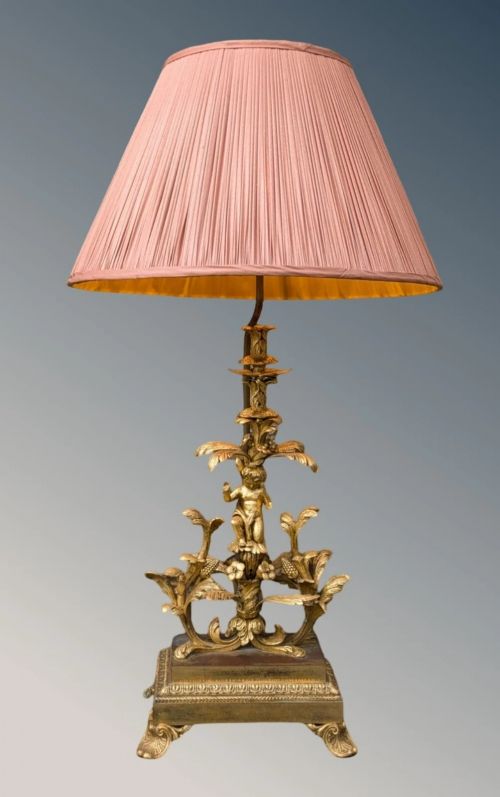
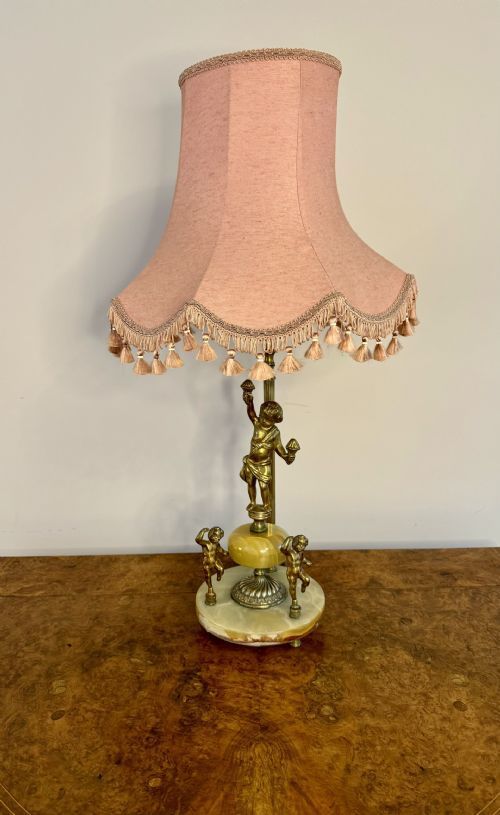
When you search for cherub side lamps, you meet figural lighting cast in bronze, brass, gilt metal and ormolu, often paired with marble bases. These pieces take the form of table lamps and putti figures supporting mounts from the nineteenth century through to the nineteen-thirties.
The versions most commonly found here include pairs of brass or bronze table lamps from around nineteen-twenty, alongside French ormolu and marble examples dating back to eighteen-seventy. Alongside dedicated lighting, the selection occasionally incorporates occasional tables such as painted satinwood pieces.
Makers and designers worked within distinct design traditions, ranging from French Rococo revival and Sheraton revival to Edwardian and Art Deco styles. Each piece relies on sculptural metalwork to anchor the lighting scheme within a room.
How they were made
Foundry workers shaped these lamps using bronze, gilt bronze, brass and ormolu, casting metal figures of putti and cherubs to support the lighting components. These metal bodies frequently sit upon heavy marble or onyx bases that provide stability.
Designers applied gilding to bronze and brass surfaces, while fabric elements completed the shade assemblies. Artisans incorporated painted satinwood on associated furniture forms where timber structures complemented the metalwork.
Cherub Side Lamps Retail Price Guide 2026
Typical asking prices for cherub side lamps among the pieces listed under this phrase on Sellingantiques today, from the lower quarter to the upper quarter. They describe what is for sale here now, not the wider market.
Sculpted bronze cherubs hold up the illumination, ensuring winged infants oversee every corner of the room.
What varies in quality
The distinction between standard production and superior execution rests on the crispness of the metal chasing and the depth of the casting. Heavier bronze and ormolu specimens display finer anatomical detail in the cherub figures than lighter brass counterparts.
Selection of secondary materials, such as solid marble versus lesser stone bases, shifts the character of the object. Monumental scale and the presence of matched pairs elevate the visual weight of the lighting within an interior.
Aug. Moreau
The Cherub Side Lamps Glossary
- Ormolu
- Finely ground high-carat gold applied to a bronze base using a mercury amalgamation technique. This finish yields a warm, enduring lustre characteristic of French decorative metalwork.
- Putti
- Depictions of chubby male infants, frequently winged, derived from classical art and Renaissance sculpture. They appear frequently in these metal castings acting as attendants or supports.
- Rococo Revival
- A nineteenth-century design movement drawing inspiration from the asymmetrical curves and scrollwork of the eighteenth-century French style. This aesthetic governs many of the figural mounts seen here.
- Gilt Bronze
- Copper alloy cast into sculptural forms and subsequently coated with a thin layer of gold. It provides durability alongside a rich metallic sheen.
- Satinwood
- A durable hardwood featuring a natural golden sheen, popular in cabinetmaking during the Sheraton revival period. It takes paint well and forms the basis of decorative occasional tables.
Cherub Side Lamps: Frequently Asked Questions
What periods do these lamps come from?
The pieces span the Victorian era, the Edwardian period, and the early twentieth century up to nineteen-thirty. Examples range from eighteen-seventy ormolu creations to nineteen-twenty brass pairs.
Design influences stretch from French Rococo revival through to Art Deco, reflecting shifting tastes in domestic lighting over several decades.
Are these lamps usually sold as pairs?
Many of the metal table lamps appear as matched pairs featuring cherub or putti figures. Single monumental lamps also occur within the selection alongside paired items.
Matching sets typically share identical bronze, brass or gilt metal casting characteristics and matching stone bases.
What materials make up the bases?
Foundations frequently incorporate heavy marble or onyx to anchor the weight of the metal figures above. Brass and gilded metal also form structural platforms for the lighting fixtures.
These dense materials ensure the figural lamps remain stable when placed on side surfaces.
How do French designs differ from others?
French nineteenth-century pieces often utilise elaborate ormolu casting and Rococo revival styling. These examples emphasise ornate scrollwork and detailed sculptural putti.
Other pieces from the Edwardian or later periods adopt restrained forms or incorporate Sheraton revival satinwood furniture alongside the metal lighting.