

French Ormolu Lamps
French ormolu lamps combine gilded bronze mounts with marble, porcelain, or glass to create decorative table illumination.
French Ormolu Lamps
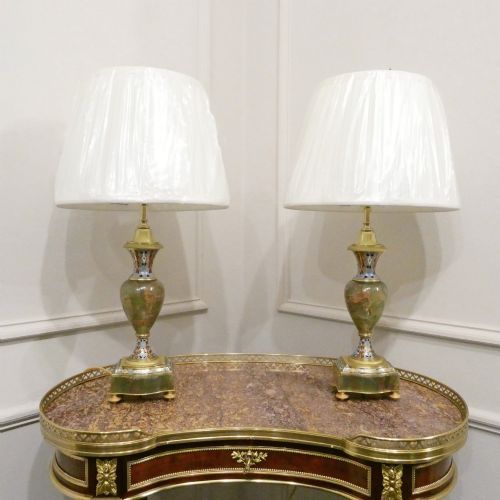
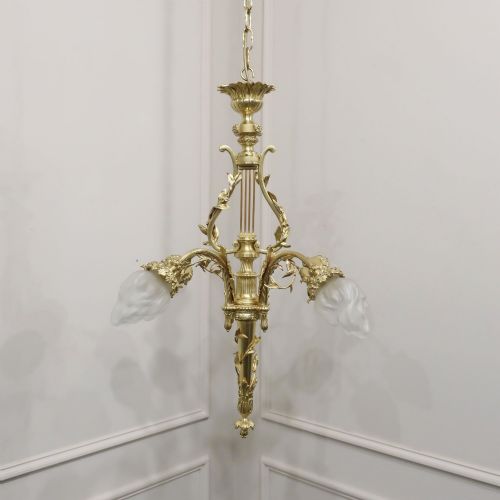
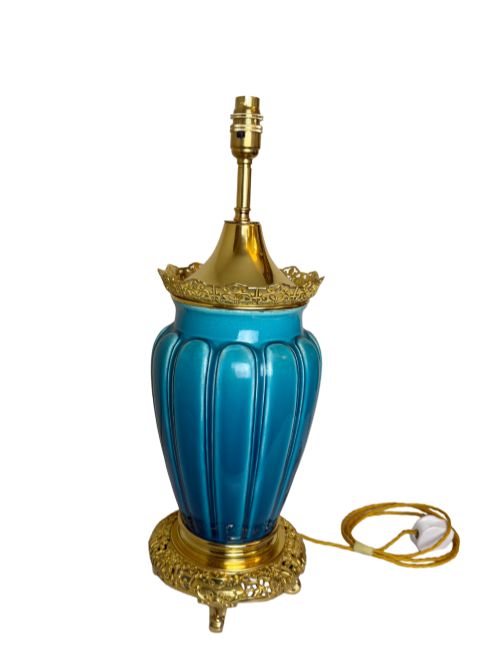
French ormolu lamps are lighting fixtures shaped as table lamps, candelabra, urns, and cassolettes, originating largely across the nineteenth century. These pieces combine cast metal mounts with bodies of marble, porcelain, glass, or onyx. Buyers seeking french ormolu lamps frequently encounter pairs designed for symmetrical placement.
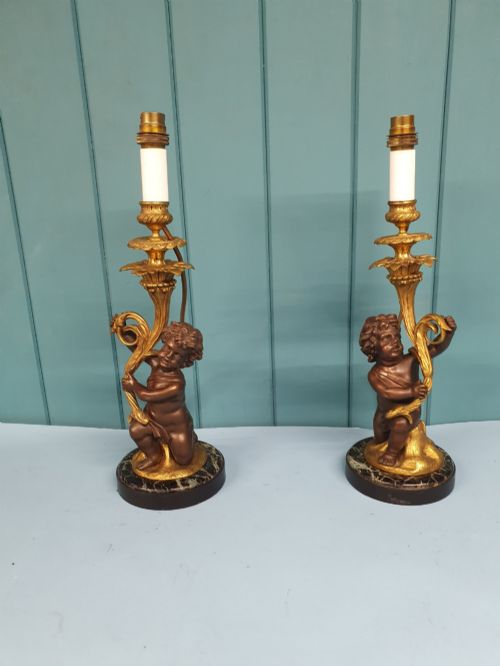
The decorative styles draw heavily from French Neoclassical, Rococo Revival, Grand Regency, and Empire traditions. Motifs include cherubs, classical urns, and intricate floral or scrollwork mounts. Most surviving examples represent conversions from earlier candelabra, vases, or oil lamps.
Materials and Construction
Makers utilised bronze, gilt metal, brass, and genuine ormolu for the metallic elements, applying fire-gilding techniques to achieve a deep, durable surface lustre. These metal mounts were cast and chiselled before assembly.
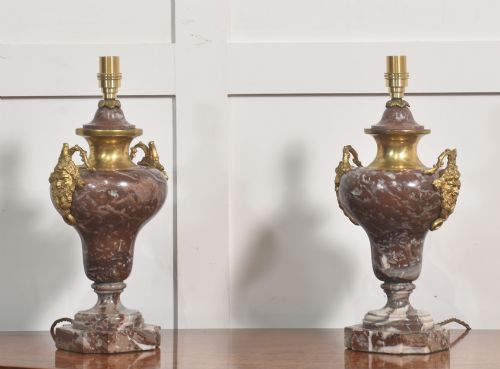
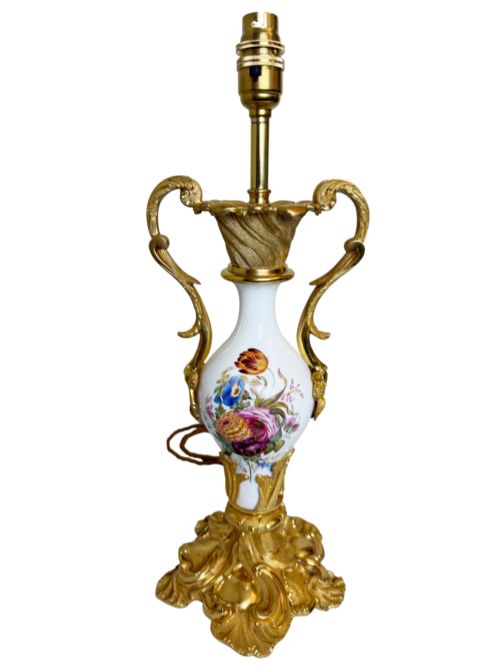
Bodies incorporate variegated, red, and grey marble, alongside cut glass, crystal, onyx, and ceramic elements such as Japanese Imari or Sevres porcelain. Silk components frequently appear in the surviving lighting shades.
Retail Price Guide 2026
Typical UK retail prices for french ormolu lamps, calculated from the Sellingantiques database of over a million retail prices indexed since 2003. This retail price guide relies exclusively on Sellingantiques data; no external sources or auction records are used, so the figures do not describe the wider market.
Several cherubs double as illumination engineers, holding up wiring routes with permanent nineteenth-century expressions of bewildered effort.
Evaluating Quality
The selection and turning of the body materials, such as heavy variegated marble or unblemished porcelain, dictate the overall weight and balance. Integrated figural work, particularly patinated bronze cherubs combined with crisp ormolu, marks the higher tier.
Brocot
The French Ormolu Lamps Glossary
- Ormolu
- Gilt bronze produced by applying a mercury and gold amalgam to a bronze base and heating it. This historic technique yields a rich, golden surface finish.
- Cassolette
- A decorative vessel featuring a reversible lid, allowing it to function as a perfume burner or a vase. Many were later adapted into table lamps.
- Candelabra
- A branched candlestick designed to hold multiple tapers. Several examples in this category were converted into electric lamps.
- Sevres
- Porcelain produced by the French royal manufactory, recognised for fine enamel work and distinctive ground colours. These porcelain sections are frequently framed in ormolu mounts.
Frequently Asked Questions
Were these always electric lamps?
Most of these pieces began life as oil lamps, candelabra, or decorative vases before undergoing later conversion to electricity. The wiring and fittings are generally twentieth-century additions.
The underlying bodies and mounts date to the nineteenth or early twentieth century, maintaining their original decorative purpose while adapting to modern domestic interiors.
How do I clean ormolu mounts?
Ormolu requires gentle dusting with a soft, dry brush to protect the delicate gold layer beneath. Moisture and abrasive cleaners damage the historical fire-gilding.
Preserving the original surface patina is essential for maintaining the character and historical integrity of nineteenth-century gilt bronze work.
Why are most of these offered as pairs?
Symmetry governed nineteenth-century interior design, particularly for mantelpieces, sideboards, and large tables. Workshops produced matching sets to balance room layouts.
Matching pairs remain highly sought after by collectors who prefer complete, balanced sets for display.
How do I distinguish Rococo from Neoclassical styles?
Rococo designs feature asymmetrical scrolls, naturalistic foliage, and playful cherubs. Neoclassical pieces rely on strict symmetry, urn shapes, and classical architectural motifs.
Examining the mount details and body forms quickly reveals which nineteenth-century revival period influenced the maker.