
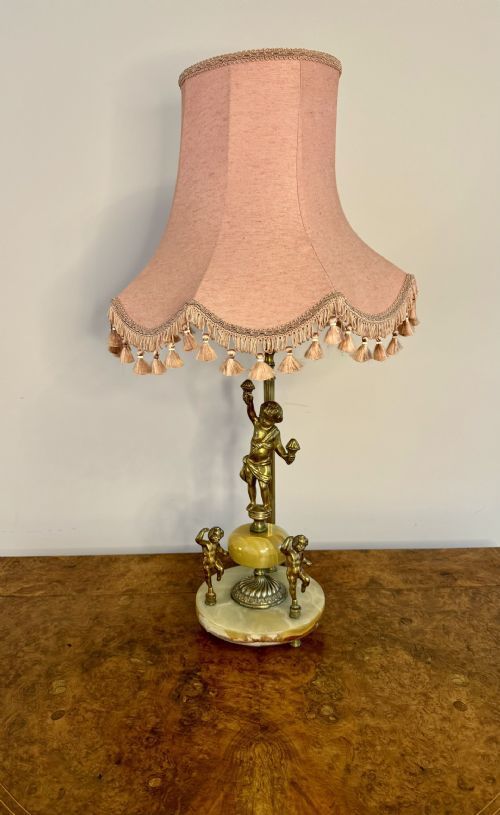


Brass Putti Lamp
These brass putti lamp examples combine cast metal figures with domestic lighting, offering decorative character drawn from nineteenth and early twentieth century design.
Brass Putti Lamp
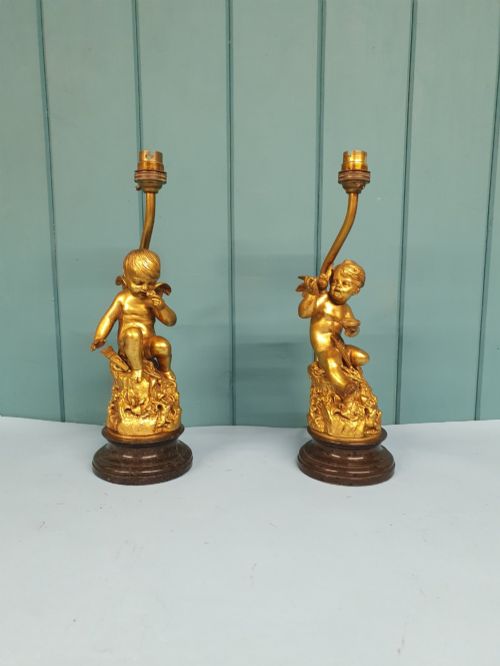
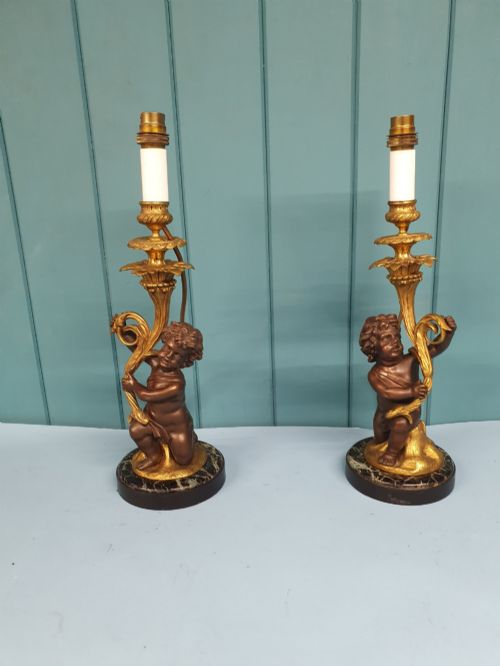
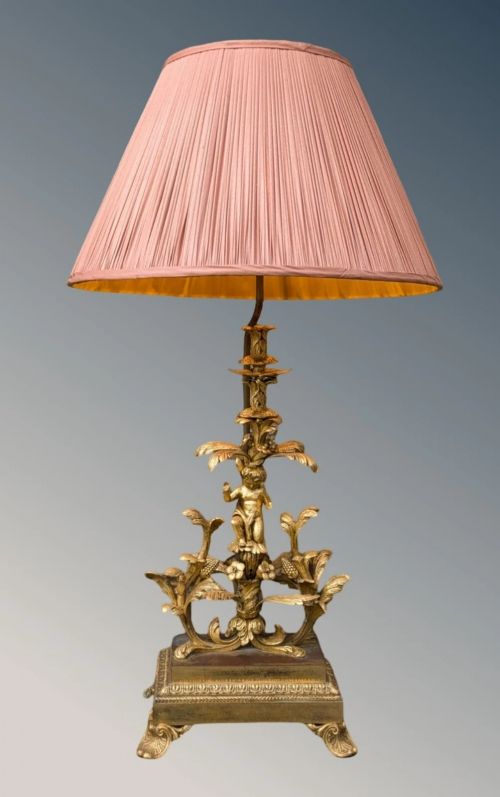
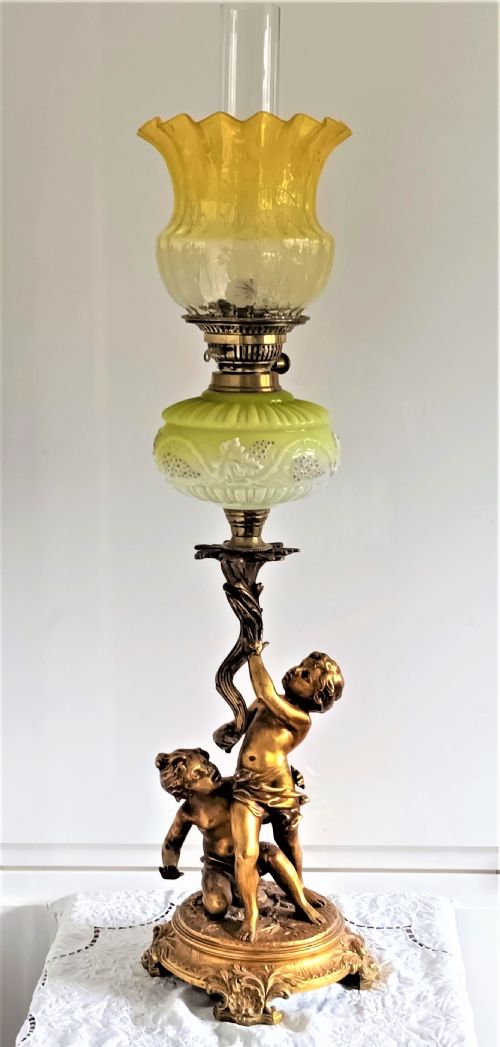
A brass putti lamp brings figurative sculpture into lighting, featuring winged cherubs cast in metal alongside oil reservoirs, candle arms or bulb fittings. Most options found here are table lamps, often encountered in pairs from the nineteenth century through the 1930s.
The decorative vocabulary draws heavily from French Rococo Revival and Victorian styles, placing figures amidst natural scrolls, acanthus leaves or dolphins. Beyond simple table pieces, the form extends to wall sconces, oil lamps, and chandeliers with cherub arms.
Materials vary widely beyond plain metal, incorporating marble and onyx bases, porcelain bodies from factories like Meissen and Sitzendorf, and glass shades. These diverse combinations mean each lamp functions as both a light source and a sculptural centrepiece.
How they were made
Metals such as brass, bronze and ormolu were shaped through casting, often finished with gilding or patination to highlight the detailed modelling of the putti. Many pieces started life as oil lamps or bronze statuettes before later conversion to take electrical fittings.
Pricier examples integrate luxury materials like carved marble, polished onyx and hand-painted porcelain elements. Glass and fabric components were added to diffuse the light, paired with metal armatures designed to hold shades securely.
Some cherubs double as marine riders, sharing their lamp bases with determined dolphins.
What varies in quality
The integration of secondary materials sets finer lamps apart, particularly when combining hand-painted porcelain figures with fire-gilded bronze mounts. Matched pairs also carry distinct advantage over single conversions or mismatched components.
Sitzendorf·Meissen
The Brass Putti Lamp Glossary
- Putto
- A plump, often winged male child figure frequently depicted in classical and Renaissance art. These chubby infants appear widely as the central sculptural motif on these lamps.
- Ormolu
- Finely chopped high-karat gold applied to a bronze base using a mercury amalgamation process. This rich surface treatment provides a warm, durable finish seen on French pieces.
- Rococo Revival
- A nineteenth century design movement reviving the asymmetrical scrolls, shell motifs and ornate curves of the eighteenth century. This aesthetic dominates the ornamentation of these figural pieces.
- Sitzendorf
- A German porcelain factory active through the nineteenth century known for intricate decorative figures and lamp components. Their marked pieces appear alongside Meissen porcelain elements in domestic lighting.
Brass Putti Lamp: Frequently Asked Questions
How do I wire an old lamp?
Rewiring typically involves replacing perished internal cords with modern braided flex while retaining the original brass holders and weighted bases where possible. Professional testing ensures the metal body is properly earthed.
Working with antique metalwork requires care to preserve patinated surfaces while updating the internal electrical components to meet current safety standards.
Were these always electric?
Many examples began as oil lamps or candle sconces before conversion to electricity during the twentieth century. Some started purely as bronze statuettes adapted later to house lamp fittings.
This history of adaptation means buyers often encounter altered burners, drilled bases, or added wiring channels that record each piece's domestic evolution.
How do I clean brass and bronze?
Dusting with a dry, soft brush protects vulnerable patination and delicate gilt surfaces from unnecessary wear. Aggressive metal polishes strip away age and historical colour.
Gentle cleaning with a microfibre cloth keeps the cast details clear without risking the rich tones built up over decades of handling.
What styles accompany putti lamps?
French Rococo Revival and Victorian designs provide the primary decorative framework, featuring elaborate scrolling foliage, dolphins, and classical urns. Edwardian and Art Nouveau versions introduce simpler lines or altered material pairings.
Matching these pieces to a room depends on the surrounding woodwork and whether the finish relies on bright gilt bronze or warm patinated brass.