
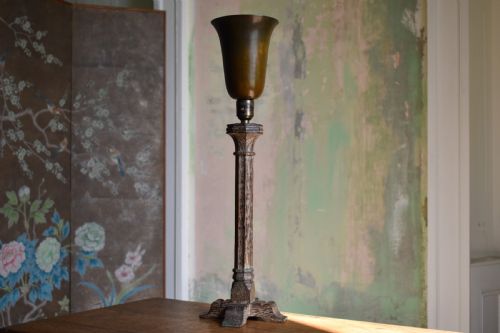


Carved Timber Table Lamp
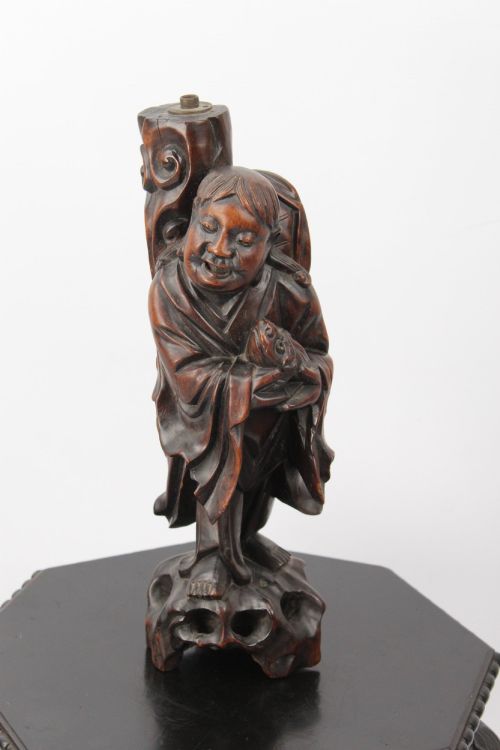
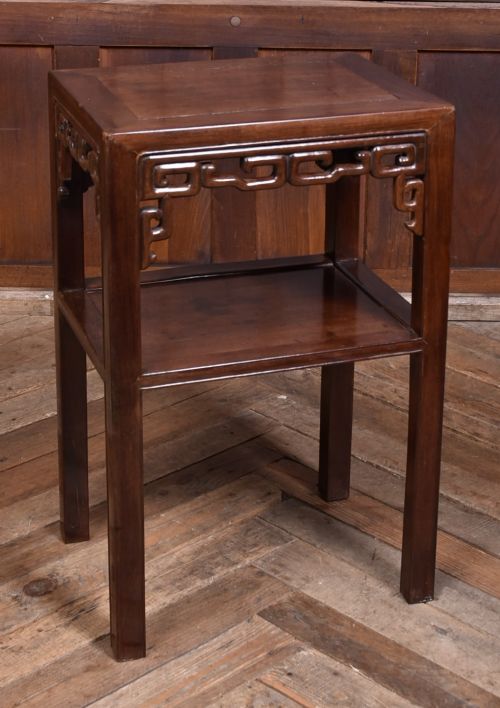
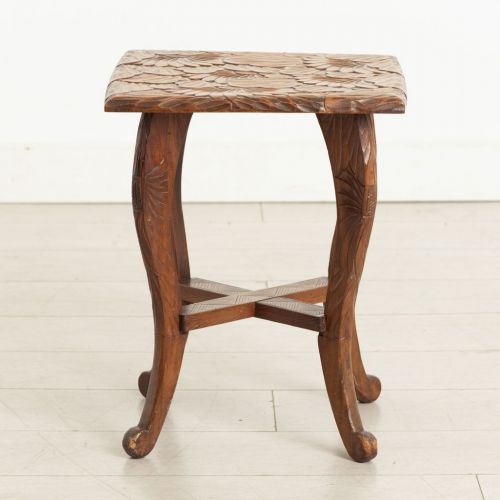
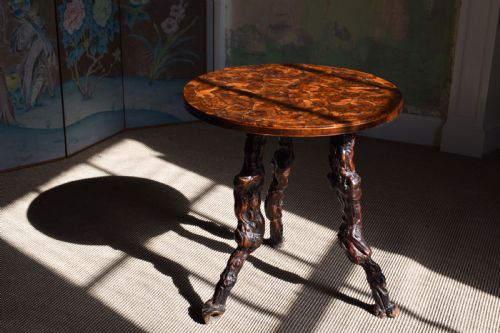
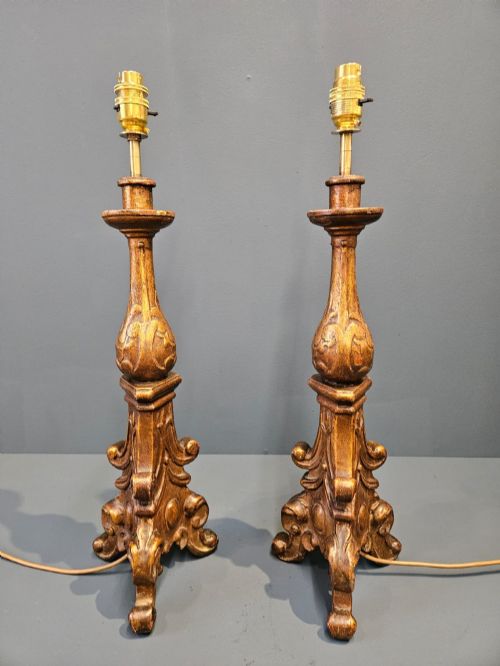
These carved timber table lamp examples bring sculptural warmth to an interior, shaped from varied hardwoods and root wood.
Carved Timber Table Lamp
A carved timber table lamp brings functional illumination together with sculptural woodworking, drawing on styles from the Victorian period through to the 1930s. Buyers searching for a carved timber table lamp encounter pieces shaped from root wood, teak, linden, and walnut.
The selection ranges from European Black Forest and oak designs to Anglo-Indian, Indonesian, and Chinese root wood carvings. Many pieces originate from the early twentieth century, reflecting Edwardian tastes and Arts and Crafts movements alongside Victorian conventions.
How they were made
Carved timber table lamps rely on traditional joinery and hand-carving techniques applied to dense materials like oak, walnut, rosewood, and exotic hardwoods. Makers selected timber based on grain pattern and workability, allowing deep relief carving or organic root forms.
Surface treatments vary from polished finishes that highlight the natural figure of the walnut and mahogany to limed oak and painted surfaces. Brass fittings and fabric shades frequently accompany the turned or carved timber bases.
Listings feature items dated from the 19th Century through to the 1930s, constructed in oak, walnut, rosewood, and root wood.
What varies in quality
Quality rests in the crispness of the hand-carving and the selection of the timber, whether dealing with native oak or imported huali hardwood. Depth of detail in figural elements, such as cherubs or root wood contours, defines the upper tier of execution.
Structural integrity of the timber base and the preservation of original patination separate standard production from exceptional examples. The harmony between the carved wooden body and the overall proportions dictates visual success.
Liberty of London·Anton Seuffer
The Carved Timber Table Lamp Glossary
- Root wood
- Timber sourced from the root system of a tree, prized for twisted, gnarled growth patterns that lend themselves to sculptural lamp bases.
- Hardwood
- Timber from broad-leaved trees such as oak, walnut, teak, and rosewood, offering the density required for intricate carving.
- Patina
- The surface sheen and colour acquired by timber through age, handling, and regular polishing.
- Arts and Crafts
- A design movement prioritising traditional craftsmanship, visible grain, and simple construction over mass production.
Carved Timber Table Lamp: Frequently Asked Questions
How do I date a carved timber table lamp?
Dating relies on stylistic clues from periods like the Victorian era, Edwardian period, and the 1920s, alongside the type of timber and wiring methods used.
Examination of the wood patination, carving style, and any associated brass components helps narrow down the decade of production.
What woods are typical for these lamps?
Common materials include oak, walnut, rosewood, teak, and various Asian root woods. Each timber offers distinct weight and grain characteristics.
European species like linden appear in Black Forest pieces, while exotic hardwoods feature in Chinese and Indian imports.
How should I clean a carved wooden base?
Dust gently with a dry, soft cloth to prevent buildup in the recessed areas of the carving. Avoid chemical sprays that can strip the historic polish.
Applying microcrystalline wax periodically helps nourish the timber and maintain the natural lustre of the surface.
Are these lamps electrified originally?
Many early twentieth-century and late nineteenth-century timber lamps were adapted from candlesticks or manufactured specifically for electricity as domestic lighting evolved.
Contemporary buyers should check the wiring to ensure the internal components meet modern safety standards.