
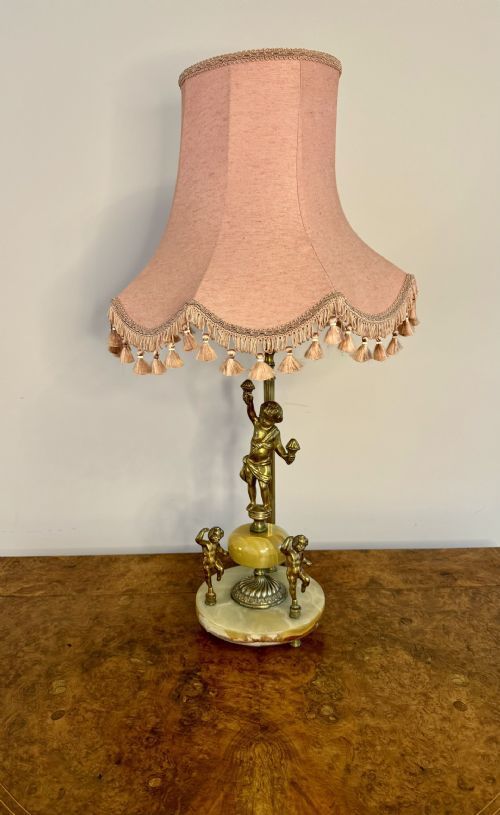
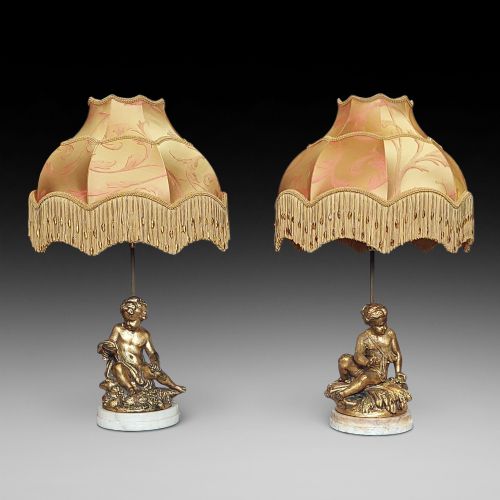


Antique Cherub Table Light
An antique cherub table light brings figural warmth and sculptural grace to a room, cast in bronze or shaped in porcelain.
Antique Cherub Table Light
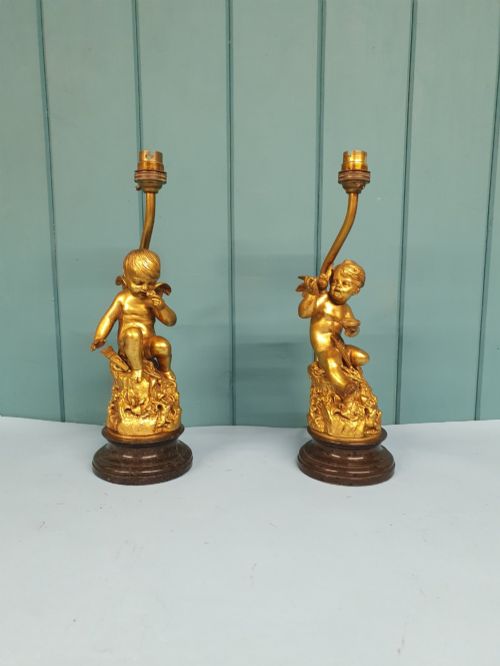
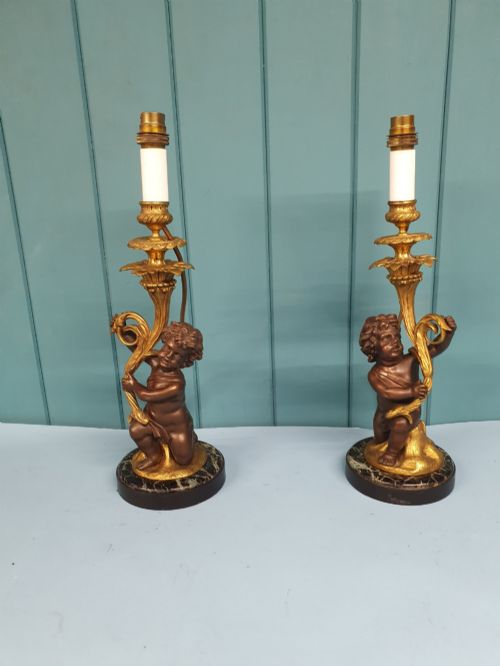
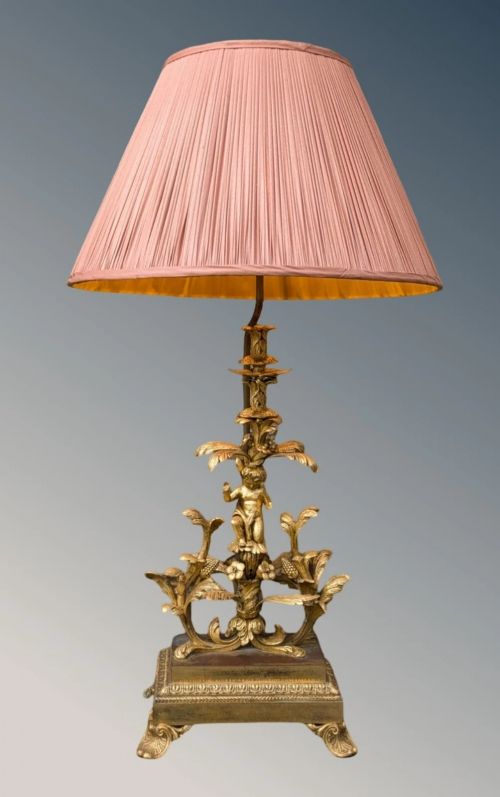
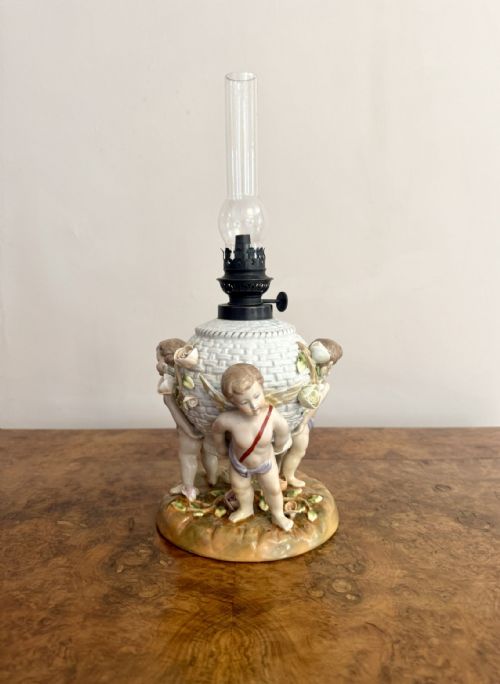
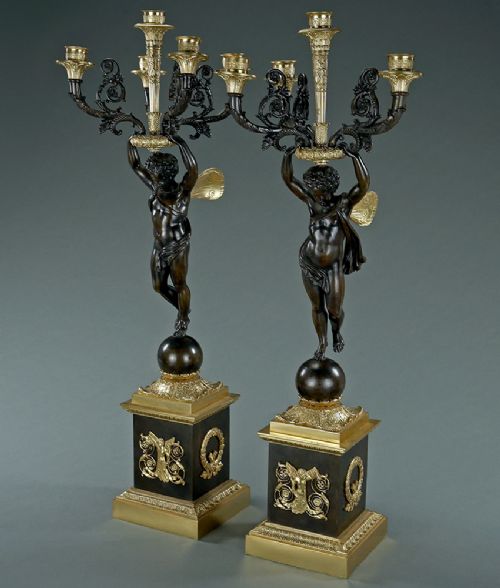
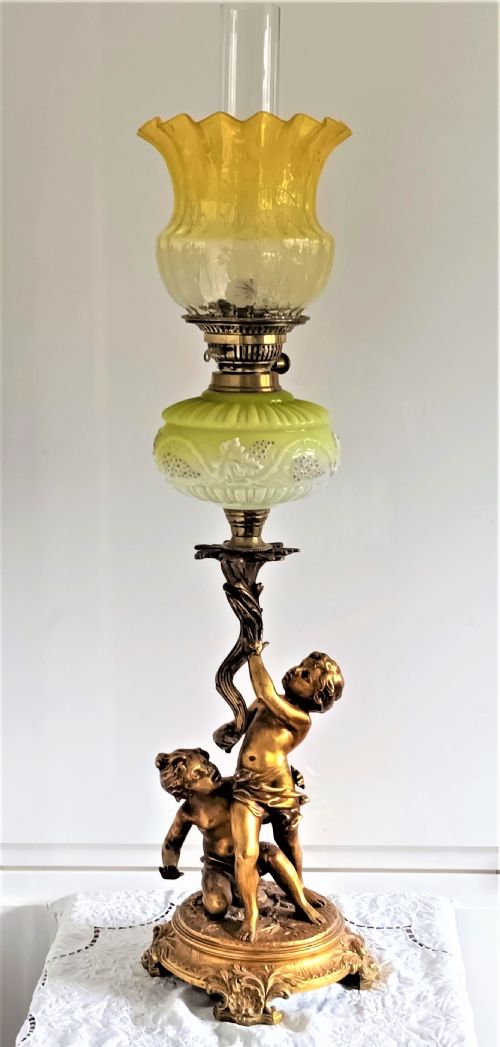
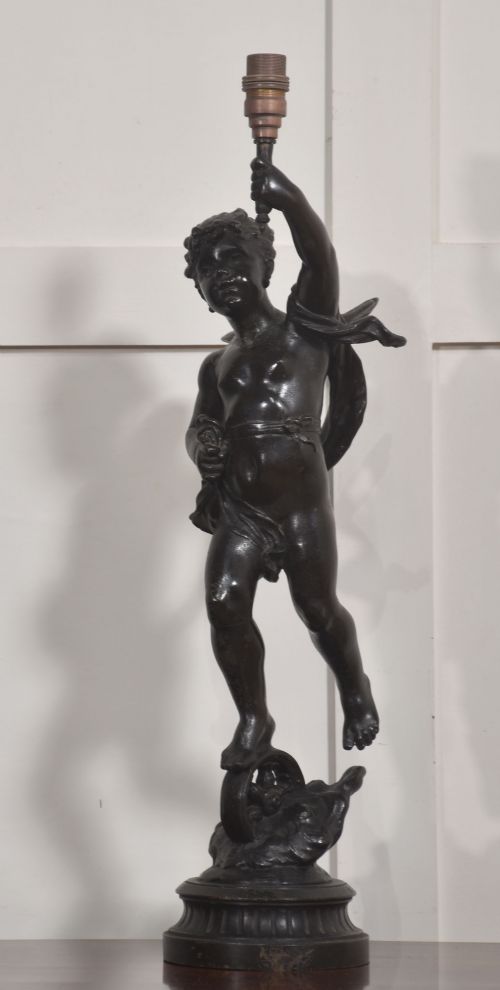
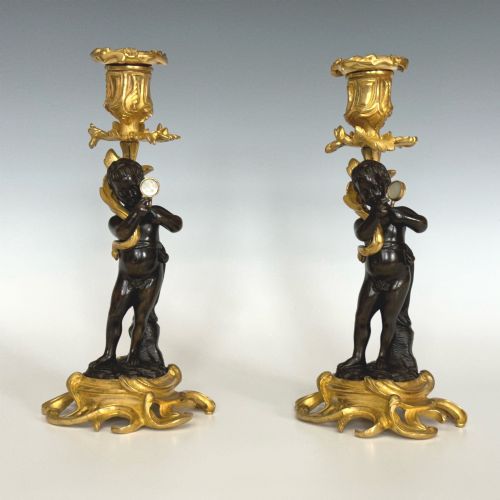
An antique cherub table light combines figural charm with functional illumination, taking the form of converted candelabra, oil lamps, and dedicated table lamps. These pieces draw on French Empire, Louis XVI, and Rococo Revival styles to place winged figures amid scrolling mounts.
Buyers meet pairs and single examples most often from the nineteenth and early twentieth centuries, set upon marble bases or cast entirely in metal. The figures appear as putti or cherubs supporting candle sockets, torchères, or electrical fittings adapted from earlier oil reservoirs.
Materials and Construction
Maker workshops utilised cast bronze, gilt bronze, ormolu, and brass to build the structural bodies and sculptural cherubs, frequently combining patinated dark metal with bright gilded highlights. Marble provided heavy, stable footings, while porcelain from factories such as Sitzendorf and Meissen added delicate painted detail to lamp bodies and oil urns.
Surface decoration involved chasing, gilding, and enamelling on metal components, alongside shaped fabric shades and gilt toleware. Many pieces began life as oil lamps, candlesticks, or candelabra before later conversion to electricity.
Listings span the nineteenth century up to 1930, uniting French Rococo Revival styles with German porcelain factories and English Victorian production.
Distinctions in Execution
Quality rests in the crispness of the metal chasing and the anatomical modelling of the cherub figures, where sharp hand-finishing separates fine work from softer, mass-produced castings. The weight and selection of the supporting marble base or the delicacy of the porcelain painting signal the grade of the original commission.
The integration of light fittings during conversion work dictates how cleanly the piece preserves its historical character. Complete pairs matched in patination and material hold greater visual coherence than assembled pairs.
Sitzendorf·Meissen·Sevres·Aug Moreau
The Antique Cherub Table Light Glossary
- Ormolu
- Gilded bronze produced by applying a mercury and gold amalgam to a bronze base, creating a durable golden surface common in French decorative arts. It provides the warm metallic glow seen on many nineteenth-century mounts.
- Putto
- A plump, naked male child figure, frequently winged, used widely in Renaissance and Revival sculpture. These figures form the central motif of an antique cherub table light.
- Candelabra
- A branched candlestick holding multiple lights. Many examples on the market were converted to table lamps by running electrical wiring through the central column.
- Toleware
- Painted or lacquered sheet metal items popular in French interiors. Toleware components often supply colour and contrast beneath fabric shades.
- Torchère
- A stand or tall candlestick designed to carry a light source. In lamp form, the cherub often holds the torchère aloft as a stem.
Antique Cherub Table Light: Frequently Asked Questions
How do I wire an antique lamp safely?
Most antique lamps require rewiring by a qualified professional to meet modern electrical safety standards. Wiring can be threaded through existing channels without altering the original metal or porcelain structure.
Ask your electrician to use modern insulated flex that complements the brass, bronze, or gilt finish of the base.
Are these lamps converted from older pieces?
A large proportion of these table lights began life as oil lamps, candlesticks, or candelabra during the nineteenth century. Later conversions integrated electrical fittings into the original burners or candle sockets.
Evidence of adaptation is normal and forms part of the functional history of lighting fixtures from this period.
How do I clean gilt bronze and ormolu?
Dust metal surfaces gently with a soft, dry brush to prevent the accumulation of grit in recessed chasing. Avoid abrasive cleaners, water, or chemical polishes that can strip the original mercury gilding.
Preserving the natural patination maintains the visual depth and historical integrity of the bronze work.
How do I tell Victorian from Edwardian pieces?
Victorian pieces often favour heavier Rococo Revival forms with robust cast bronze, ormolu, and detailed porcelain figures from continental factories. Edwardian examples frequently introduce lighter onyx bases and more restrained decorative mounts.
Stylistic cues in the casting and the choice of associated materials help separate mid-nineteenth-century work from early twentieth-century production.