



Oriental Figural Lamp
These oriental figural lamp pieces combine carved root wood, painted porcelain and metal mounts to illuminate period interiors.
Oriental Figural Lamp
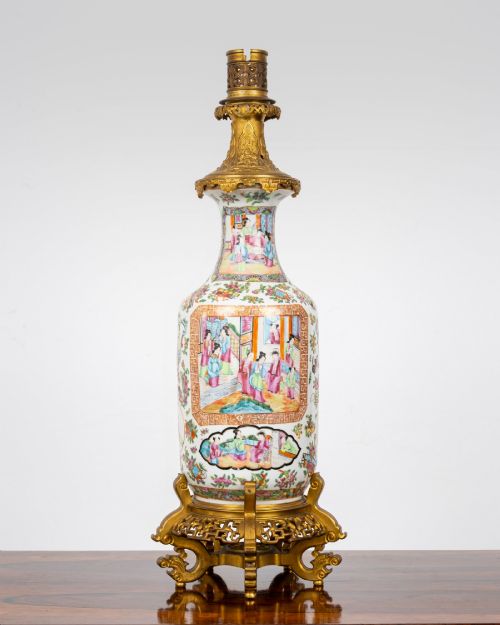
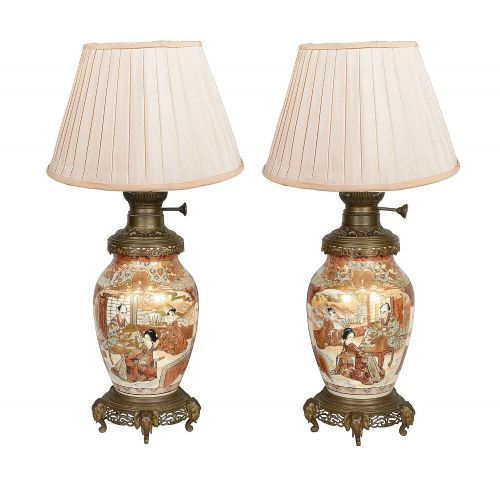
When you search for an oriental figural lamp, you are looking at functional table lighting constructed from converted Asian vessels, carved wood figures and decorated ceramics. These objects date across the nineteenth century and the early twentieth century, taking the form of table lamps adapted from older vases, ginger jars and carved root wood sculptures.
The versions you are most likely to meet on this page include pairs of Satsuma and Famille Rose porcelain bodies, alongside carved root wood figures from nineteenth century China and Japan. Many examples incorporate metal mounts, ranging from gilt bronze to simple brass fittings, which were added during the conversion process to hold electrical components securely.
Materials and construction methods
Makers utilised hard materials such as porcelain, earthenware and dense root wood, shaping ceramics on the potter's wheel and carving timber to follow natural organic contours. Glazes include turquoise, crackleware and polychrome enamel decoration painted by hand onto Satsuma and Rose Medallion surfaces.
Metalworkers added brass and gilt bronze mounts to secure the ceramic bodies and provide stable bases for lamp fittings. Fabric shades of silk completed the construction, though original shades rarely survive intact on these converted vessels.
Several root wood lamps double as wise old men peering intently from your sideboard.
Distinctions in craftsmanship and condition
Conversion methods also separate standard pieces from superior examples, particularly where ceramic vessels remain undrilled or retain original mounts. The harmony between the base vessel and the upper electrical hardware determines the overall visual balance of the piece.
The Oriental Figural Lamp Glossary
- Satsuma
- A type of Japanese earthenware featuring a crackled ivory glaze and richly painted polychrome enamels enhanced with gold. These ceramics were frequently converted into table lamps during the early twentieth century.
- Famille rose
- A palette of Chinese porcelain enamels dominated by opaque pink, introduced during the Qing dynasty. Pieces decorated in this style often served as bodies for nineteenth century table lighting.
- Root wood
- Dense timber sculpted from the root systems of trees to exploit natural gnarled shapes, often representing figures or mythical beasts in Chinese and Japanese carving. Such sculptures form striking figural lamp bases.
- Gilt bronze
- Copper alloy coated with a thin layer of gold, utilised for decorative mounts and bases. This material provides durability and a rich metallic sheen to finished lamps.
- Crackelware
- Pottery featuring a network of fine cracks intentionally created in the glaze during firing. This texture appears across various nineteenth century Chinese vases adapted for illumination.
Oriental Figural Lamp: Frequently Asked Questions
How do I wire an antique lamp safely?
Most antique lamps require rewiring with modern flex and a certified plug to meet current safety standards before regular daily use. A qualified electrician can replace old internal components while preserving the historic body and exterior mounts.
Ensure the internal threaded rod and cord grip are properly secured to protect the ceramic or wood body from undue stress during handling.
Were these lamps originally made for lighting?
Nearly all ceramic bodies and carved figures started life as decorative vases, ginger jars or standalone sculptures rather than lamps. Craftsmen later adapted these objects by adding wiring, lamp holders and metal bases to suit Western domestic interiors.
As a result, the primary vessel often predates the electrical conversion by several decades or more.
How do I clean porcelain lamp bodies?
Dust ceramic surfaces gently with a soft, dry brush to prevent dirt accumulation in painted recesses and crackled glazes. Avoid chemical solvents or abrasive cloths that might damage delicate overglaze enamels and gilding.
Keep moisture away from the electrical fittings and base joins entirely during maintenance.
How do I distinguish Satsuma from Famille Rose?
Satsuma wares are typically earthenware with an ivory crackle glaze and dense gold leaf highlights over detailed figures and floral motifs. Famille Rose porcelains utilise a hard paste body characterised by opaque pink enamel painting within broader Chinese decorative schemes.
Examining the base and the weight of the ceramic helps confirm the specific regional origin.
What kind of shade suits these lamps?
Neutral fabric shades in silk or linen allow the intricate patterns of the ceramic or wood base to remain the focal point. Proportion is key, ensuring the shade diameter complements the width of the lamp body without overwhelming the figural details.
Duplux or spider fittings help position the shade at the correct height relative to the bulb holder.