

Vintage Cast Iron Stick Stand
A vintage cast iron stick stand organises heavy wet weather gear in a hallway while bringing robust metalwork into the interior.
Vintage Cast Iron Stick Stand
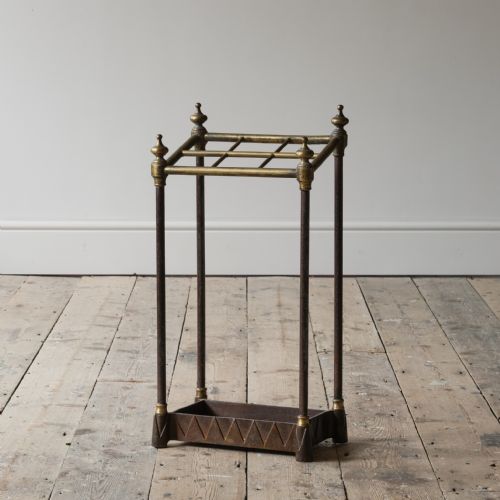
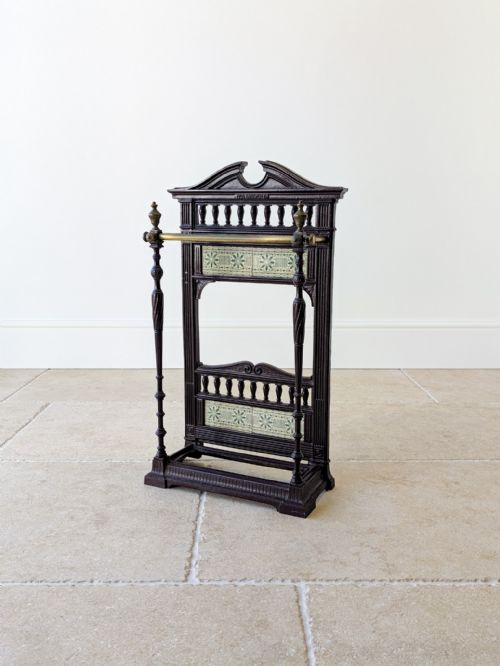
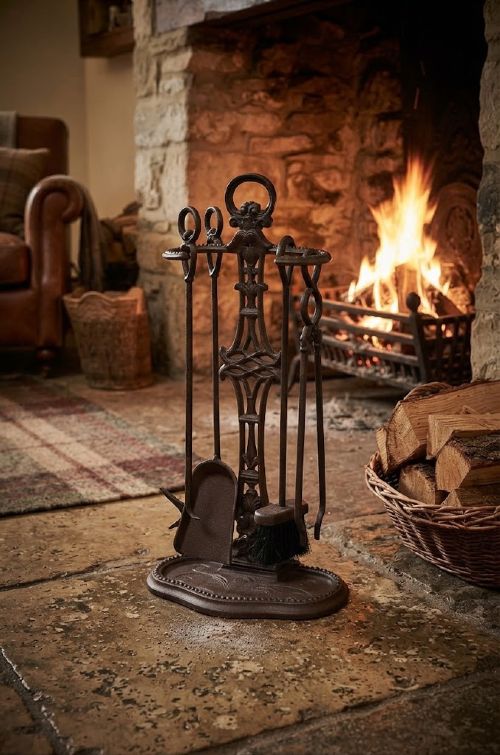
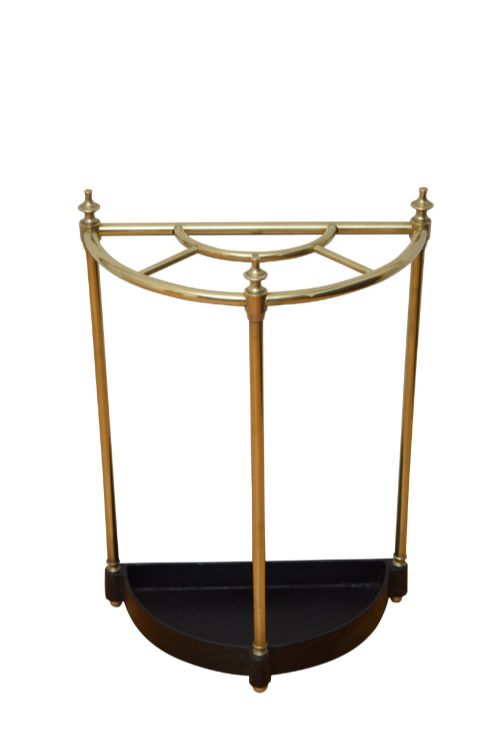
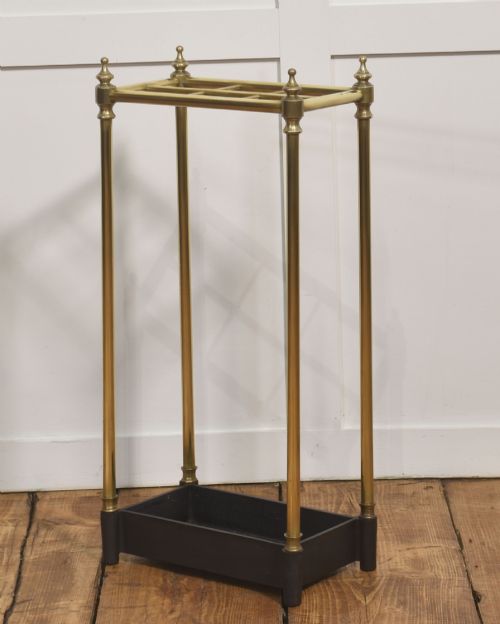
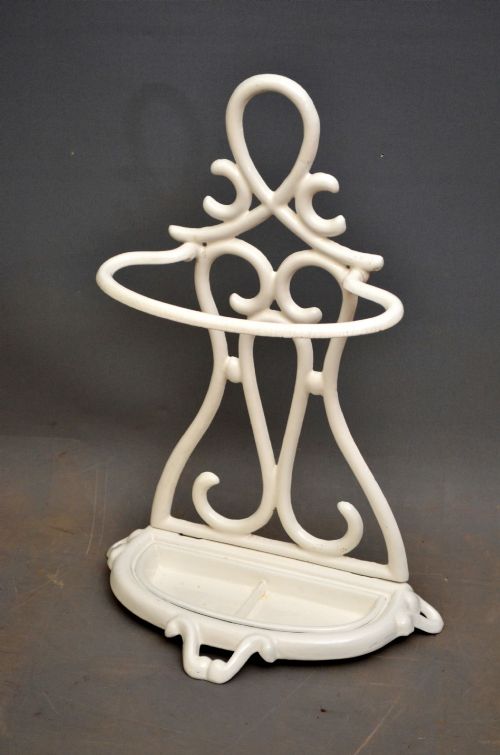
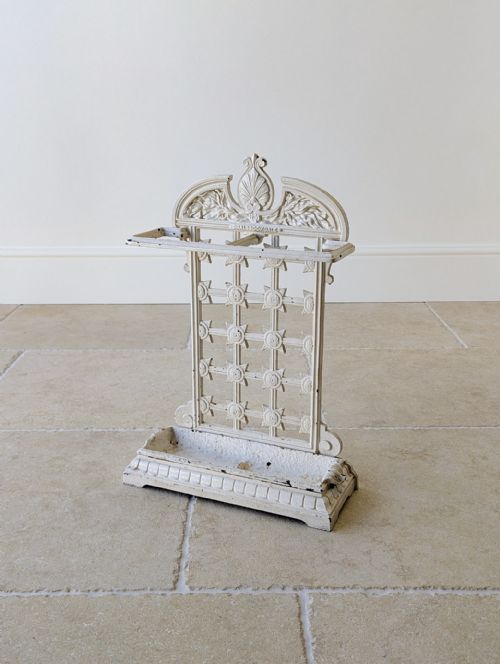
A vintage cast iron stick stand is primarily encountered as a heavy floor-standing hall accessory designed to hold walking sticks, umbrellas and occasionally fire tools. The selection spans the Victorian period, Edwardian eras, through to Art Deco designs of the 1930s.
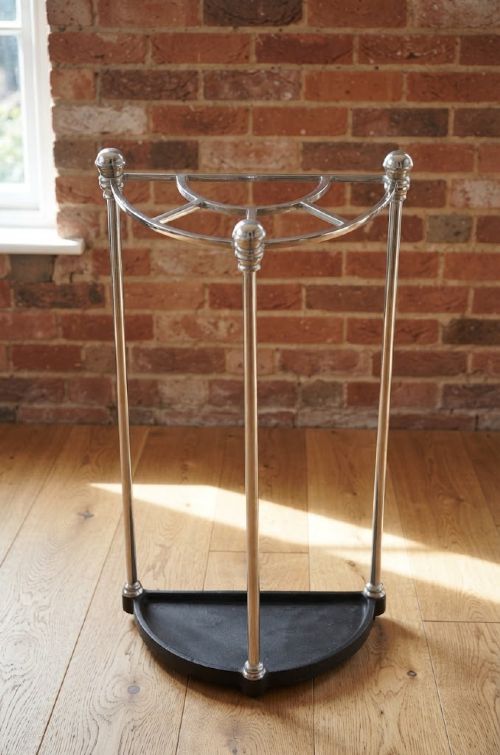
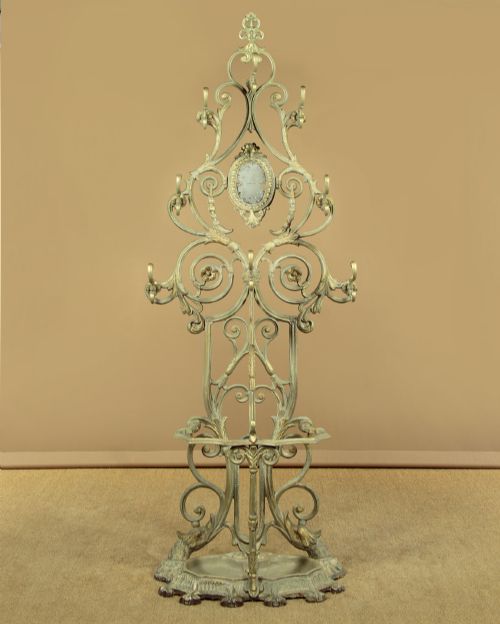
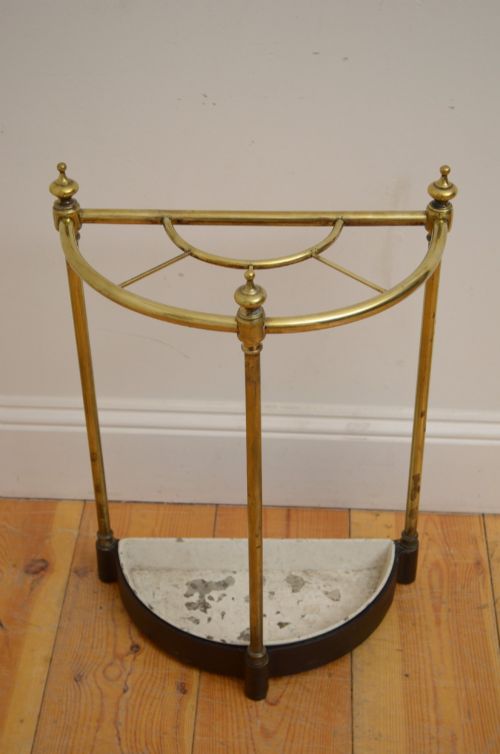
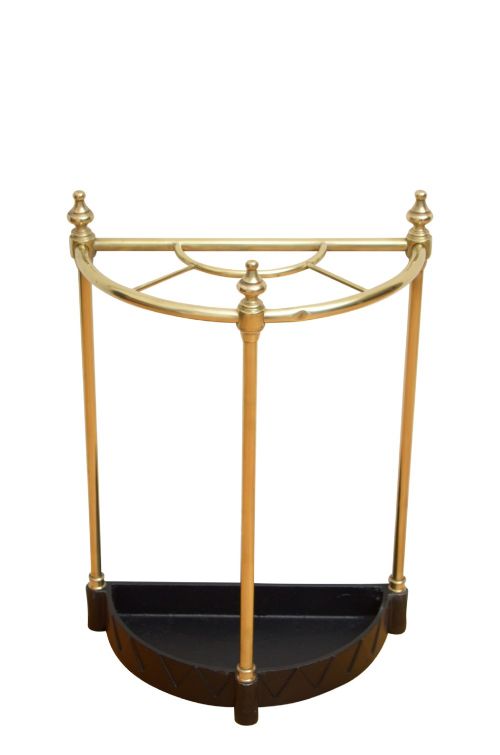
The dominant forms include demi-lune shapes designed to sit flat against a hallway wall, alongside substantial freestanding pieces that incorporate umbrella and stick stands into larger hall stands featuring coat hooks and drip trays.
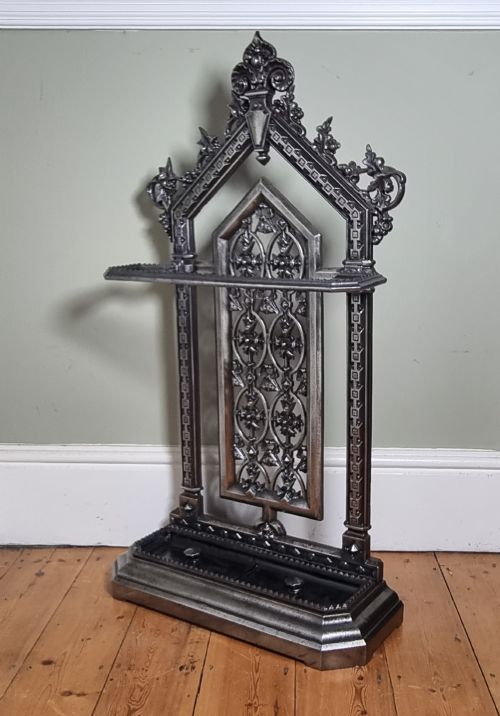
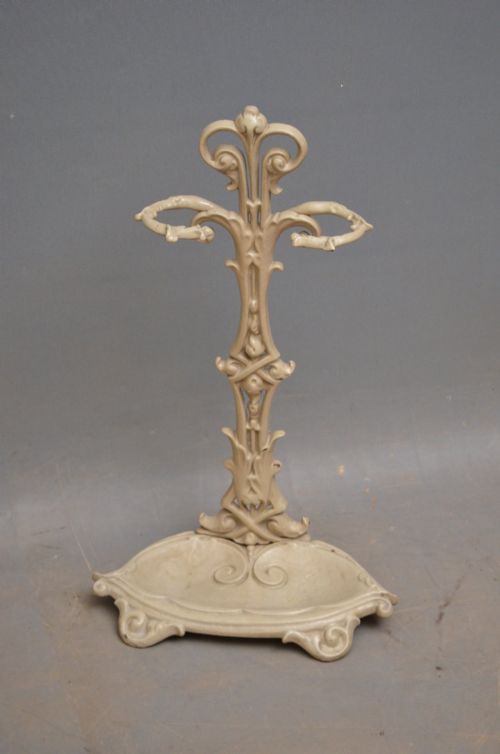
Origins represented on the page stretch from English foundries to French workshops, moving through diverse aesthetic movements from Gothic revivals to organic Art Nouveau curves and faux bamboo or faux bois motifs.
Materials and Casting
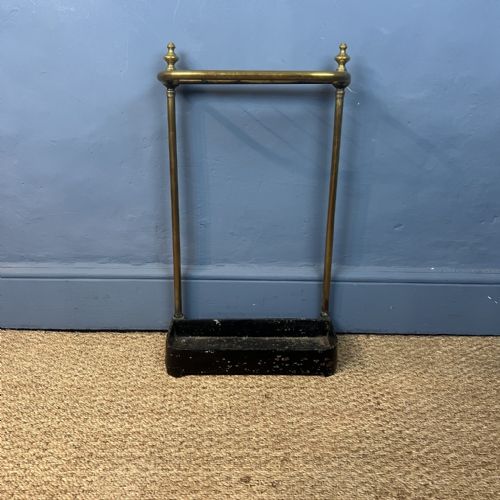
Cast iron forms the structural core of these pieces, poured into intricate moulds to create openwork lattice panels, figural dogs, or naturalistic bamboo and wood-grain textures. Foundries frequently integrated secondary metals, pairing the heavy iron frames with spun brass rails, decorative ball finials, and nickel plating.
Drip management required specialised additions to protect interior floors, leading to the incorporation of ceramic liners, white enamel finishes, and removable dog-tooth trays. Iron sections were often painted black or finished with specialised coatings to prevent corrosion from damp umbrellas.
Cast iron footballing figures stand ready to intercept dropped umbrellas in the hallway.
Design and Detail
Quality in these stands rests upon the crispness of the casting detail and the ambition of the design, separating standard utilitarian foundry output from sophisticated artistic pieces associated with named makers like Coalbrookdale. Sharply defined foliage, clean piercing in openwork panels, and well-modelled figural elements such as gun dogs or footballers indicate superior pattern work.
The integration of mixed materials also dictates the tier of the piece, where substantial brass fittings, original ceramic drip trays, and intact nickel plating elevate the object beyond simple heavy ironwork into refined hallway furniture.
Coalbrookdale·Kenrick
The Vintage Cast Iron Stick Stand Glossary
- Demi-lune
- Half-moon shape designed to fit flush against a wall. This profile allowed large stands to occupy narrow corridors without blocking passage.
- Faux bois
- Imitation of wood grain rendered in cast iron. Makers used this technique to give cold metal an organic, rustic appearance.
- Drip tray
- Removable metal or ceramic tray positioned at the base of the stand. It catches rainwater from wet umbrellas to protect flooring.
- Coalbrookdale
- Prominent English ironfoundry known for decorative castings. Their catalogued designs remain benchmarks for Victorian metalwork.
Vintage Cast Iron Stick Stand: Frequently Asked Questions
Where should a stick stand go?
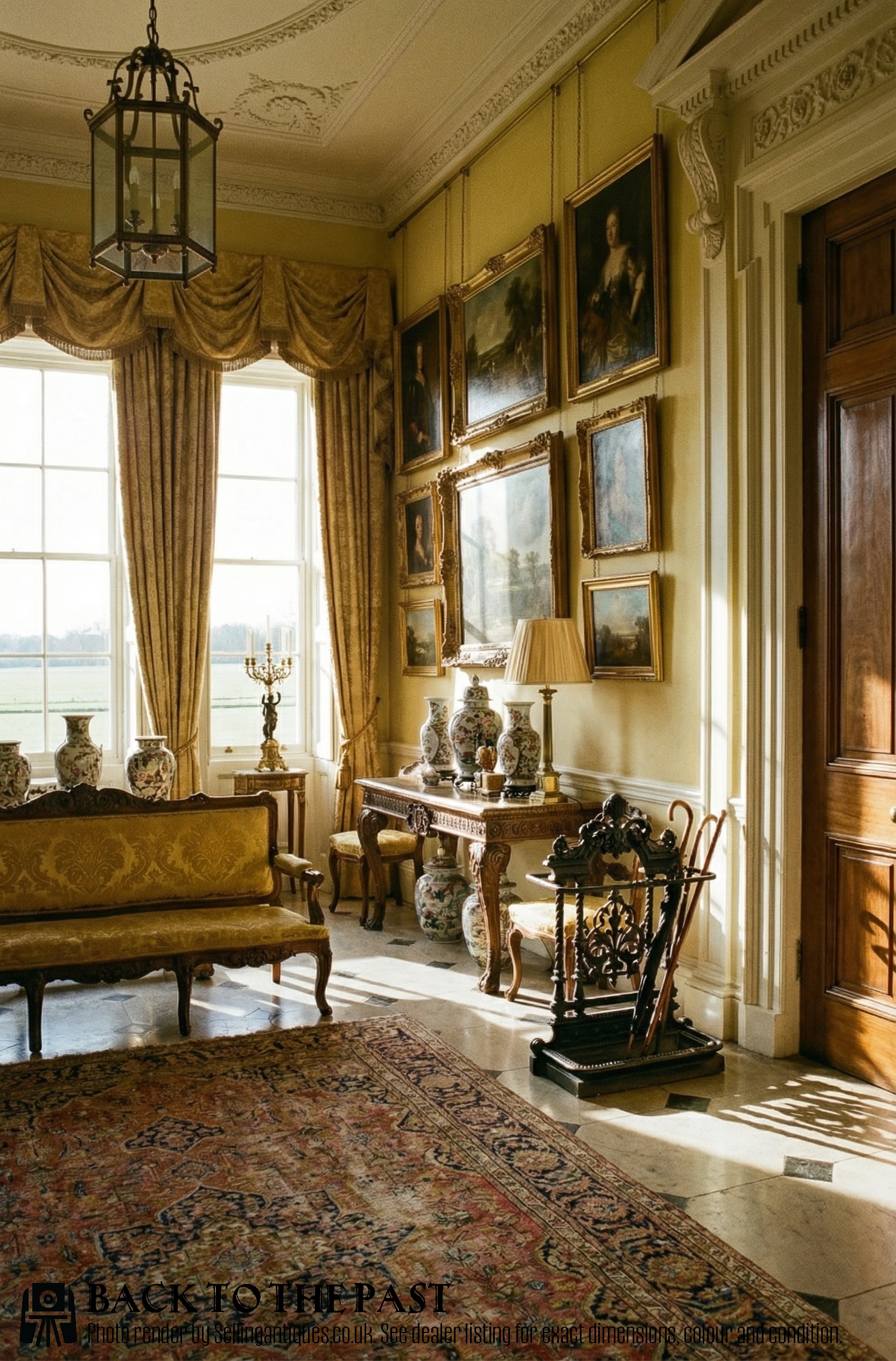
These pieces belong in a hallway, vestibule, or entrance porch where wet umbrellas and walking sticks accumulate after outdoor excursions. Demi-lune versions tuck neatly against narrow corridor walls.
Position the stand near the primary entrance door on a hard floor surface that tolerates occasional moisture escaping from the drip tray.
How do I protect my floor?
Check that the stand retains its original internal drip tray or ceramic liner before placing wet items inside. These components catch pooling water.
If the base lacks an insert, place a small modern tray underneath the frame to safeguard wooden floorboards or carpets from dampness.
How do I clean cast iron?
Dust the intricate openwork regularly with a soft brush to prevent grime from settling in recessed casting details. Avoid harsh chemical cleaners that strip historical painted finishes.
Apply a light microcrystalline wax to bare or painted iron surfaces periodically to maintain the finish and inhibit moisture damage.
Can they hold walking sticks?
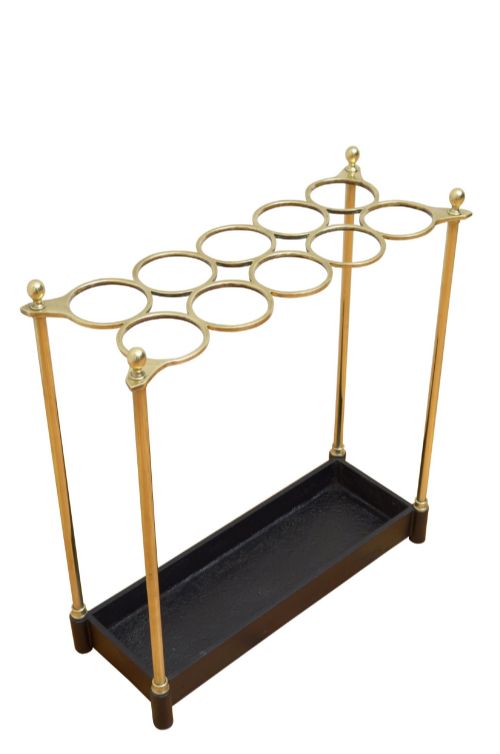
The vertical divisions and ring separators accommodate walking sticks, shooting sticks, and riding crops alongside traditional umbrellas. Narrower dividers prevent slimmer shafts from slipping sideways.
Heavier cast iron frames provide the necessary ballast to support tall, weighted walking aids without tipping over.
How are periods identified?
Stylistic clues within the ironwork point to specific decades, such as organic flowing stems for Art Nouveau or geometric symmetry for Art Deco. Victorian examples often display Gothic revival motifs or heavy pierced foliage.
Maker marks stamped directly into the base metal or registration lozenges offer definitive clues regarding the manufacturing date and foundry origin.