


White Cast Iron Umbrella Stand
A white cast iron umbrella stand brings sturdy hall organisation and crisp Victorian form to an entrance, offering robust metalwork painted in enduring finishes.
White Cast Iron Umbrella Stand
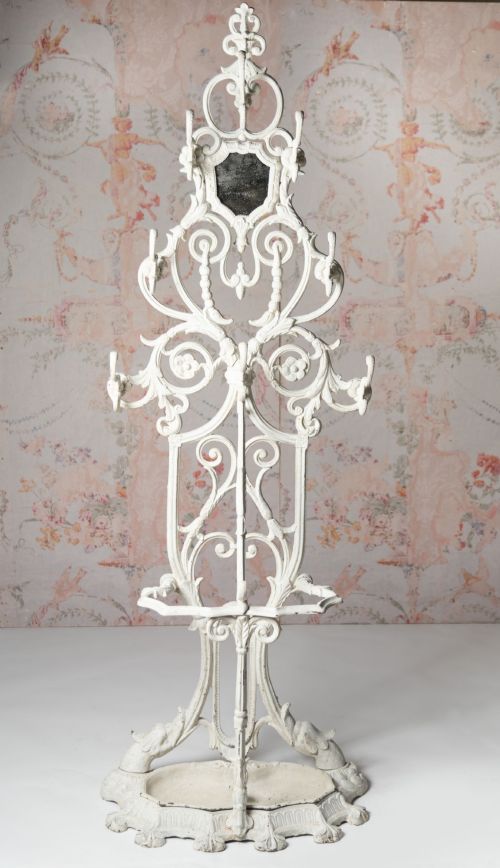
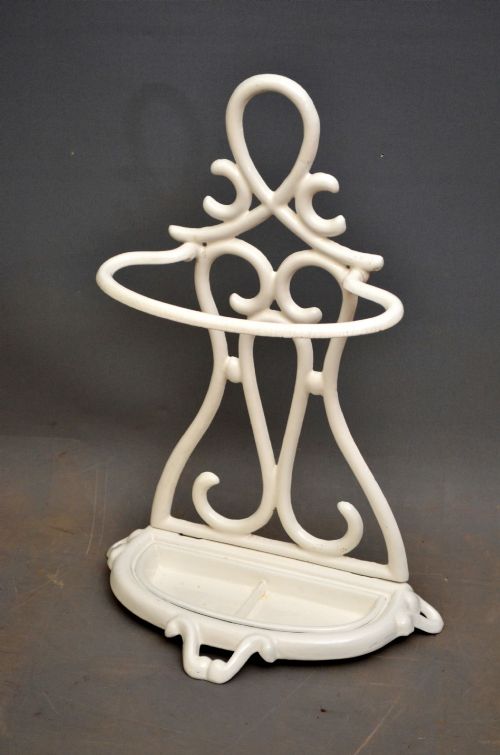
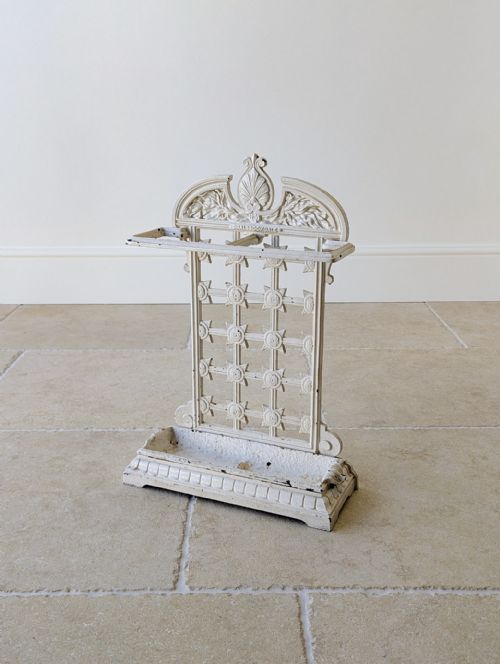
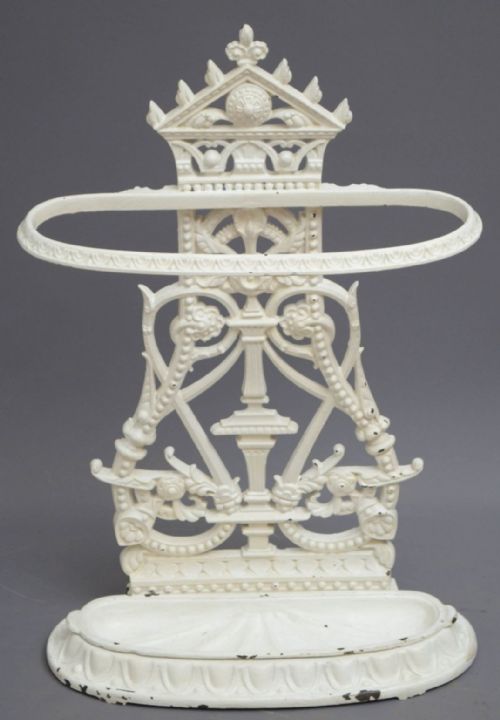
When you search for a white cast iron umbrella stand, you encounter robust hall furniture designed to hold walking sticks, umbrellas, and occasionally coats in nineteenth-century hallways. The forms range from compact stick stands to tall portico coat stands, with umbrella loops and drip pans integrated into their heavy metal frames.
You are most likely to meet Victorian examples on this page, including pieces dated to around eighteen eighty, nineteen hundred, and the late Victorian period. These originate from English and French workshops, utilising cast iron shaped into architectural porticos or organic Rococo Revival and Art Nouveau curves.
The objects serve a practical domestic purpose while establishing a formal architectural presence in an entryway. Their white finish, often applied as paint or enamel over heavy iron, lightens the imposing nature of the metalwork.
How they were made
Foundries produced these umbrella stands by pouring molten iron into sand moulds, creating intricate openwork patterns, structural ribs, and heavy bases designed to catch water drips. This casting technique allowed makers to achieve both rigid structural strength and delicate decorative motifs in a single durable material.
Makers finished the cast metal surfaces with layers of paint or white enamel to protect the iron from rust and brighten the hallway aesthetic. Some examples incorporate sheet metal components for backing or trays, alongside glass elements or umbrella loops fitted securely into the main iron structure.
Listings feature items from the Victorian period, eighteen eighty, nineteen hundred, and the nineteenth century.
What varies in quality
The distinction between standard domestic hall furniture and exceptional pieces lies in the crispness of the casting detail and the ambition of the design. Elaborate Coalbrookdale foundry work or complex architectural portico structures demonstrate superior pattern-making compared to plain utilitarian models.
Proportion and presence separate the ordinary from the remarkable, particularly in taller coat and umbrella stands that maintain balance and structural integrity. The refinement of the openwork scrolls and the integrity of the original enamel or painted finish dictate the standing of the piece.
Coalbrookdale
The White Cast Iron Umbrella Stand Glossary
- Cast iron
- A strong, hard alloy of iron and carbon poured into moulds to create complex decorative and structural forms. It provides the heavy foundation necessary for stability in tall umbrella stands.
- Enamel
- A vitreous or painted protective coating fused or applied to metal surfaces. In these stands, a white enamel finish offers a smooth, durable barrier against moisture from wet umbrellas.
- Portico
- An architectural framework featuring columns and pediments, used here to describe grand hall stands. This style mimics classical building entrances to frame coats and walking sticks.
- Stick stand
- A piece of furniture specifically designed to hold walking sticks and canes upright. These are often integrated into larger hall stands featuring umbrella loops.
- Rococo Revival
- A nineteenth-century design style drawing on eighteenth-century Rococo motifs with asymmetrical C-scrolls and naturalistic plant forms. It appears in the flowing, curved lines of many Victorian stands.
White Cast Iron Umbrella Stand: Frequently Asked Questions
How do I clean a cast iron stand?
Dust the iron surfaces regularly with a soft brush and avoid harsh chemical cleaners that can strip the painted or enamelled finish. Keep the drip tray clean of standing water to prevent corrosion.
Ensure the metal dries completely after any cleaning session to preserve the integrity of the white finish.
Were these stands made for homes?
Victorian households utilised these stands in entrance halls and vestibules to store wet umbrellas and walking sticks before entering the main living spaces. They kept hallways orderly and protected floors from moisture.
Larger versions also accommodated heavy outerwear on integrated coat hooks and rails.
How can I tell the period?
Examine the casting quality, the style of the ornamentation, and the construction methods used in the frame. Victorian and late nineteenth-century pieces display specific decorative idioms like Gothic Revival or Art Nouveau.
Foundry marks and registration numbers cast into the iron can also point to the era of manufacture.
Are all white stands original?
Many cast iron stands received white paint or enamel finishes during their working life, sometimes updated to suit domestic interiors. The evidence shows period pieces with white enamel or painted surfaces dating back to manufacture or subsequent historic maintenance.
Inspect the surface texture to understand how the finish has aged alongside the iron substructure.