




Antique Umbrella Container
An antique umbrella container keeps hall floors dry while bringing tactile warmth to an entrance through heavy brass, coopered oak and sturdy leather.
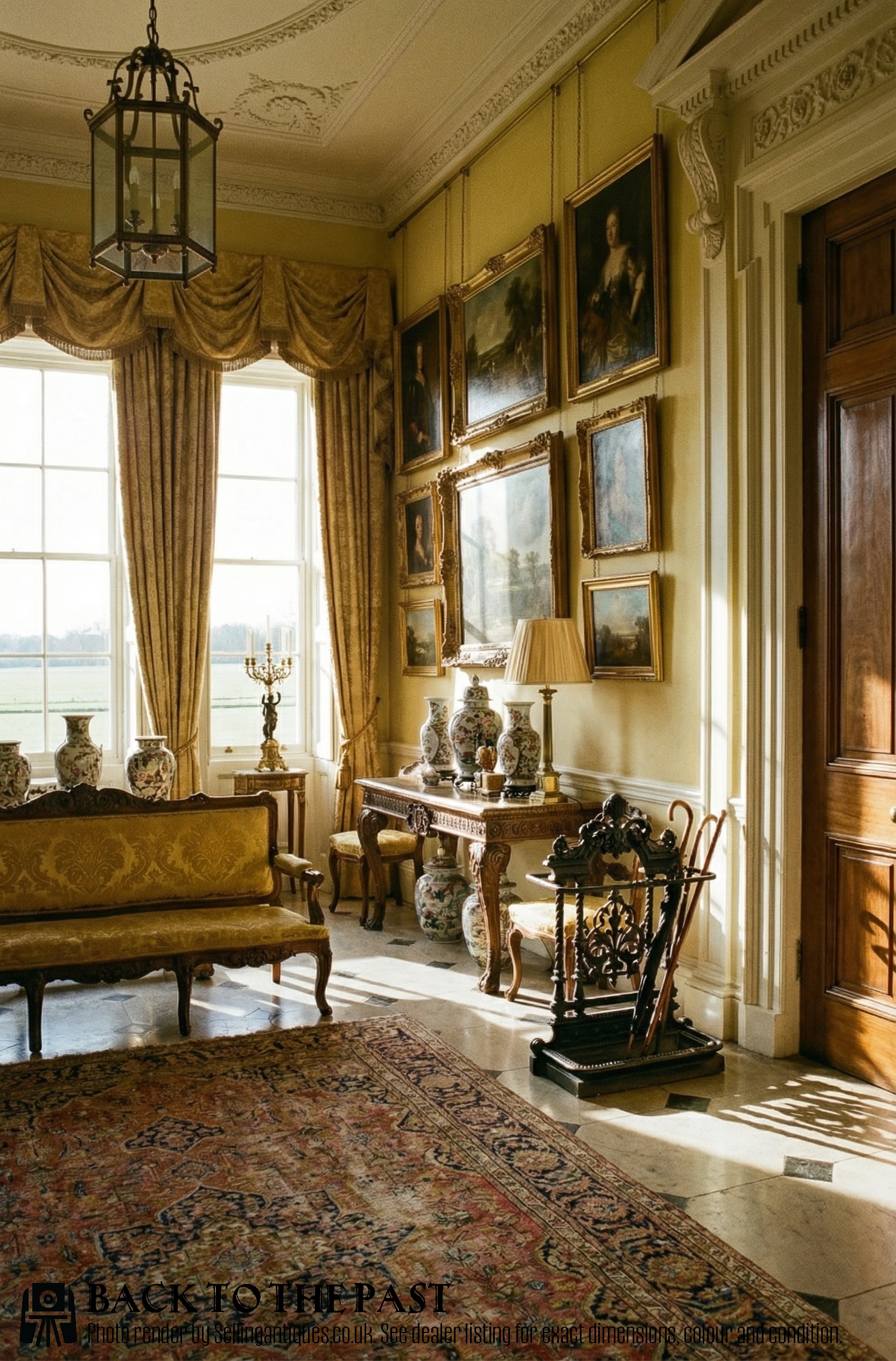
Antique Umbrella Container
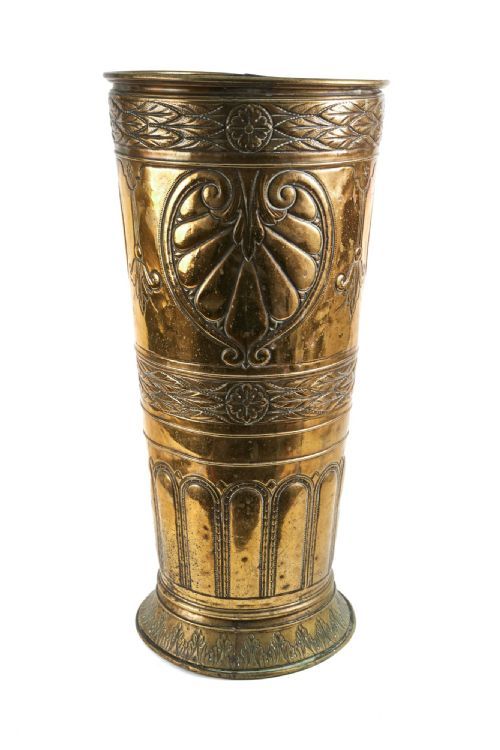
An antique umbrella container serves as a utilitarian hallway vessel designed to hold wet walking sticks, canes and umbrellas. When exploring this selection, buyers frequently encounter heavy brass stands, coopered oak barrels and leather buckets originating from the nineteenth and early twentieth centuries.
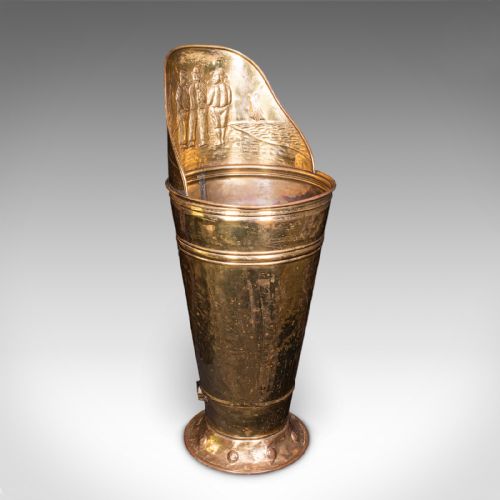
The assortment spans formal Victorian and Edwardian domestic items alongside industrial repurks like cordite shell carriers and French grape hottes. These hall vessels reflect the domestic routines of country houses and urban townhouses alike.
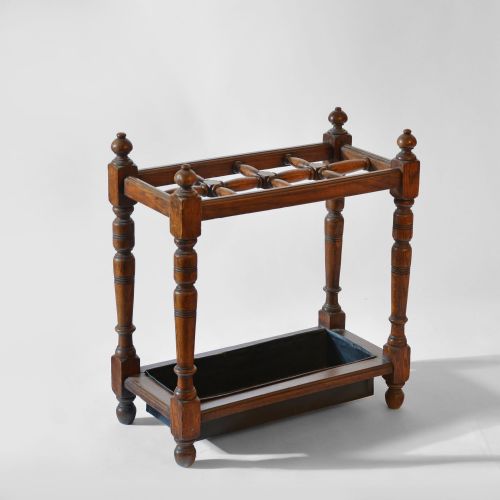
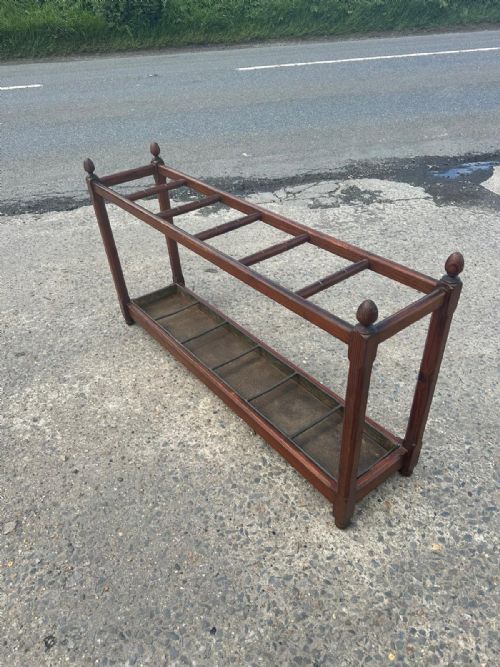
Forms range from demi-lune brass frames to pierced cast iron cylinders and dugout tree trunks. Each piece demonstrates how historical interiors accommodated weather protection in the main entrance.
Materials and construction methods
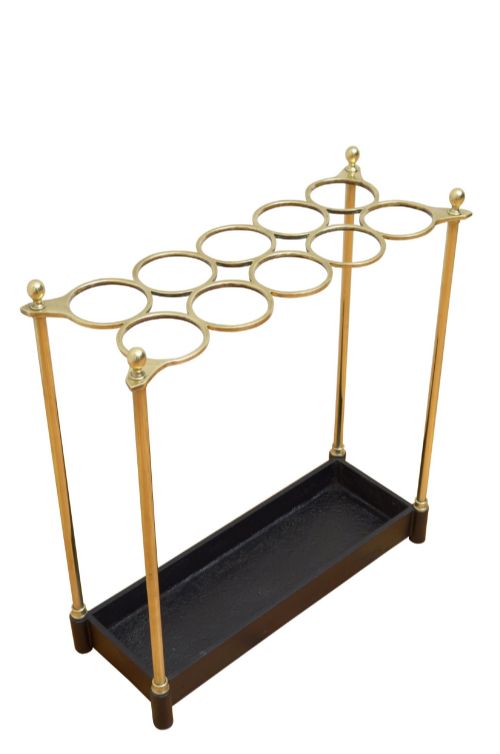
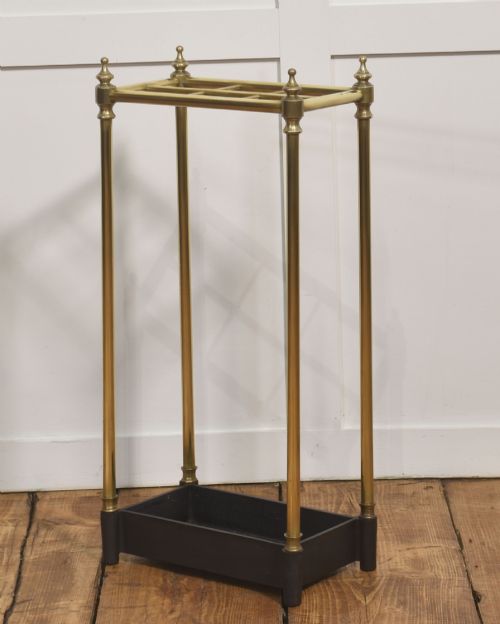
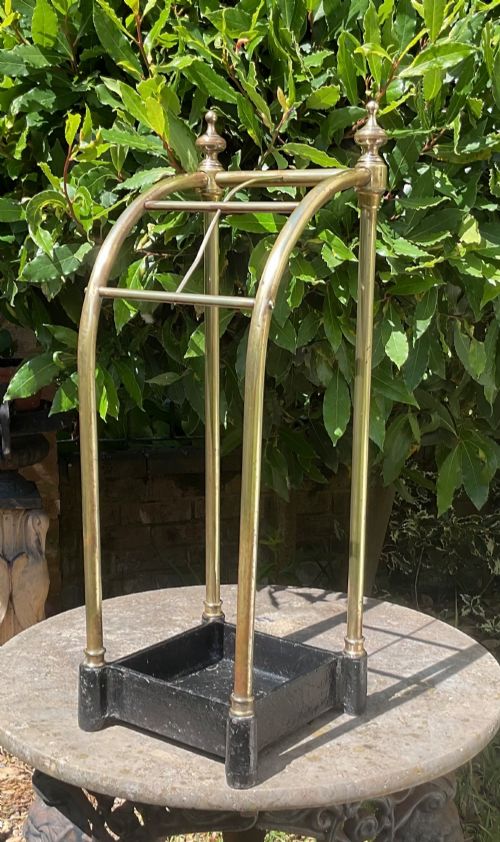
Makers utilised durable metals and dense timbers capable of withstanding constant moisture from wet walking gear. Brass and copper appear frequently, often combined with cast iron bases for stability or formed into riveted sheets.
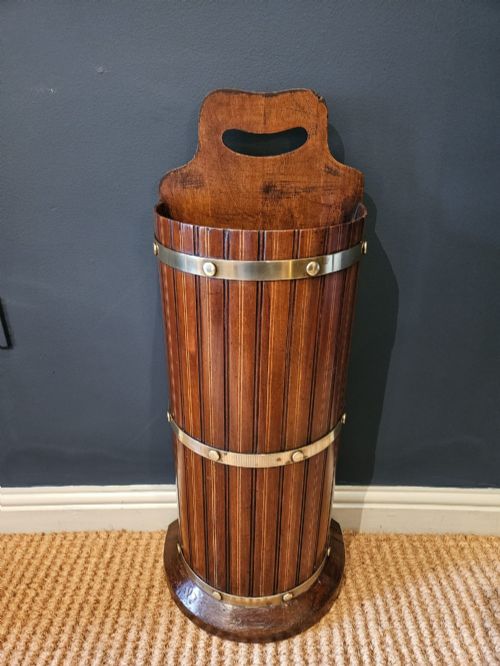
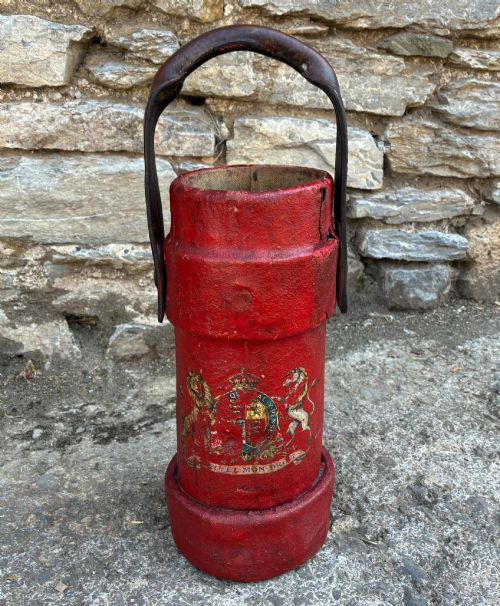
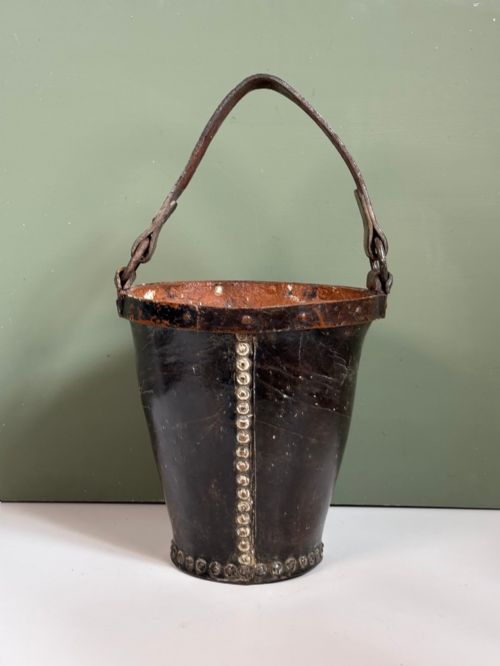
Coopered construction defines the wooden examples, where staves of oak or pitch pine are bound tightly together with metal hoops. Leather items rely on boiled or heavy bridle hides, stitched or riveted to form rigid water-resistant vessels.
Vineyards once filled these rustic grape hottes with heavy harvests before they retired to quiet suburban hallways as umbrella stands.
Judging the calibre of a piece
Quality rests in the integrity of the materials and the precision of the construction rather than mere ornamentation. Coopered vessels demonstrate tighter stave joints and heavier metal banding, while brass items show crisp casting and substantial weight in the finials and bases.
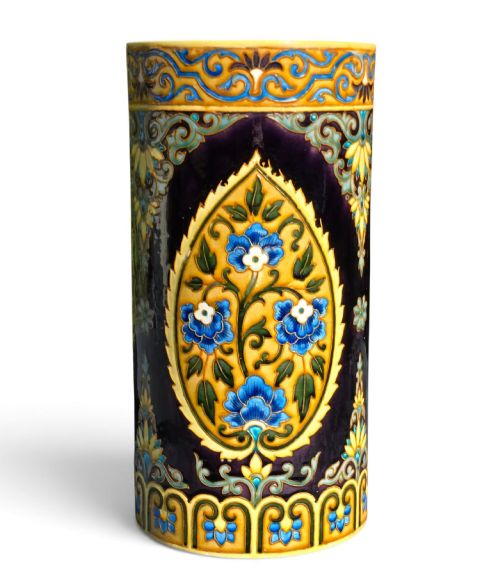
Design ambition separates standard utilitarian receptacles from exceptional examples such as those bearing Iznik-Revival ceramic panels or intricate Gothic tracery. The presence of original drip pans and uncompromised structural joins elevates a piece above routine utility.
Théodore Deck
The Antique Umbrella Container Glossary
- Coopered
- Constructed from wooden staves fitted together and bound by metal hoops, much like a traditional barrel. This method provides the structural strength needed for holding heavy walking sticks.
- Demi-lune
- A half-moon shape designed to sit flat against a hallway wall and save floor space. These semi-circular stands often appear in brass or oak.
- Cordite bucket
- A heavy metal military container originally used to store propellant charges, frequently repurposed in civilian interiors as a sturdy umbrella holder. They are typically fashioned from brass or copper.
- Hotte
- A traditional French backpack carrier, often constructed from wood and metal, utilised during the grape harvest. Examples found in hallways serve as rustic stick receptacles.
- Pierced brass
- Metalwork featuring patterns cut completely through the sheet to allow ventilation and drainage. This technique appears on decorative Victorian stands.
Antique Umbrella Container: Frequently Asked Questions
How do I stop water damaging the floor?
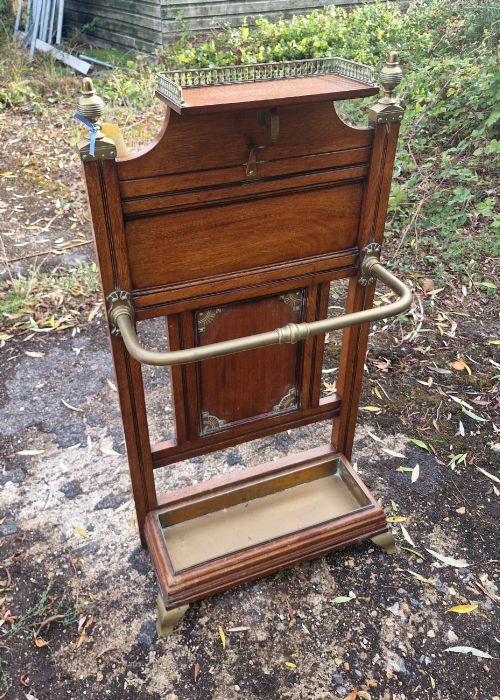
Many traditional stands include removable metal drip pans positioned inside the base to catch runoff from wet umbrellas. Placing a small ceramic saucer inside vessels that lack an original liner provides similar protection for wooden floorboards.
Ensuring the container is fully dry before storing items long-term prevents interior moisture buildup and preserves the integrity of leather or wood.
Were these always meant for umbrellas?
Several pieces designed as fire buckets, military ammunition carriers or agricultural grape hods were later adopted into domestic hallways for wet weather gear. The Victorians frequently repurposed robust industrial and agricultural vessels for household convenience.
Purpose-built hall stands emerged alongside these repurposed items, specifically proportioned for walking canes and umbrella handles during the nineteenth century.
How do I clean brass and copper?
Gentle dusting with a soft cloth preserves the natural aged patina that collectors value on antique metalwork. Avoid harsh chemical polishes that strip away historical character and leave an overly bright finish.
Oak and pine surfaces benefit from occasional application of beeswax to nourish the timber grain and protect against atmospheric moisture.
Can I use them for walking sticks too?
These containers were originally manufactured to hold both walking sticks and umbrellas simultaneously in busy hallways. The generous proportions and deep wells accommodate various cane lengths without tipping.
Heavier cast iron and brass models provide the necessary ballast to support multiple wooden walking sticks safely.