


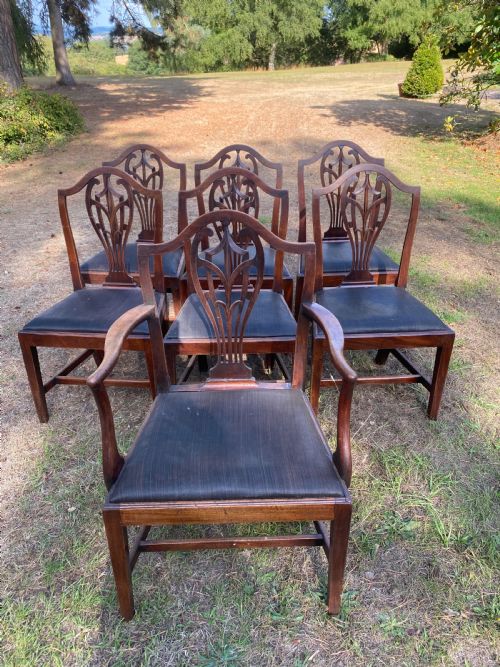
Vintage Carved Dining Chair
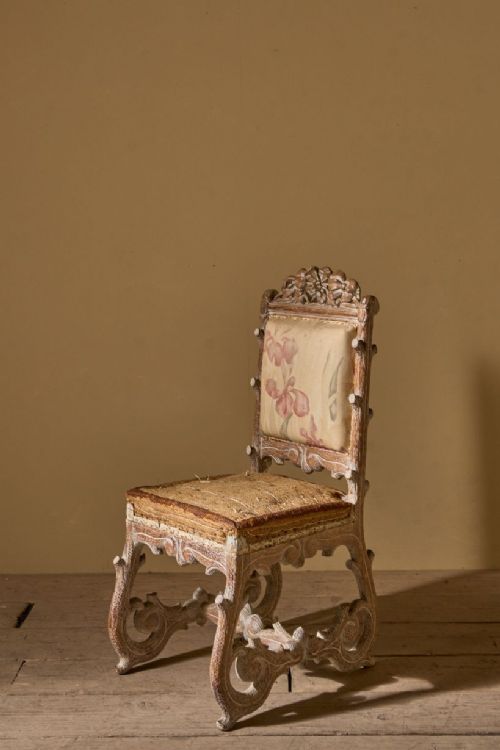
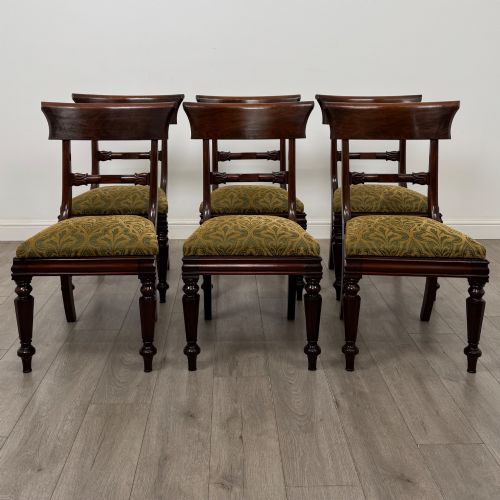
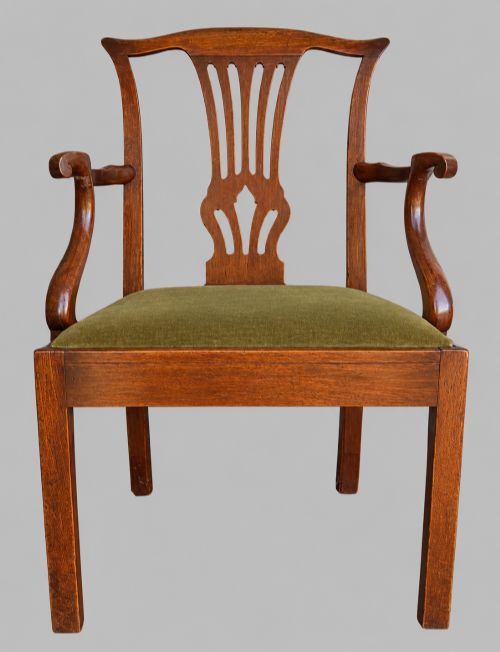
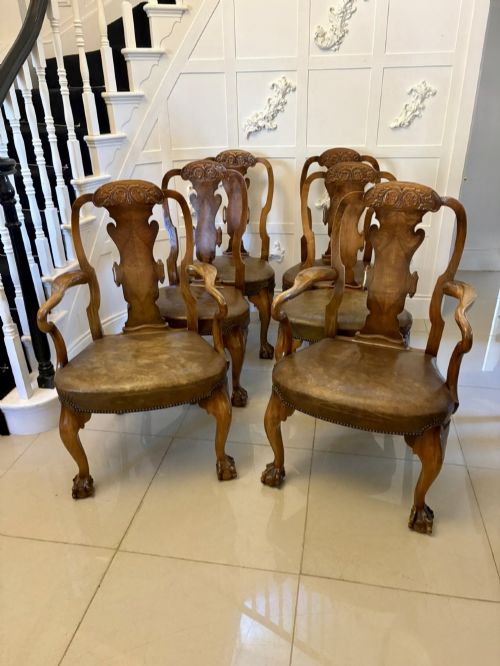
A vintage carved dining chair brings dependable character to the table, spanning oak, mahogany, and walnut forms from centuries past.
Vintage Carved Dining Chair
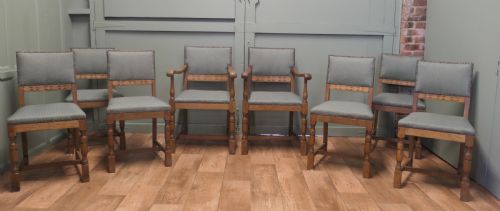
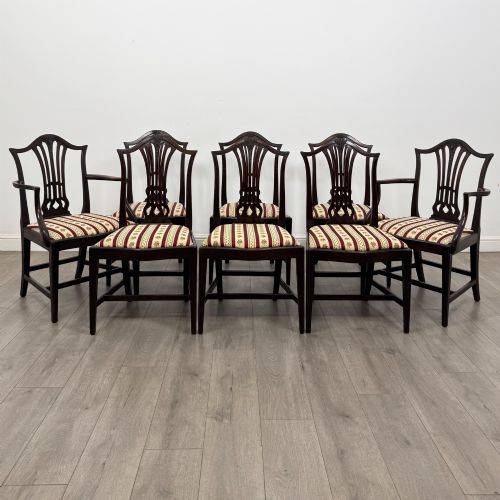
A vintage carved dining chair encompasses everything from sturdy Edwardian oak frames to elegant Victorian mahogany balloon backs and Georgian designs. Buyers exploring this category frequently encounter sets of six or eight alongside individual carvers, desk chairs, and hall seats.
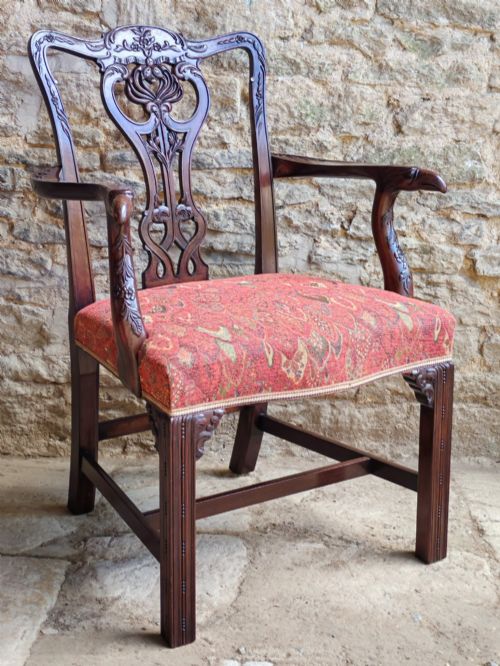
The most common examples on this page date from the nineteenth and early twentieth centuries, reflecting revival styles like Chippendale, Hepplewhite, and Jacobean. These pieces serve practical seating duties while anchoring a dining room with traditional presence.
Materials and construction
Makers relied heavily on solid hardwoods like mahogany, oak, and walnut, selecting dense timbers capable of supporting intricate hand-carved details on splats, rails, and legs. Beech also appears in structural frames, while rosewood and maple feature in specific stylistic interpretations.
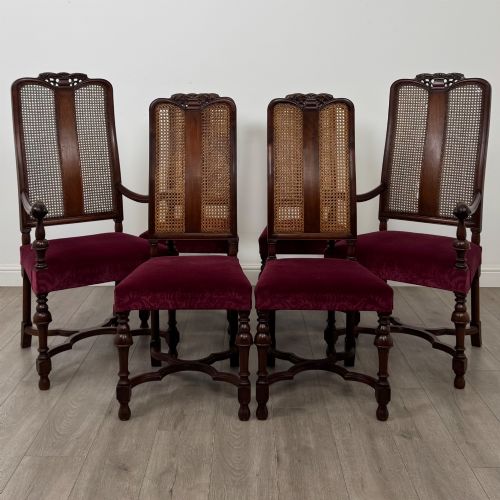
Upholstered variants incorporate leather, velvet, and woven fabric over traditional stuffing, sometimes complemented by brass inlay or turned elements such as barley twist and bobbin legs.
Materials recorded across the inventory include mahogany, oak, walnut, beech, maple, rosewood, leather, velvet, fabric, and brass.
Distinctions in standard
The depth and crispness of the hand-carving separate standard utility seating from superior examples, where artisans invested greater time into shaping rails, shield backs, and cabriole legs. Timber selection dictates rigidity, with dense, well-figured mahogany or quarter-sawn oak maintaining tighter joints over decades of use.
Original upholstery materials, matched sets numbering six or more pieces, and distinctive design elements like brass inlay or specific regional turning elevate the standing of a set within its period.
Maple and Co·Howard and Sons·Alfred Allen of Birmingham
The Vintage Carved Dining Chair Glossary
- Carver
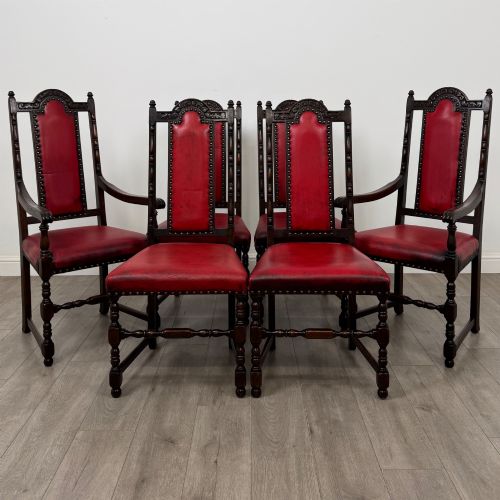
- An armchair designed to sit at the head of a dining table. These typically feature open arms to accommodate formal clothing.
- Shield back
- A chair back shaped like a heraldic shield, popularised in the eighteenth century by designers like Hepplewhite. The openwork splat usually fans out from a central carved motif.
- Balloon back
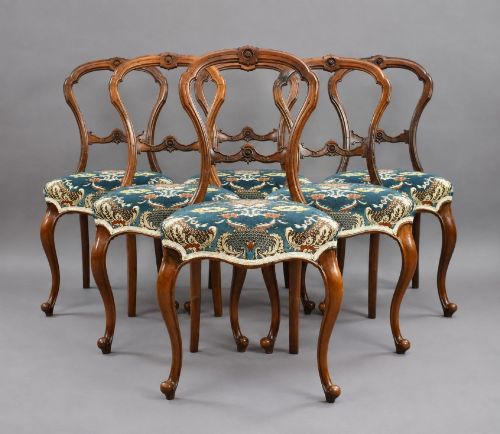
- A rounded, continuous backrest shaped like an oval or balloon, characteristic of Victorian seating. This form allowed for ergonomic support alongside steam-bent curves.
- Barley twist
- A type of turning resembling a twisted rope, carved into chair legs and stretchers. It gained widespread popularity during revival periods.
- Cabriole leg
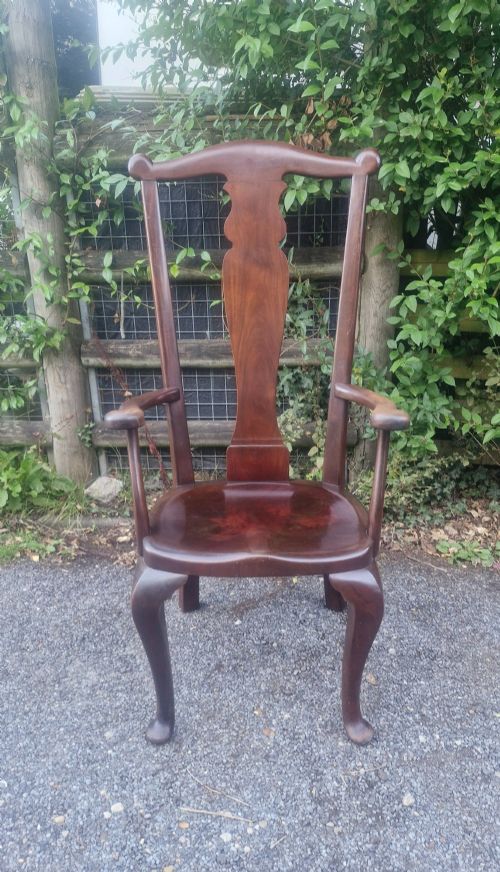
- A furniture leg that curves out and then in, resembling the leg of an animal. This classic form terminates in a pad, claw, or ball foot.
Vintage Carved Dining Chair: Frequently Asked Questions
How do I care for antique wood chairs?
Keep wooden frames away from direct heat sources and sudden humidity changes to prevent timber splitting or joint shrinkage. Apply a traditional wax polish occasionally to nourish the grain without building up heavy residues.
Check underframes and stretchers periodically for loose joints. Professional tightening preserves the original pegged or glued construction before heavy movement causes lasting structural strain.
Can I mix these chairs with a modern table?
Mixing period seating with a contemporary or contrasting table creates a balanced interior scheme by highlighting the warmth of traditional timber. Ensure the seat height allows comfortable clearance beneath the table apron.
Scale is the primary consideration when combining disparate styles. Large carved backs or open armchairs require sufficient legroom and perimeter space around the dining setting.
How can I tell a Victorian chair from an Edwardian one?
Victorian chairs often utilise dark mahogany or walnut with dense carving, balloon backs, or upholstered scroll forms. The aesthetic leans toward heavy proportions and rich, formal finishes.
Edwardian pieces frequently display lighter oak construction, simpler lines, or revive earlier seventeenth-century styles through barley twist supports and high vertical slat backs.