



Ribbon Back Armchair
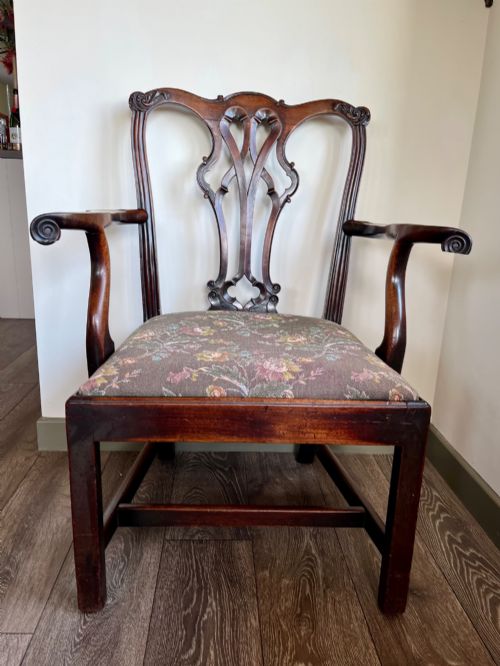
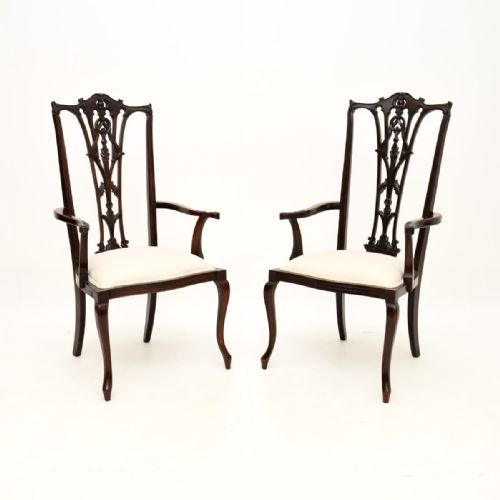
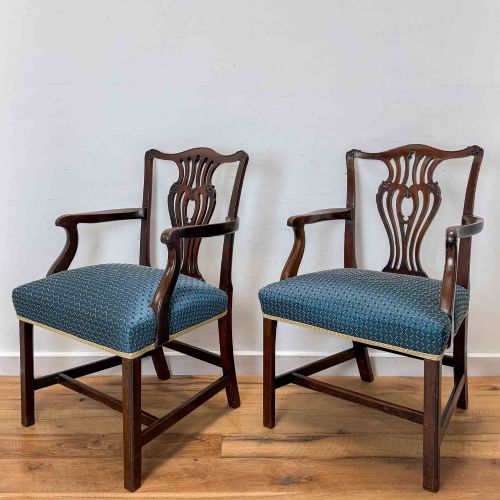
A ribbon back armchair brings sculptural carved mahogany and eighteenth-century elegance straight to the table or desk.
Ribbon Back Armchair
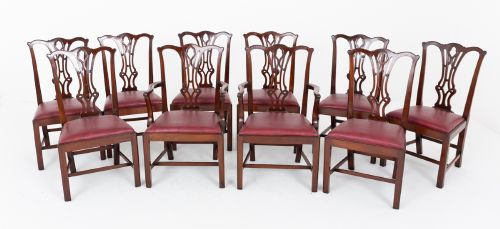
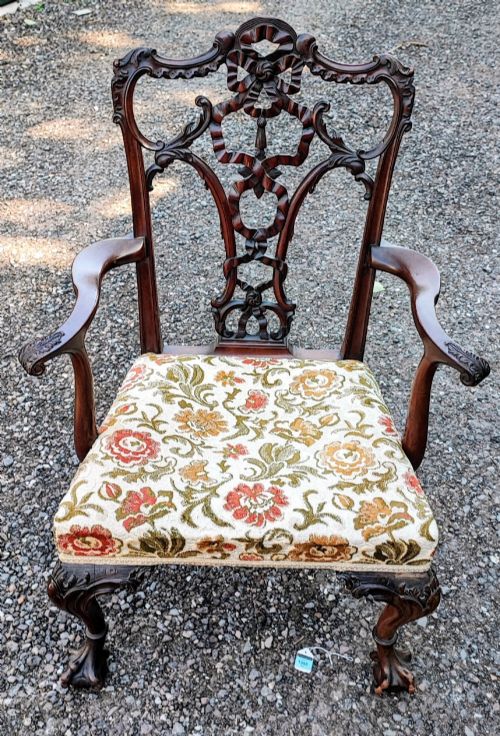
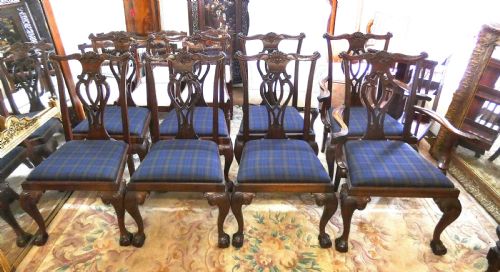
A ribbon back armchair draws on eighteenth-century designs where the central splat of the backrest mimics flowing ribbon or ribbon knots. These pieces appear in single chairs, pairs, and larger dining sets spanning the eighteenth century through to later revival periods.
Most examples found here date from the nineteenth and early twentieth centuries, constructed during the Victorian and Edwardian revivals of Georgian styles. Makers utilised mahogany timber to produce dining chairs, desk chairs, and open armchairs featuring this distinctive pierced splat.
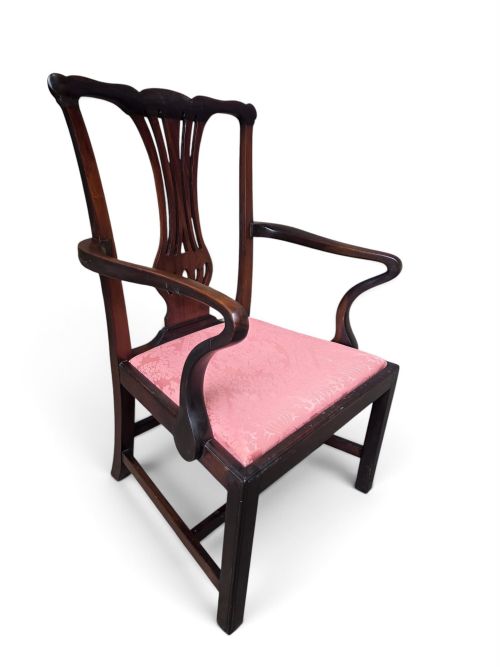
The form functions equally well as a single desk chair or as carver chairs paired with matching dining sets. Buyers encounter both authentic eighteenth-century pieces and later revival interpretations executed in mahogany.
Materials and construction
Makers relied principally on solid mahogany for the frames, taking advantage of the timber's strength to execute the intricate pierced fretwork of the ribbon splat. Cabinetmakers shaped the curved top rails and arms by hand, often incorporating carved details such as acanthus leaves or ball and claw feet.
Seats required upholstery work, utilising materials like leather, damask upholstery, velvet, and various textile fabrics secured over drop-in frames or stuffed rails. The underlying joinery combined traditional mortise and tenon joints to support the weight and movement expected of a working armchair or dining seat.
Ribbon Back Armchair Retail Price Guide 2026
Typical asking prices for ribbon back armchair among the pieces listed under this phrase on Sellingantiques today, from the lower quarter to the upper quarter. They describe what is for sale here now, not the wider market.
Even office work feels like an eighteenth-century committee meeting when sitting in a carved ribbon back desk chair.
Evaluating craftsmanship and condition
The crispness and depth of the wood carving separate standard production from finer work, particularly in how sharply the interlaced ribbon folds are defined. Superior pieces display smooth, flowing pierced work without mechanical rigidity or heavy-handed sanding that softens the edges.
Timber selection dictates the visual presence of the frame, with dense, deeply figured mahogany providing a richer surface than plainer stock. Original patination and tight structural joints further distinguish a superior antique chair from a weaker or heavily repaired example.
The Ribbon Back Armchair Glossary
- Ribbon back
- A chair back featuring a central splat carved to resemble undulating ribbons and looped bows. This decorative motif gained popularity in mid-eighteenth-century English seating.
- Chippendale style
- Furniture designs inspired by the pattern books of Thomas Chippendale and his eighteenth-century contemporaries. The style encompasses carved ribbon splats, cabriole legs, and elaborate fretwork.
- Carver chair
- An armchair designed with open sides, traditionally placed at the heads of a dining table or utilised as a desk chair. These seats match the surrounding single dining chairs.
- Splat
- The vertical wooden strip running up the centre of a chair back between the seat and top rail. In these pieces, the splat takes the distinctive form of intertwined ribbon.
- Georgian revival
- A nineteenth and early twentieth-century movement that recreated the architectural and furniture styles of the Georgian period. Pieces from this era copy earlier eighteenth-century prototypes.
Ribbon Back Armchair: Frequently Asked Questions
What is a ribbon back armchair?
A ribbon back armchair is a seating form defined by a carved wooden splat that resembles folded and looped ribbon. These chairs appear in single formats or as carvers accompanying dining sets.
Cabinetmakers produced them across the eighteenth, nineteenth, and early twentieth centuries, drawing heavily on Georgian and Chippendale design traditions.
How do I date a ribbon back armchair?
Dating relies on examining the timber species, tool marks, joinery methods, and the crispness of the carved details. Eighteenth-century examples display different construction nuances compared to nineteenth-century revival pieces.
Matching the chair to periods like the Victorian era or Georgian revival helps narrow down the decade of manufacture.
Can I use these at a modern desk?
Many buyers utilise these armchairs as desk or office chairs because their open arms and supportive backs suit workspace environments. Desk chairs listed in these categories often feature sturdy mahogany frames built for daily sitting.
Checking seat heights ensures the chair fits comfortably beneath a standard desk or writing table.
Are these chairs comfortable for dining?
Dining chairs and carvers featuring upholstered seats in fabric, leather, or velvet provide comfortable seating for prolonged dining use. The open armchair design accommodates various sitting postures while supporting the arms.
Upholstery materials vary from period textiles to later replacement covers fitted over the wooden frame.