
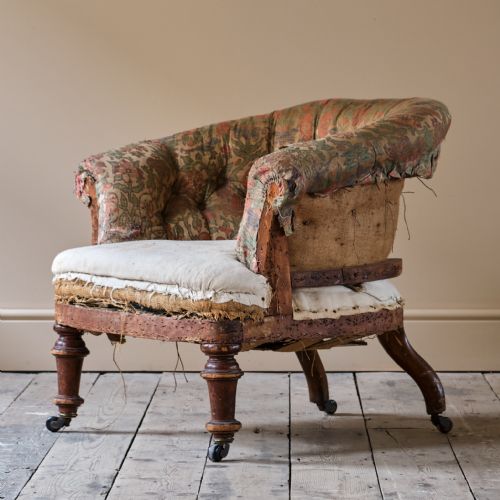
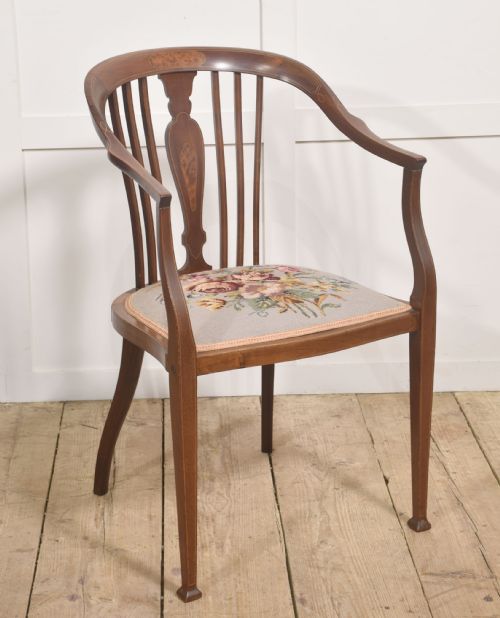


Brown Floral Armchair
A brown floral armchair brings pattern and warmth to a room, offering comfortable seating rooted in historical styles.
Brown Floral Armchair
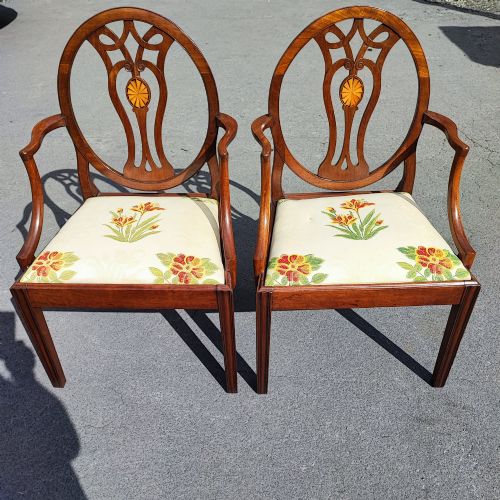
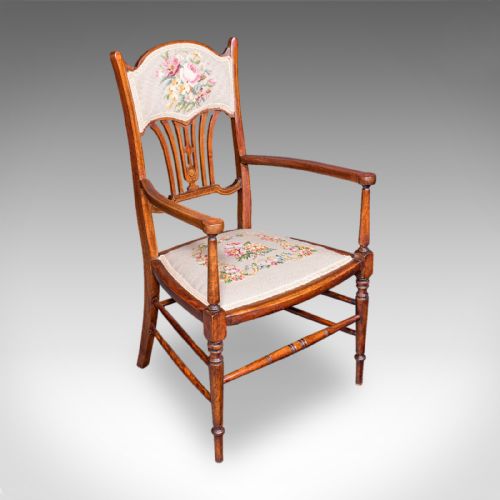
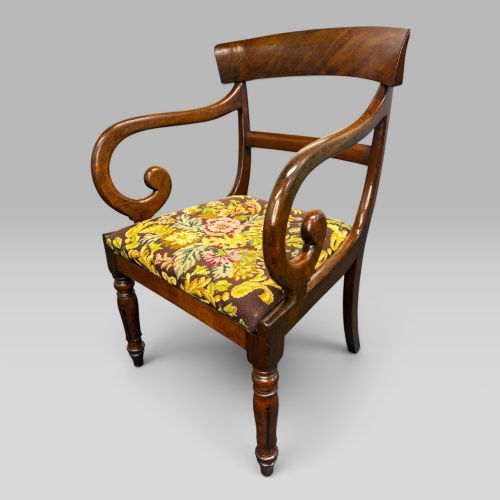
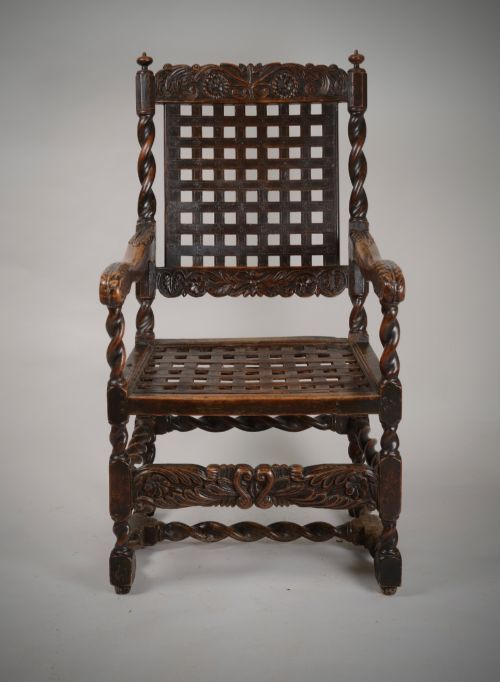
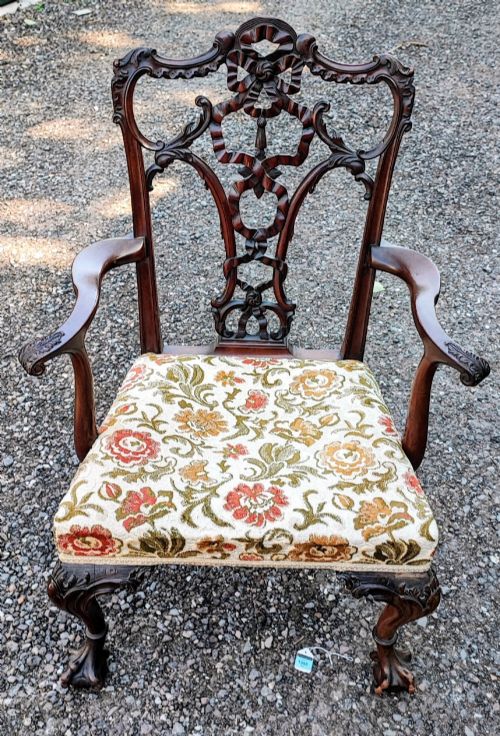
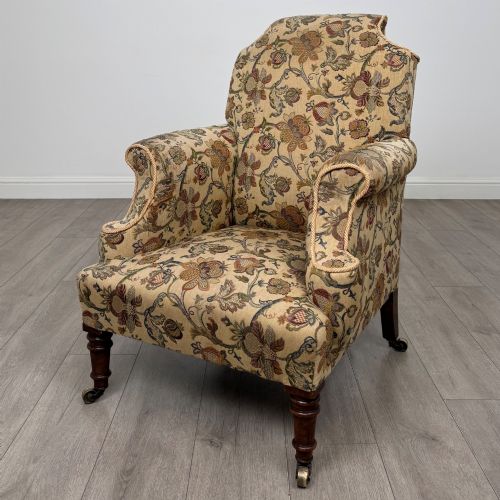
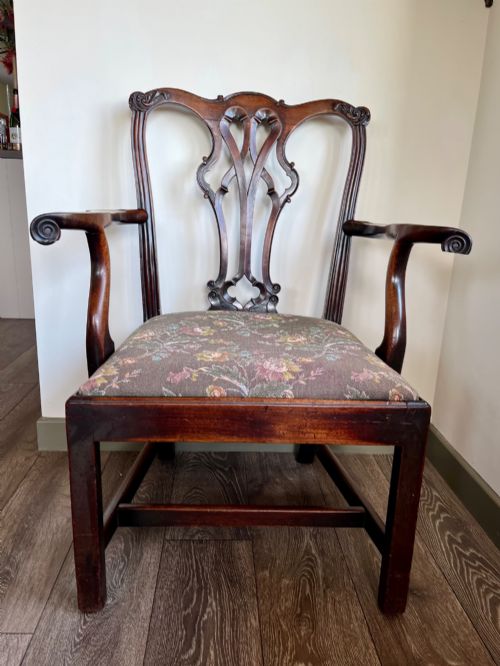
A brown floral armchair encompasses seating upholstered in patterned textiles paired with timber frames, drawing from periods spanning the seventeenth century through to the early twentieth century. These pieces appear in forms such as elbow chairs, occasional chairs, wingbacks, and carvers.
The selections on this page demonstrate the enduring popularity of floral and patterned upholstery across diverse frameworks, including Victorian walnut, Edwardian beech, and Georgian mahogany. Buyers encounter both original frames requiring specialist attention and refined parlor seating ready for placement.
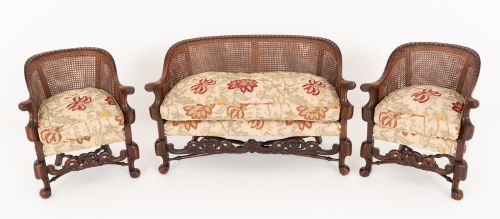
Such seating ranges from elaborate inlaid Sheraton and Chippendale revival pieces to simpler occasional rocking chairs and decorative boudoir suites. Each variation reflects the prevailing domestic tastes of its specific era.
Materials and construction methods
Framing relies predominantly on hardwoods such as mahogany, walnut, oak, and beech, frequently enhanced with satinwood inlay, marquetry, or carved detailing. These timbers provide the structural integrity required for enduring seating.
Upholstery incorporates textiles, tapestry, and linen, sometimes featuring hand-painted decoration on the woodwork or fabric surfaces. Craftspeople employed traditional joinery techniques to secure arms, legs, and backsplats to the main frames.
Listings feature mahogany, walnut, oak, and beech frames combined with tapestry, linen, and fabric upholstery across multiple centuries.
Distinguishing quality in period seating
Quality reveals itself in the crispness of timber carving, the precision of marquetry inlay, and the structural soundness of the frame. Superior examples display thoughtful proportions and harmonious integration between the wooden structure and the decorative motifs.
The selection of upholstery materials and the fidelity of revival styles also set finer pieces apart from standard workshop output. Original decorative paintwork and integrated design elements elevate the standing of individual items.
Jas Shoolbred
The Brown Floral Armchair Glossary
- Elbow chair
- An armchair featuring low arms, typically designed for use at a desk or as part of a dining suite.
- Carver armchair
- A sturdy wooden armchair, often matching a set of dining chairs, distinguished by more substantial arm supports.
- Marquetry
- The art of applying decorative pieces of veneer to a structure to form intricate floral or geometric patterns.
- Wingback armchair
- A fireside chair featuring protective side panels designed to shield the occupant from draughts.
- Splati back
- A chair back featuring a central vertical wooden strip, often shaped or decorated with painted or carved designs.
Brown Floral Armchair: Frequently Asked Questions
What periods do these armchairs come from?
The listings span several centuries, starting from seventeenth-century pieces up through eighteenth-century Georgian examples, nineteenth-century Victorian designs, and early twentieth-century Edwardian items.
This broad chronological range allows buyers to select pieces matching specific historical aesthetics, from elaborate revival styles to simpler domestic seating.
How do I choose between an occasional chair and a carver?
Occasional chairs are typically lighter, built for placement in corners or boudoirs, and often feature decorative inlay or painted surfaces. Carver chairs offer more robust wooden construction and broader proportions, traditionally serving as head-of-table seating.
Consider where the chair will sit in your home and whether it needs to support active daily use or serve primarily as a decorative accent.
Are these chairs suitable for daily use?
Many of these armchairs are structurally sound for regular seating, though some selections explicitly note the need for re-upholstery. Examining the frame construction and upholstery condition helps determine whether a piece requires restoration before active service.
Pieces designed for libraries, desks, or parlours continue to function well in modern domestic settings when handled with appropriate care.
What wood types are most common?
Mahogany and walnut appear frequently across the collection, often complemented by satinwood inlay or marquetry details. Beech and oak are also utilised, particularly in regional pieces and Edwardian occasional seating.
These timbers provided nineteenth and early twentieth-century makers with the durability needed for intricate carving and structural joints.