

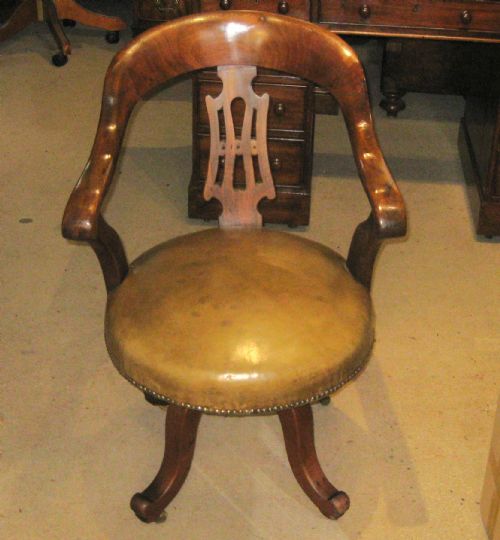
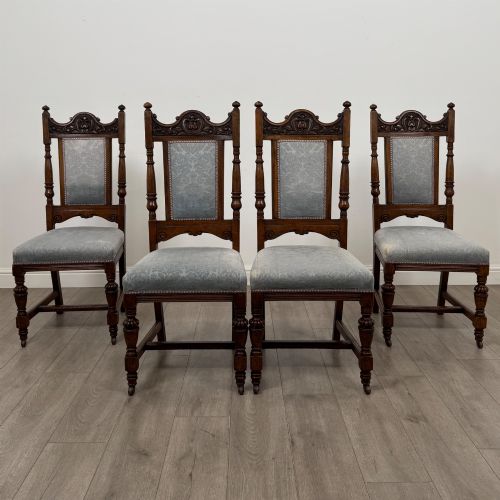
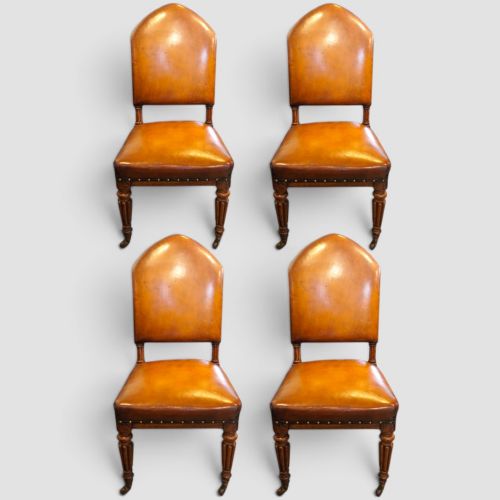
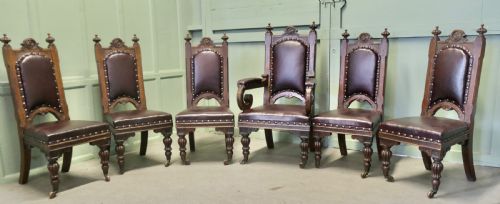
Victorian Carved Desk Seat
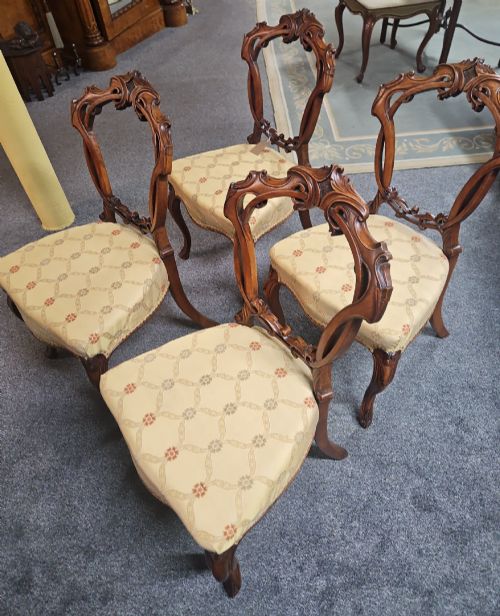
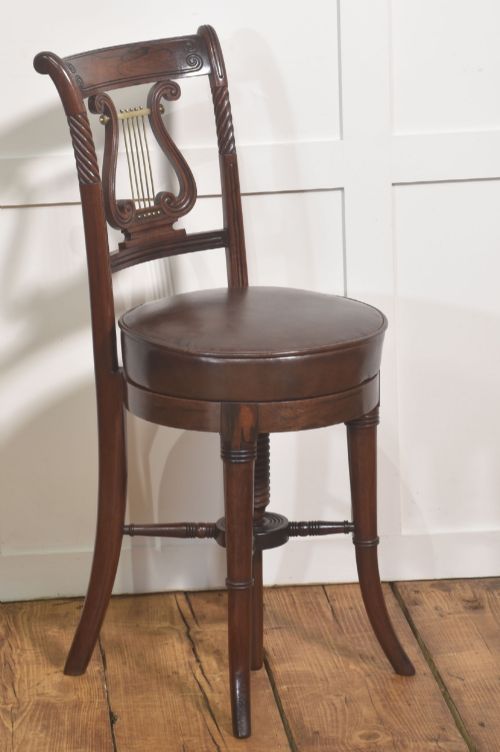
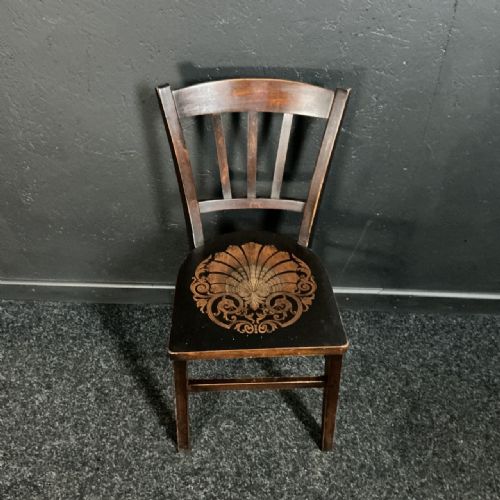
These Victorian carved desk seat examples bring solid timber and carved detail to a study.
Victorian Carved Desk Seat
A victorian carved desk seat provides a sturdy, supportive place to sit while working, combining nineteenth-century joinery with decorative carving. The pieces appearing here span the Victorian and Edwardian periods, stretching from the middle years of the nineteenth century into the opening decades of the twentieth.
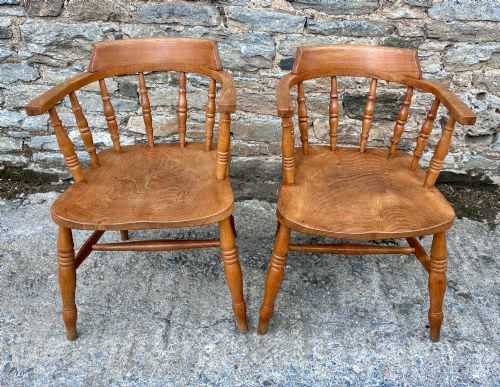
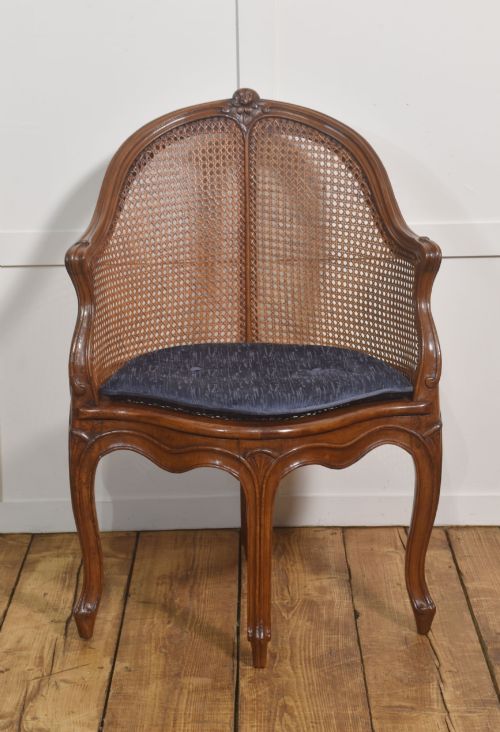
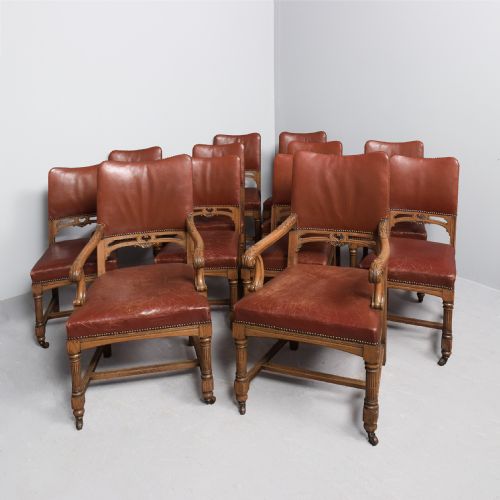
Most examples originate from British workshops and country houses, taking forms such as revolving office chairs, library armchairs, and captains chairs. Makers utilised dense hardwoods to build seating intended for daily utility and long hours at a writing table.
How they were made
Makers constructed these chairs primarily using timbers such as mahogany, oak, walnut, elm, and rosewood. These dense woods provided the structural strength required for swivelling mechanisms, adjustable heights, and heavy carved backrests.
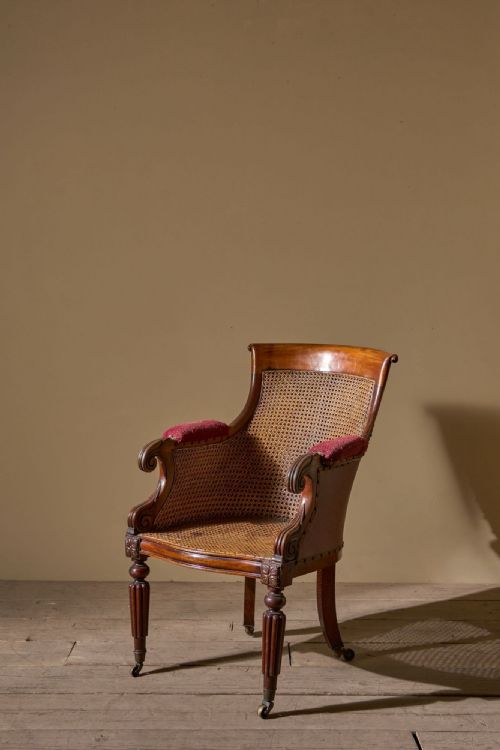
Craftspeople integrated secondary materials including brass for swivel fittings and castors, alongside leather, fabric, cane, and velvet for upholstered pads and seats. Joinery relied on traditional tenons and mechanical iron components to support movement.
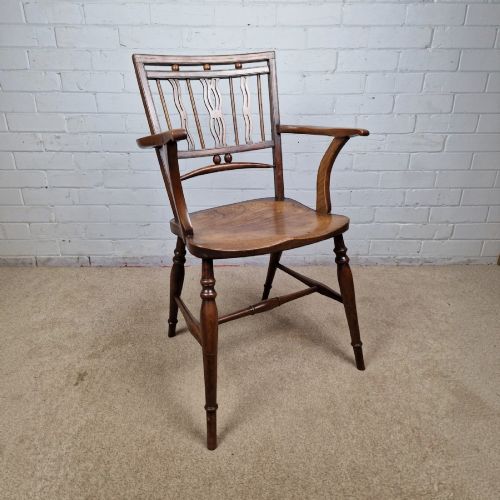
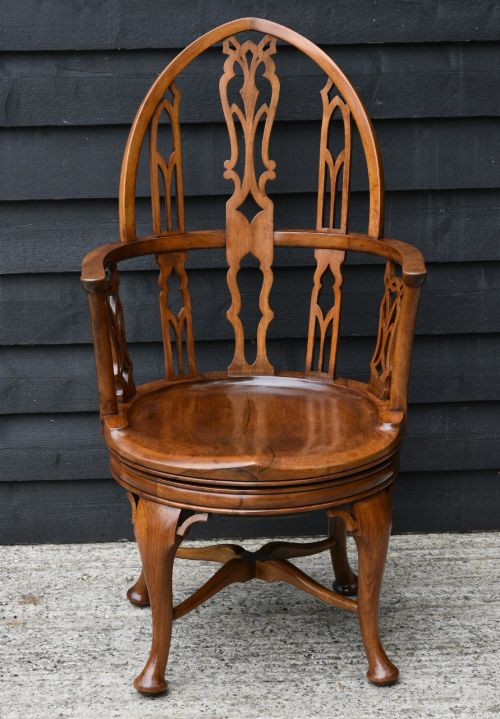
Desk seating configurations on this page include revolving office models, captains chairs, and library armchairs.
What varies in quality
The standard of carving defines the upper tiers of these chairs, separating utilitarian seating from bespoke pieces featuring crisp relief work and considered proportions. Timber selection also dictates grade, with figured mahogany and burr elm commanding attention above plain domestic woods.
Complexity of construction influences value, particularly the presence of working swivel actions, adjustable rise-and-fall mechanisms, and original leather or cane work. Retaining integrated brass hardware and untouched timber surfaces marks the difference between average production and superior execution.
Gillows·Bruce James Talbert
The Victorian Carved Desk Seat Glossary
- Revolving desk chair
- A seat fitted with a central spindle or mechanical pivot allowing the upper portion to turn through a full circle.
- Captains chair
- A low-backed wooden armchair featuring a curved top rail supported by spindles above a solid saddle seat.
- Gothic Revival
- A nineteenth-century design style drawing on medieval architectural motifs, pointed arches, and heavy carved tracery.
- Rosewood
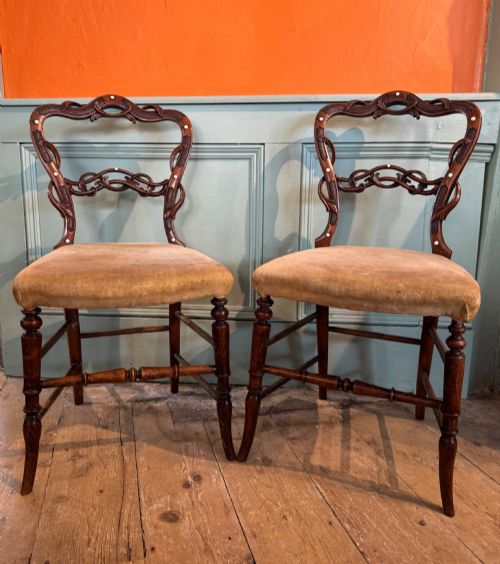
- A dense, heavily figured exotic timber utilised for high-status Victorian library and drawing room seating.
- Ladderback
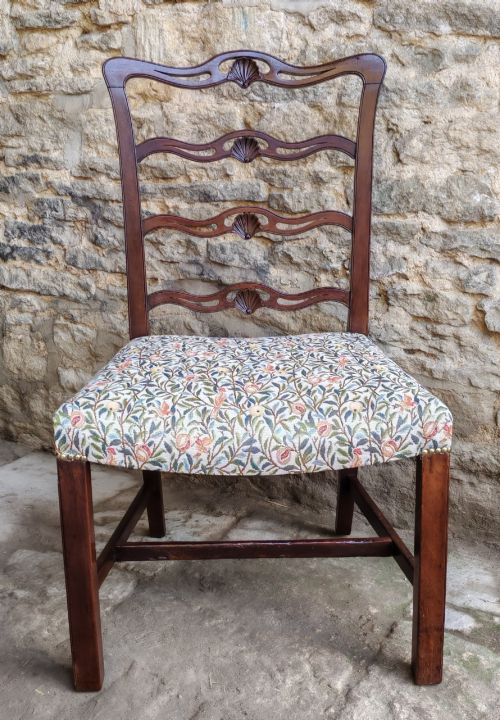
- A chair back constructed from a series of horizontal wooden slats set between vertical uprights.
Victorian Carved Desk Seat: Frequently Asked Questions
How do I spot a swivel mechanism?
Look underneath the wooden seat for an iron spindle, spider bracket, or central screw thread connecting the chair to its base.
Many nineteenth-century examples incorporate hidden iron or brass screws that allowed the user to adjust the height or rotate freely.
Are these chairs comfortable for daily work?
Most feature generous proportions, curved ladderbacks, or upholstered armrests designed to support the body during long hours at a desk.
Swivel and library models offer mobility, though padding depends on whether the original leather or stuffed seat survives.
How do I tell Victorian from Edwardian pieces?
Victorian chairs tend to feature heavier timbers, deep carvings, and darker walnut or mahogany finishes rooted in nineteenth-century revival styles.
Edwardian items often display lighter bentwood construction or simpler framing reflecting the tastes of the early twentieth century.
What woods were commonly used?
Makers relied heavily on durable British and imported hardwoods including oak, mahogany, walnut, and elm.
Softer timbers appear less frequently, usually reserved for secondary frame components rather than the main load-bearing structure.