
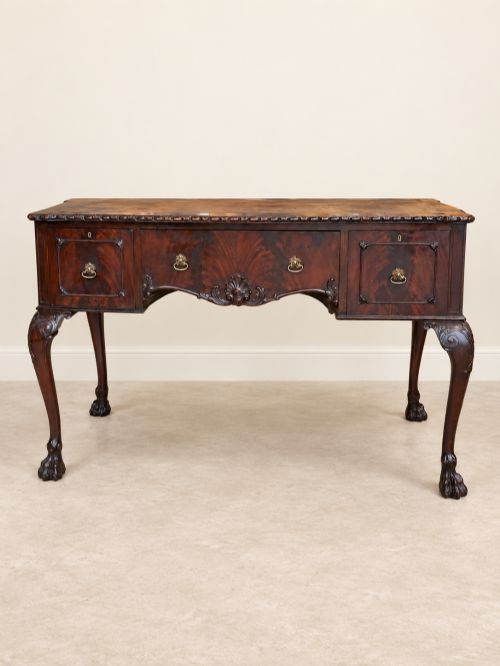
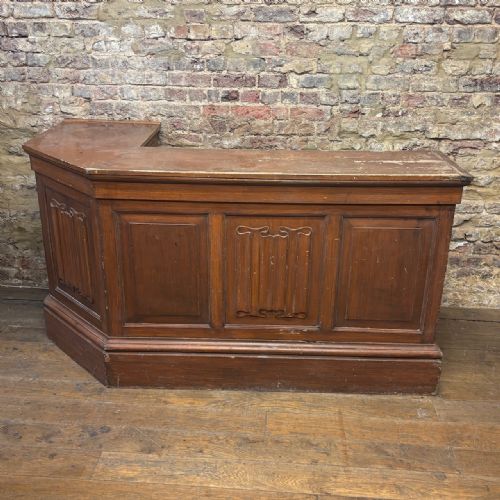
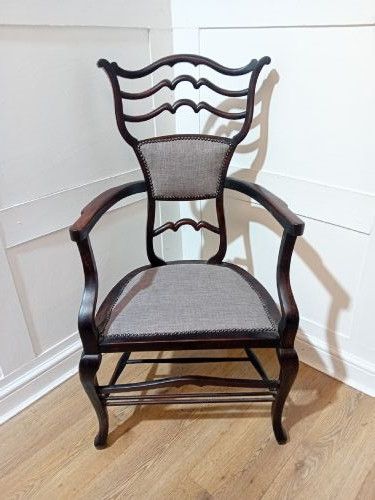

Vintage Carved Desk
A vintage carved desk brings solid timber and traditional craftsmanship into a room, offering a durable workspace with historical character.
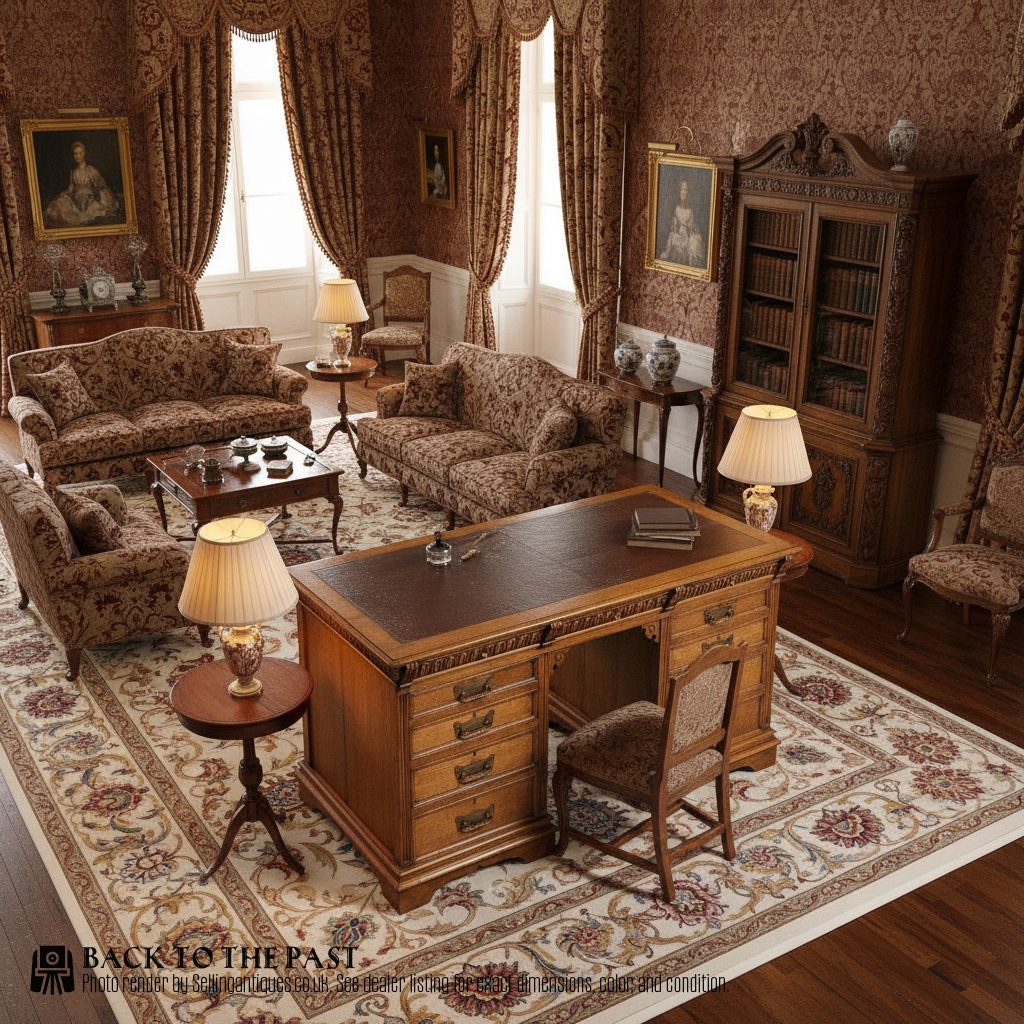
Vintage Carved Desk
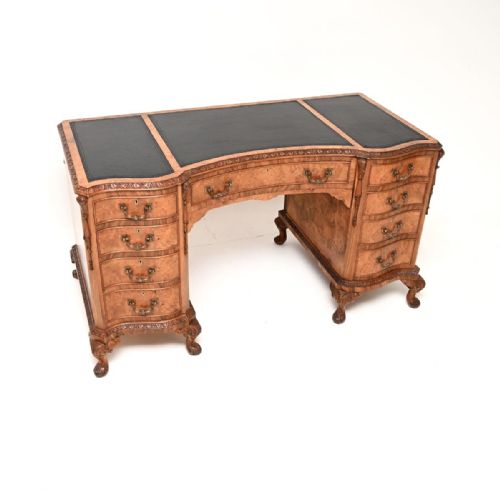
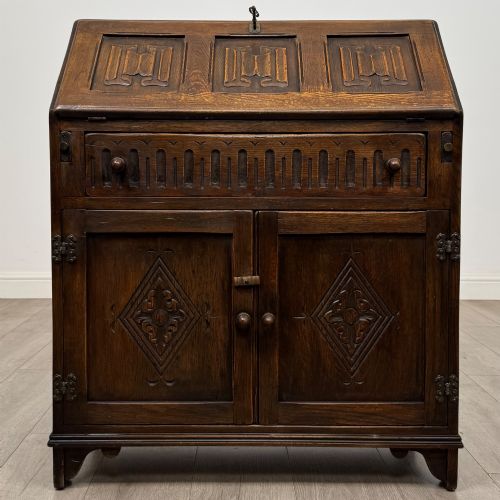
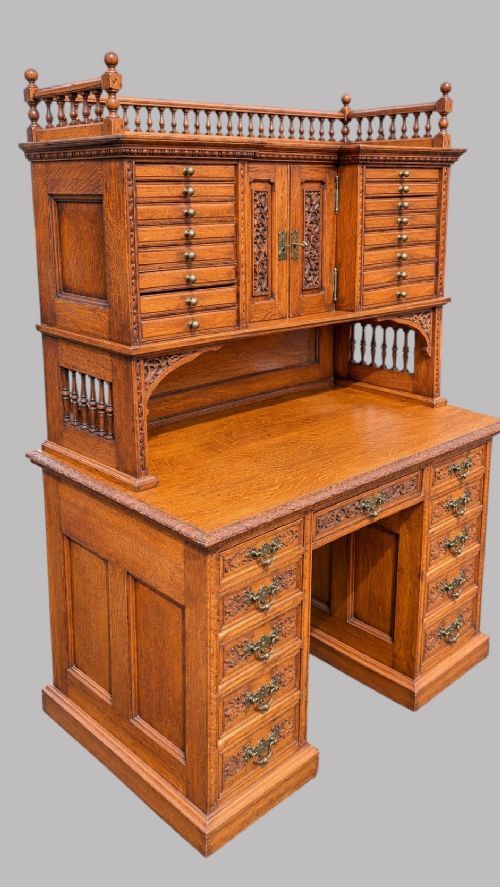
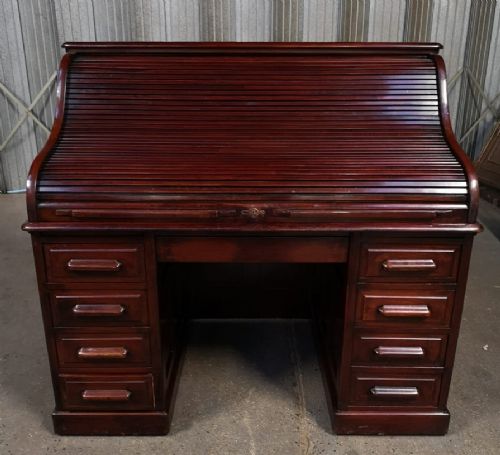
A vintage carved desk is a functional workspace built primarily during the nineteenth and early twentieth centuries, spanning periods such as the Victorian and Edwardian eras. These pieces take the form of pedestal desks, kneehole desks, roll-top desks, and bureaus featuring carved wooden details.
The most common versions met on this page are constructed from oak and mahogany, often displaying revival styles including Jacobean, Tudor, and Gothic influences. Many incorporate writing surfaces inset with leather alongside multiple storage drawers.
Beyond standard writing desks, related forms in the evidence include bureaus with linenfold carving and specialised prayer desks or kneelers. These objects combine practical utility with period woodworking traditions.
Materials and construction
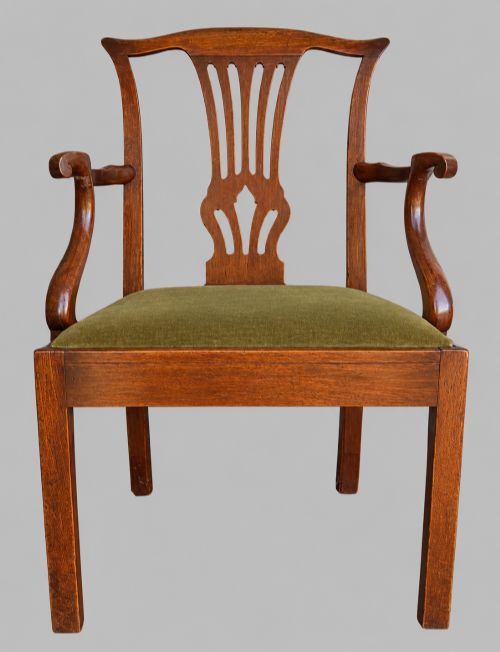
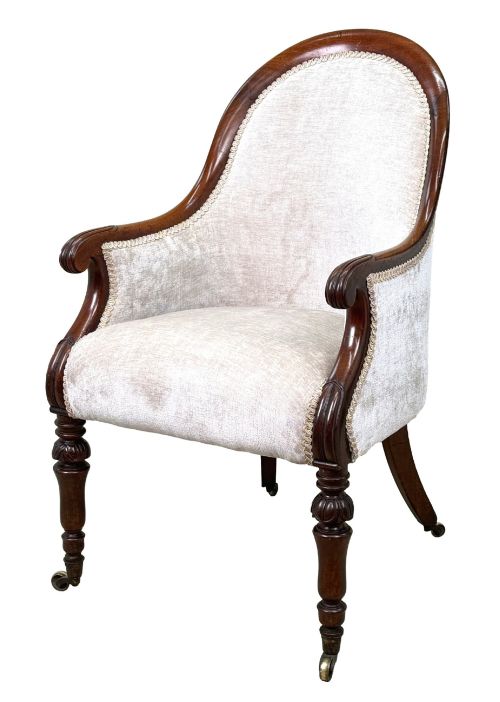
Construction relies heavily on hardwoods such as oak, mahogany, and walnut, frequently selected for their durability and grain patterns. Burr walnut and beech also appear among the timber choices for specific desks and tables.
Surface decoration involves hand carving, seen in linenfold panels, geometric motifs, and period revival details executed directly into the solid wood. Leather inserts provide contrasting writing surfaces on pedestal and partners desks, while brass hardware secures drawers and doors.
Listings feature woods including oak, mahogany, walnut, burr walnut, beech, and elm, spanning periods from the 19th century through the Edwardian era.
Judging quality in carved desks
Quality rests on the crispness of the hand carving and the selection of timber, where burr walnut veneers or dense oak show superior material choices. Well-made examples maintain tight joinery in the drawer construction and sturdy structural framing.
The integration of secondary materials like fitted leather writing surfaces and original brass pulls distinguishes finer pieces from simpler utilitarian items. The depth and detail of the carved elements, such as linenfold panels, indicate the level of craftsmanship invested in the desk.
Maple and Co·C Bechstein·H.A.C.
The Vintage Carved Desk Glossary
- Pedestal desk
- A heavy freestanding writing desk consisting of two pedestals of drawers supporting a single desktop. This form often includes an inset leather writing panel on the top surface.
- Kneehole desk
- A compact desk featuring a central recess for the user's legs, flanked by banks of drawers on both sides. These units typically stand against a wall.
- Linenfold
- A style of carved wooden panelling resembling folded vertical linen fabric. It appears frequently on Edwardian oak desks and bureaus.
- Roll top desk
- A desk fitted with a slatted wooden tambour that pulls down to conceal the writing surface and pigeonholes. This mechanism allows the workspace to be locked securely.
Vintage Carved Desk: Frequently Asked Questions
How do I identify an Edwardian carved desk?
Edwardian carved desks, dating from around the early twentieth century, frequently utilise oak with linenfold carving and lighter proportions than their Victorian predecessors.
They often reflect revival styles and include pedestal or bureau formats with multiple small drawers.
How do I care for a leather desk top?
Leather desk inserts require gentle cleaning with a slightly damp cloth, avoiding harsh chemical solvents that can dry or crack the hide. Regular conditioning helps maintain the suppleness of the leather surface.
Keep desks away from direct sunlight to prevent fading of both the leather and the surrounding wood.
What is the difference between a pedestal and kneehole desk?
A pedestal desk is built from two separate drawer columns supporting a wide top, often finished on all sides to stand freely in a room. A kneehole desk is traditionally designed with a recessed space for sitting and is usually placed flat against a wall.
Both forms utilise hardwoods like oak, mahogany, and walnut.