




Antique Padouk Table
An antique padouk table brings dense, richly coloured exotic timber into a room, offering sturdy utility with remarkable carving.
Antique Padouk Table
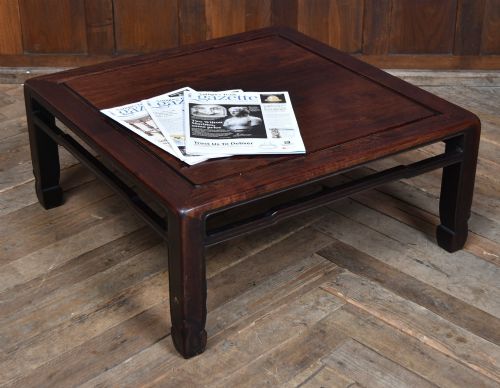
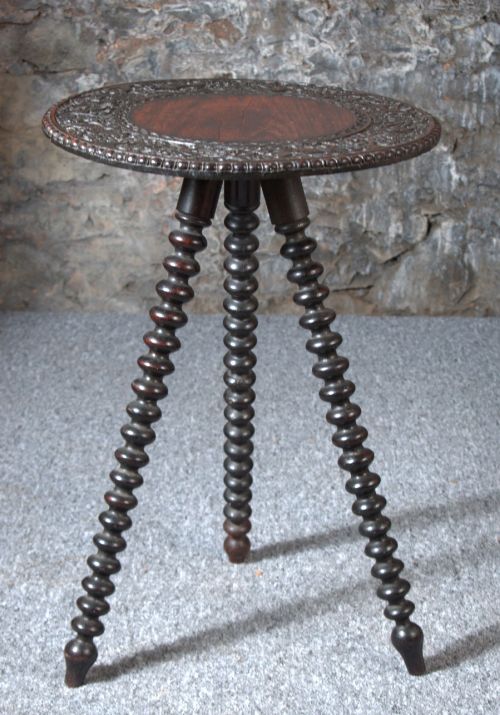
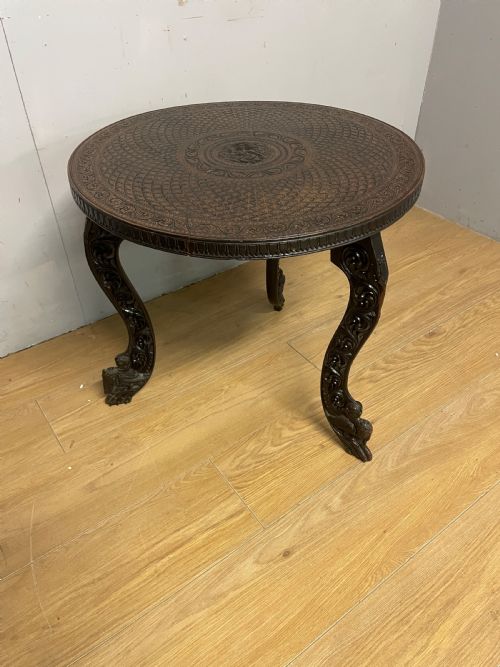
Buyers will most commonly encounter side tables, circular tilt-top pieces, and stands originating from British colonial endeavours or Chinese workshops. These items often display intricate hand-carved ornamentation, demonstrating the cross-cultural exchange of furniture design during the eighteenth and nineteenth centuries.
How they were made
Joiners and cabinetmakers utilised solid padouk wood, prized for its natural stability and deep reddish-brown hue that darkens with age. Construction often incorporated traditional mortise and tenon joints to handle the dense nature of the timber.
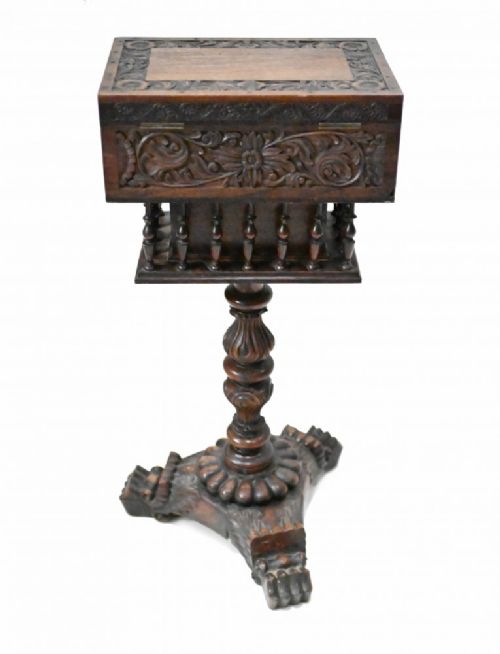
Surface decoration relied heavily upon deep relief carving, particularly in Anglo-Indian and Chinese pieces, alongside occasional contrasting satinwood inlay or inset marble tops. These techniques required skilled hand work to shape the heavy material without splitting.
Padouk sawdust smells faintly of vinegar when freshly cut, though the scent fades centuries before reaching the showroom floor.
What varies in quality
The degree of refinement in the hand-carved detail separates standard production items from superior examples. Crisp, deeply undercut foliage and figures demonstrate a higher level of artisan skill than shallow, machine-like incisions.
The choice of secondary materials and timber selection also dictates standard, with well-figured padouk grain and intact structural joinery representing better execution. Consistency in the polish and the original integrity of tilt mechanisms or inset marble slabs further distinguishes finer pieces.
Gillows
The Antique Padouk Table Glossary
- Padouk
- A dense tropical hardwood known for its reddish-brown colour and heavy weight. It was widely used in colonial and export furniture for its durability.
- Tilt-top table
- A table with a top that pivots on a catch, allowing it to be stored vertically against a wall when not in use. This form is common in nineteenth-century occasional tables.
- Anglo-Indian
- A style of furniture produced in India during the British colonial period, often combining British forms with traditional Indian carving motifs.
- Quartetto nest
- A set of four graduated tables designed to fit neatly beneath one another. They gained popularity in the nineteenth century for entertaining.
- Teapoy
- A small table or chest designed to hold tea canisters, frequently found in Anglo-Indian and Regency contexts. They often feature hinged lids or carved compartments.
Antique Padouk Table: Frequently Asked Questions
What is padouk wood?
Padouk is a dense, durable hardwood native to the tropics, celebrated for its deep reddish-brown colour that matures over time.
Cabinetmakers valued it for its strength and resistance to decay, making it suitable for intricate carving and export furniture.
How do I care for an antique padouk table?
Protect the surface by avoiding direct sunlight and excessive moisture, which can affect the timber and polish over time.
Dust regularly with a soft, dry cloth and apply occasional natural wax to maintain the rich sheen of the wood.
Where were these tables made?
Many examples originated in workshops across India, China, and Britain during the eighteenth and nineteenth centuries.
They reflect international trade and colonial connections, combining local craftsmanship with European forms.
How can I tell the period?
Dating relies on examining construction methods, timber patination, and stylistic markers such as George III or Victorian proportions.
Carving styles and hardware types also offer clues to the approximate decade of manufacture.