


Carved Frieze Drawer Desk
These carved frieze drawer desk examples are practical writing tables and side tables shaped by centuries of cabinetmaking traditions.
Carved Frieze Drawer Desk
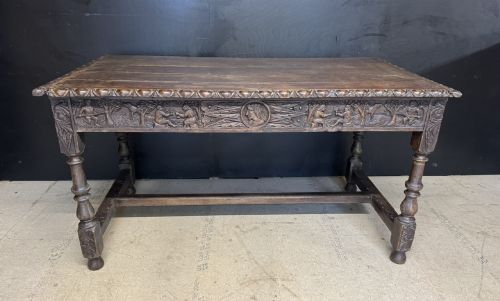
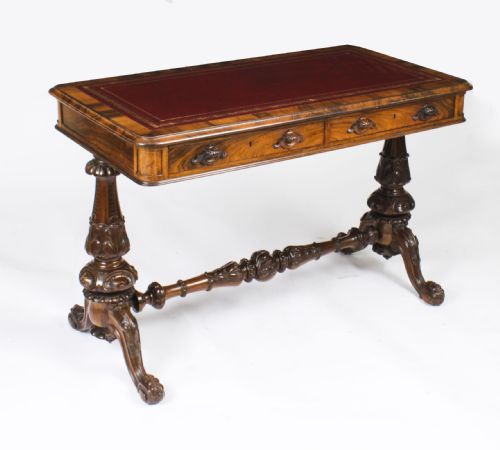
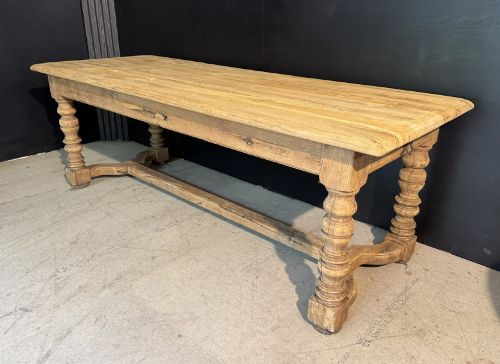
A carved frieze drawer desk brings together period utility and distinct decorative woodwork, typically appearing as writing tables, library tables, or side tables fitted with drawers beneath the top. The selection includes examples from the nineteenth century alongside earlier eighteenth-century forms such as an oak Bible box.
Buyers will most frequently encounter nineteenth-century pieces reflecting Victorian, William IV, and Regency tastes, often constructed from dense timbers like oak, mahogany, and rosewood. These items bridge the gap between functional office furniture and decorative antique furnishings.
Stylistic influences span from French farmhouse and Italian Renaissance revival to Flemish and Anglo-Indian designs, demonstrating a wide geographical range of workshop practices. Each variation retains the defining characteristic of carved detail integrated into the frieze surrounding the drawer sections.
How they were made
Cabinetmakers utilised durable hardwoods such as oak, walnut, mahogany, padouk, and rosewood to construct the primary carcasses and framing of these tables. These dense timbers provided a stable foundation capable of supporting repeated use of the drawers and top surfaces.
Surface ornamentation relied heavily on hand carving applied directly to the wooden frieze, complemented by functional metal elements in brass and iron. Specific pieces incorporated inset leather writing surfaces alongside internal drawer divisions to enhance their utility.
An eighteenth-century oak Bible box proves that sacred texts once required sturdy wooden security and three internal hiding spots.
What varies in quality
The sophistication of the carved frieze work separates standard utilitarian furniture from exceptional cabinetmaking. Superior pieces demonstrate crisp, deep relief carving executed with precision across the timber grain.
The choice and figuring of the timber dictate the visual presence of the desk. Highly figured rosewood and well-selected mahogany elevate the overall appearance far beyond simpler regional interpretations.
Edwards and Roberts
The Carved Frieze Drawer Desk Glossary
- Frieze
- The horizontal band situated immediately beneath the top surface of a table or desk, frequently embellished with carving. This area often houses the integrated drawer structure.
- Padouk
- A heavy, durable tropical hardwood displaying distinct reddish hues, utilised in specific nineteenth-century Anglo-Indian furniture production. It offers a dense grain suitable for intricate carving.
- Bible box
- A small tabletop storage box featuring internal drawers and a sloping or flat lid, used historically for sacred texts and writing materials. Early examples often incorporate carved frieze decoration.
- Library table
- A large freestanding table designed for central room placement, finished on all sides with workspace surfaces and integrated drawer storage. These typically date from the Regency and Victorian periods.
Carved Frieze Drawer Desk: Frequently Asked Questions
What periods do these desks cover?
The available pieces primarily span the nineteenth century, encompassing Regency, William IV, and Victorian eras.
Earlier examples extend back into the eighteenth century with forms like oak Bible boxes.
Which timbers were used?
Cabinetmakers worked with a broad selection of woods, most notably oak, mahogany, walnut, and rosewood.
More exotic materials such as padouk also appear alongside brass and iron hardware details.
How were these tables used historically?
These items served multiple domestic functions as writing desks, library tables, and side tables for general storage and display.
Drawers provided convenient space for correspondence, documents, and small household items.
Are these suitable for modern office work?
Many of these period tables function effectively as contemporary laptop or computer desks within a modern workspace.
Their substantial timber construction and integrated drawers offer practical everyday utility.