
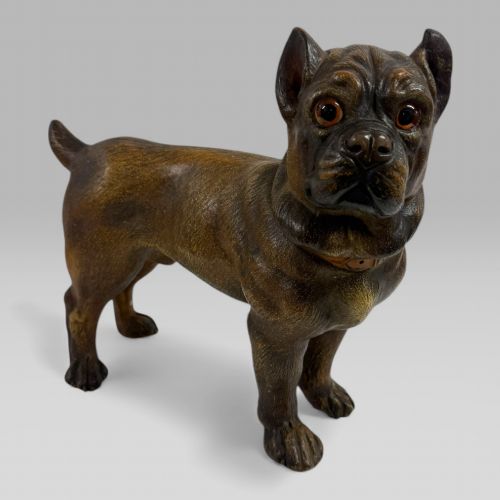


Vintage Canine Sculpture
Vintage canine sculpture captures hound, terrier and bulldog forms in bronze, terracotta and porcelain across the nineteenth and twentieth centuries.
Vintage Canine Sculpture
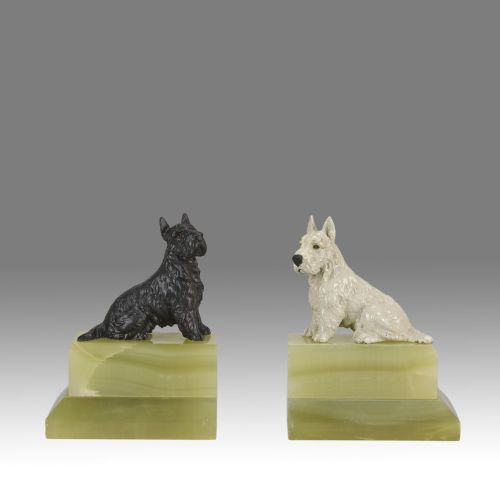
Vintage canine sculpture encompasses animalier bronzes, glazed porcelain figures, terracotta statues and carved bookends depicting specific dog breeds. Buyers seeking a vintage canine sculpture find domestic and sporting dogs rendered in characteristic poses, from seated pugs to racing greyhounds.
The selections available range from nineteenth-century French animalier bronzes to twentieth-century Art Deco spelter figures and German porcelain hounds. Examples stretch across the Victorian, Edwardian and Art Deco periods, employing materials from cold-painted bronze to marble and onyx.
Materials and methods
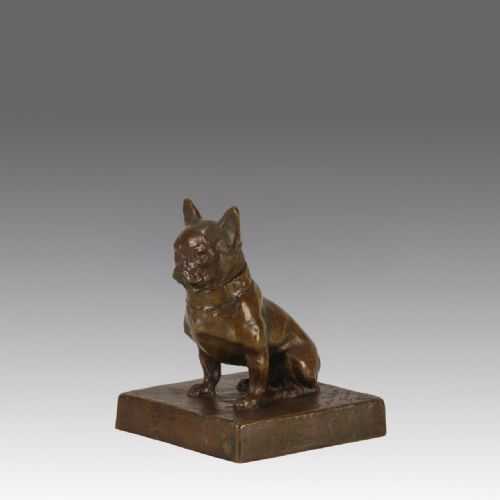
Bronze sculptures utilise the lost-wax casting technique, often finished with cold-painted polychrome details or dark patination. Foundries such as Barbedienne cast works by sculptors like Antoine Louis Barye, while Vienna workshops specialised in small cold-painted bronze models and car mascots.
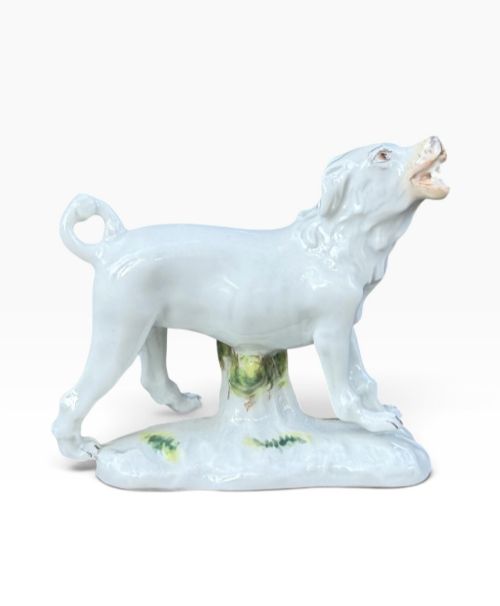
Terracotta pieces emerge from moulded clay fired to create life-size figures, while porcelain works from factories like Meissen and Rosenthal rely on intricate hand-glazing and kiln firing. Spelter appears as a cheaper alternative alloy used during the Art Deco period to simulate bronze.
Listings feature works spanning the nineteenth and twentieth centuries, encompassing Victorian, Edwardian and Art Deco periods across bronze, terracotta, and porcelain mediums.
Distinctions in craftsmanship
Quality rests in the anatomical accuracy of the musculature and the crispness of the chase work on bronze casts. Superior pieces display refined surface textures in fur and expression, whereas lesser items show softened details and blunt casting seams.
The preservation of original cold-painted polychromy dictates value in Vienna bronzes, where intact paint layers demonstrate careful handling. In porcelain and terracotta, the fidelity of the glaze application and the absence of clumsy restoration separate standard factory output from master modeller execution.
Dora Heber·Prosper Lecourtier·C Masson·Edith Parsons·Arthur Waagen·P.de Soete·Antoine Louis Barye·Franze Bergman·Louis Riché·Barbedienne
The Vintage Canine Sculpture Glossary
- Animalier
- A nineteenth-century artistic movement focusing on realistic depictions of animals. Sculptors in this tradition studied anatomy closely to capture creatures in motion or repose.
- Cold-Painted Bronze
- A process where metal figures receive paint applications without subsequent kiln firing. This technique requires meticulous sealing to prevent flaking over time.
- Spelter
- A zinc alloy utilised as a substitute for bronze in decorative figures. It accepts patination well but possesses a lighter weight and softer tensile strength than true bronze.
- Lost-Wax Casting
- A method of metal casting where a wax model is rendered into a mould and replaced by molten bronze. This allows for intricate undercut details and sharp textural fidelity.
- Car Mascot
- A sculptural ornament mounted on the radiator caps of motor vehicles during the early twentieth century. These pieces were frequently cast in bronze or chromium-plated metal.
Vintage Canine Sculpture: Frequently Asked Questions
Where were cold painted bronzes made?
Vienna served as the primary centre for cold-painted bronze production during the late nineteenth and early twentieth centuries. Specialised workshops produced small animal figures, desk items and car mascots.
These pieces were exported globally, with many featuring distinctive Austrian foundry marks or characteristic polychrome palettes.
How do I identify animalier style?
Animalier works focus purely on naturalistic animal forms, capturing tension, movement or anatomical precision. Sculptors observed wild and domestic dogs in active poses rather than static portraits.
This French-led movement spanned the nineteenth century and emphasised realistic textures in fur and muscle structure.
What is spelter?
Spelter is a zinc-based alloy commonly utilised for decorative sculptures, particularly during the Art Deco period. It offered a less expensive alternative to bronze while maintaining a metallic appearance.
Items cast in spelter are noticeably lighter than bronze and require protective patination to prevent surface oxidation.
How are terracotta dog figures finished?
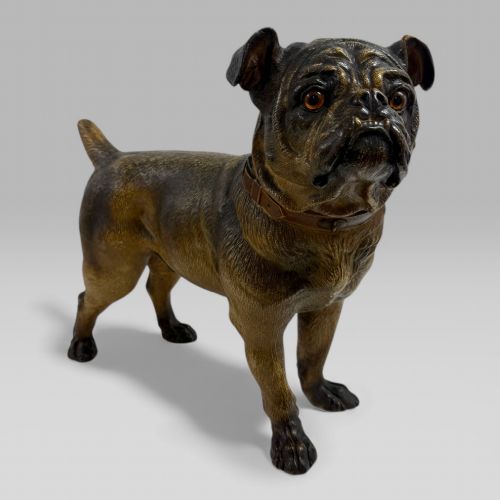
Terracotta sculptures utilise fired clay, sometimes left in its natural earthy biscuit state or decorated with surface pigments. Life-size pug figures from nineteenth-century Austria frequently employed this medium.
Such pieces were designed for interior display or conservatory placement, offering robust forms with detailed facial modelling.
Are these sculptures marked?
Many bronze and porcelain pieces carry foundry stamps, artist signatures or factory culls on the base or plinth. Signatures such as Barye or Lecourtier indicate professional studio casting.
Unsigned works remain common, requiring stylistic comparison with documented pieces to establish period and origin.