





Red Marble Base Sculpture
A red marble base sculpture carries the weight of 19th-century casting and classicism right into your room.
Red Marble Base Sculpture
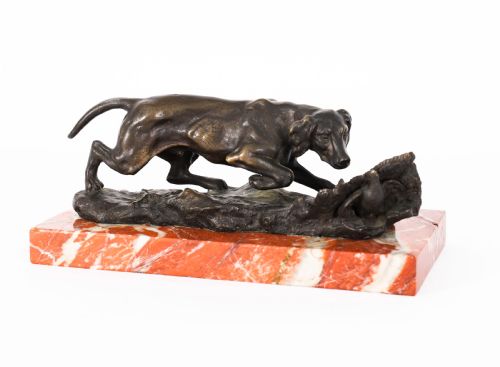
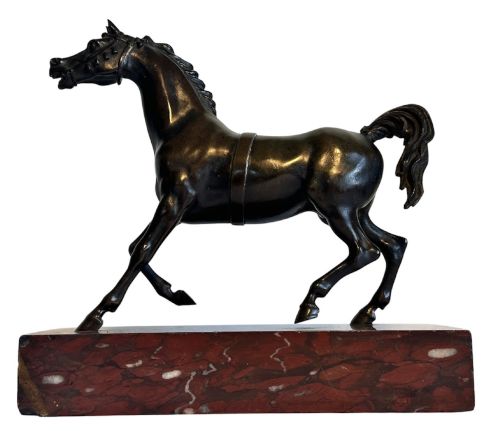
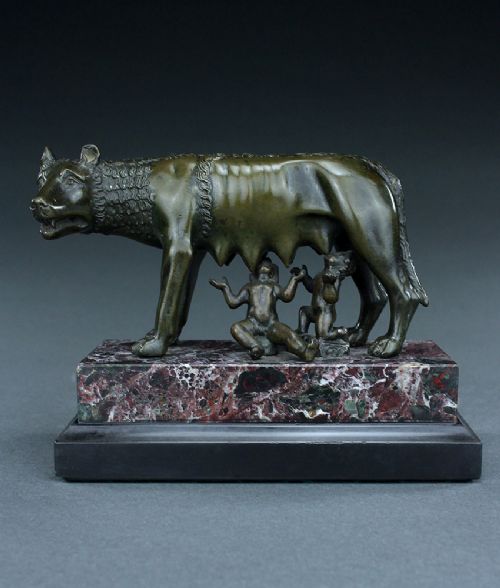
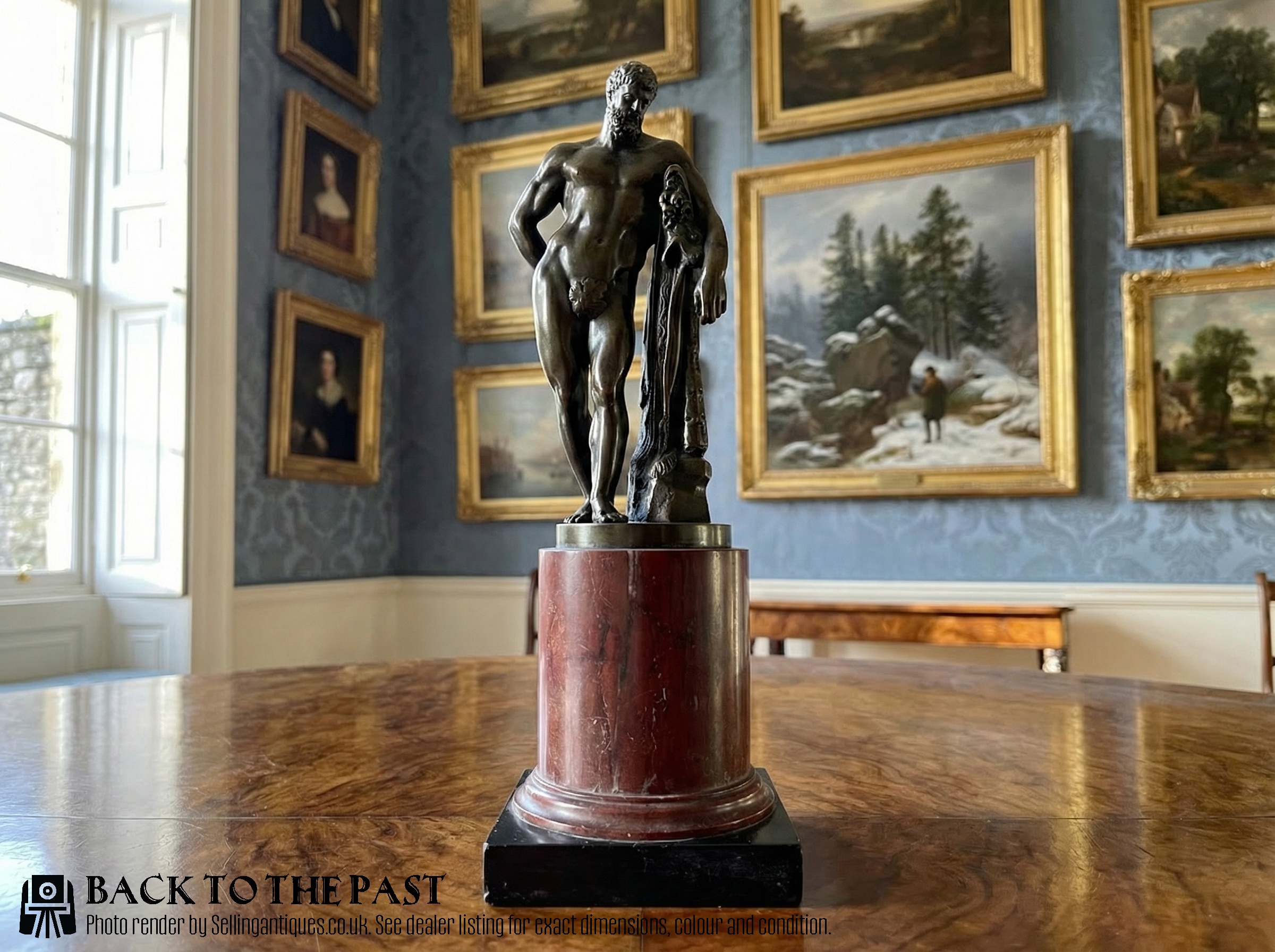
A red marble base sculpture combines metal cast figures with rich stone plinths, most often seen in French animalier subjects and Italian Grand Tour souvenirs. These pieces unite cabinet bronzes, patinated figures, and classical antiquities with decorative stone foundations.
The varieties span from hunting dogs and stallions to mythological figures like the Farnese Hercules and the Capitoline Wolf. You will frequently encounter nineteenth-century French and Italian works utilising rosso levanto and rouge marble bases.
Smaller scale cabinet bronzes and architectural columns form the core of what appears in this category. The stone mounts range from simple polished blocks to elaborate moulded pedestals supporting the metalwork above.
Evaluating quality and execution
The selection and preparation of the marble base also indicate the standard of the piece. Uniform veining, precise corner angles, and a deep, even polish on the stone elevate the work far above plain or hastily finished mountings.
Red Marble Base Sculpture Retail Price Guide 2026
Typical asking prices for red marble base sculpture among the pieces listed under this phrase on Sellingantiques today, from the lower quarter to the upper quarter. They describe what is for sale here now, not the wider market.
Greyhounds and hunting dogs appear with surprising frequency, frozen mid-stride atop heavy red stone.
Carl Kauba·Prosper Lecourtier·Christophe Fratin·Emmanuel Villanis
The Red Marble Base Sculpture Glossary
- Animalier
- A nineteenth-century artistic movement focusing on the realistic depiction of animals, particularly dogs, horses, and wild beasts. These figures frequently sit upon substantial stone bases.
- Grand Tour
- A traditional trip through Europe undertaken by upper-class scholars and collectors to acquire antiquities and souvenir bronzes. These Italian-made pieces often replicate famous classical statues.
- Rosso Levanto
- A striking deep red marble featuring prominent white and purple calcite veins. It provides a dramatic and colourful foundation for nineteenth-century cabinet bronzes.
- Lost-wax casting
- A metalworking process where a molten metal is poured into a mould that has been created by means of a wax model. This technique allows for intricate and delicate details in bronze sculptures.
Red Marble Base Sculpture: Frequently Asked Questions
What is a red marble base sculpture?
These works consist of cast bronze or brass figures mounted onto polished stone plinths made of materials like rosso levanto or rouge marble. They predominantly originate from nineteenth-century French and Italian workshops.
Subjects range from hunting dogs and horses to mythological figures and classical architectural remnants. The heavy stone base anchors the metal casting and adds decorative presence to the room.
How were grand tour sculptures used?
Grand Tour sculptures served as educated souvenirs for travellers returning from Italy with miniature bronze replicas of famous ancient monuments and statues. Collectors displayed them in studies and libraries as signs of classical learning.
Today, they function as decorative cabinet pieces that bring nineteenth-century academic taste into domestic interiors. Their compact size suits placement on mantelpieces, desks, and bookshelves.
How do I distinguish animalier bronzes?
Animalier bronzes focus intently on the accurate anatomy and natural behaviour of animals such as greyhounds, lions, and horses. Christophe Fratin and Prosper Lecourtier were prominent figures in this movement.
These pieces often feature textured casting to represent fur and muscle, supported by simple or moulded marble bases. They capture nineteenth-century realism in sculpture.
What distinguishes nineteenth-century bronze casts?
Nineteenth-century casts rely on traditional foundry techniques that produce varied patinas and hand-chased surface details. The integration between the metal figure and the marble mount is typically tight and deliberate.
Later reproductions often lack the sharp tooling marks and dense stone weight found in period pieces. Examining the underside of the base and the depth of the patina helps identify age.