
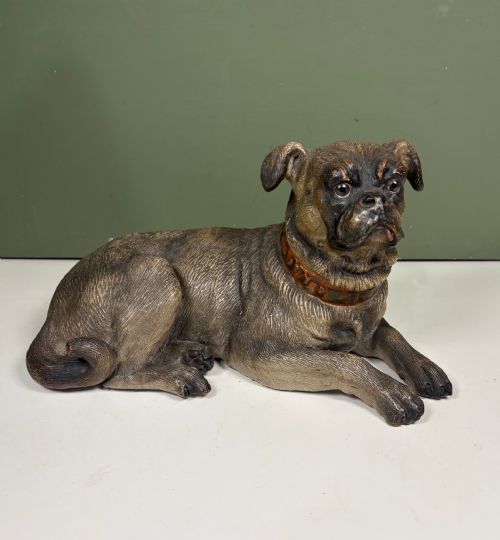


Glazed Pottery Dog Ornament
A glazed pottery dog ornament brings domestic animal companionship and nineteenth-century character directly onto the mantelpiece.
Glazed Pottery Dog Ornament
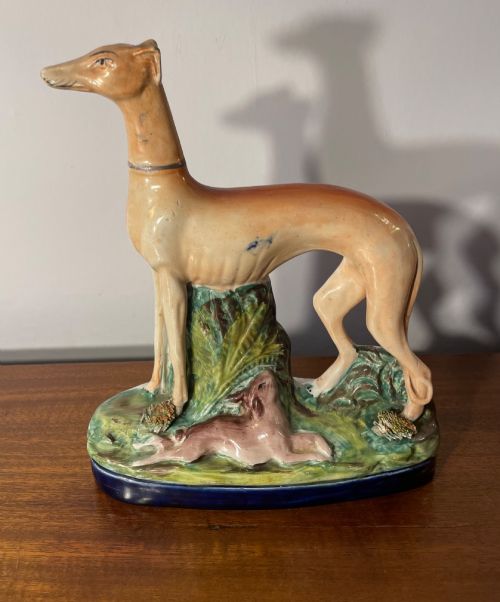
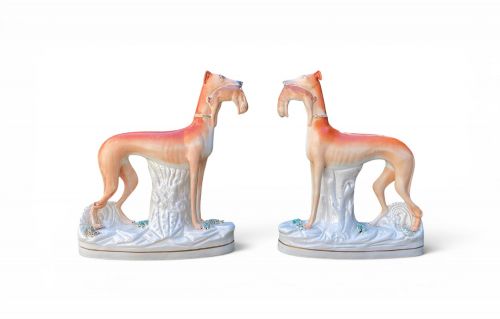
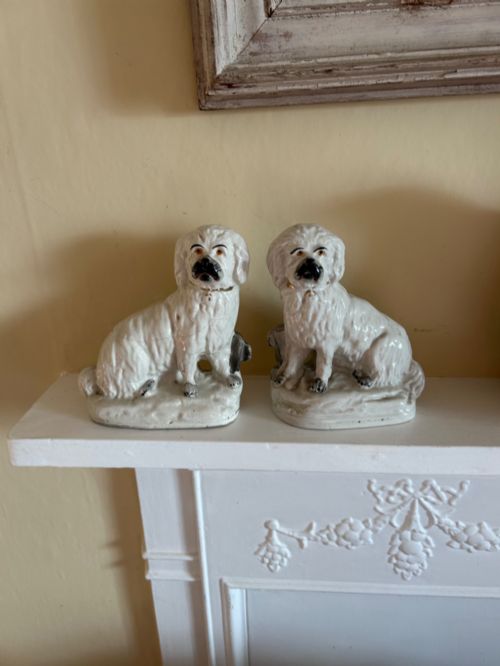
A glazed pottery dog ornament typically takes the form of a seated spaniel, greyhound, poodle, or pug originating from nineteenth-century Staffordshire potteries. Buyers encounter pairs designed for mantel display alongside functional pieces such as inkwells and quill holders.
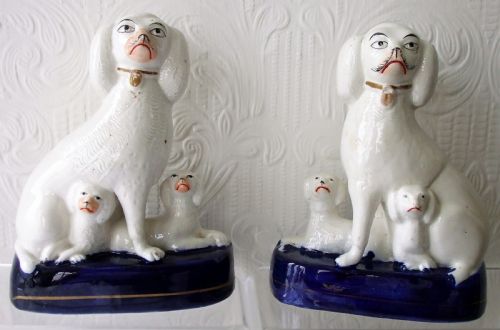
The selection ranges from Victorian spaniels and poodles with pups to Georgian pugs and Chinese Qing Dynasty Sancai figures. Victorian Staffordshire productions dominate the material evidence, often featuring characteristic painted markings and gilt highlights.
Makers such as Thomas Parr and Wedgwood & Co. Ltd appear among the offerings, spanning the Georgian, Victorian, and Edwardian periods. Collectors also find more complex groupings including dog clock sets and quill holders.
Earthenware body and enamel glaze
Potters shaped these figures from earthenware and ceramic bodies, frequently utilising press-moulding techniques to form spaniels, poodles, and greyhounds in pairs or singly. Stoneware also occurs in specific nineteenth-century examples.
Surfaces received lead glaze, enamel colours, and copper lustre finishes, sometimes augmented with gold leaf or gilt details. Hand-painted touches define facial expressions, collars, and spots across spaniels, pugs, and Dalmatians.
Listings span the Georgian, Victorian, and Edwardian periods, stretching from eighteen-hundred to nineteen-ten.
Painting precision and model scarcity
Scale and complexity separate standard pairs from exceptional pieces. Large figures, unusual breeds such as Maltese terriers or Dalmatians, and integrated forms like inkwells or clock groups command greater attention than common spaniel pairs.
Thomas Parr·Wedgwood & Co. Ltd·Beswick
The Glazed Pottery Dog Ornament Glossary
- Staffordshire figures
- Ceramic ornaments produced in the Staffordshire potteries during the nineteenth century. These pieces include popular spaniels, poodles, and greyhounds made for mantel display.
- Copper lustre
- A metallic glaze technique that produces a reflective, coppery sheen on pottery surfaces. Potters applied this finish to highlight the coats and collars of Victorian dogs.
- Sancai
- A traditional Chinese three-colour glaze technique. Pieces utilising this method appear in nineteenth-century Chinese dog of Foe representations.
- Quill holder
- A desk accessory designed to hold writing feathers. Some ceramic dog figures incorporate this function alongside inkwells.
Glazed Pottery Dog Ornament: Frequently Asked Questions
How do I identify a Victorian Staffordshire dog?
Victorian Staffordshire dogs typically feature earthenware bodies with hand-painted enamel details, often produced in mirrored pairs for mantel display. Common breeds include spaniels, poodles, and greyhounds.
Examination of the glaze, base, and painting style helps distinguish these nineteenth-century pieces from later reproductions. Details like copper lustre or gilt collars frequently indicate period manufacture.
Were these ceramic dogs purely decorative?
While most functioned as ornamental mantel figures, some served practical purposes on nineteenth-century desks. Potters integrated inkwells and quill holders into specific greyhound and Dalmatian models.
Pairs were standard for mantelpieces, symbolising loyalty and domestic comfort in Victorian homes. Collectors also encounter more complex groupings involving clock faces.
What breeds are most common?
Spaniels represent the most frequently encountered breed in this category, particularly seated spaniels and King Charles spaniels. Poodles, pugs, and greyhounds also appear regularly in pairs.
Less common variations include Maltese terriers, Dalmatians, and Chinese dogs of Foe. These alternative breeds offer distinct collecting avenues within nineteenth-century ceramics.
How should I display them at home?
Pairs of ceramic dogs look best arranged symmetrically on mantelpieces, side tables, or bookshelves. Their colourful enamels and gilt highlights provide focal points in traditional rooms.
Positioning them away from direct heat sources and heavy traffic protects the earthenware bodies and painted glaze surfaces from accidental damage.