


Vintage Cane Holder Rack
A vintage cane holder rack provides a practical and orderly vessel for walking sticks, canes, and umbrellas in the hallway.
Vintage Cane Holder Rack
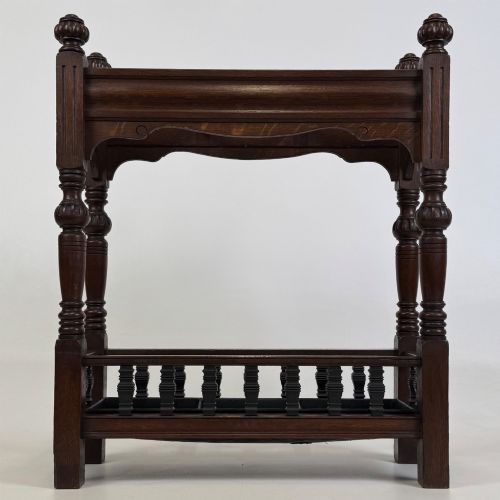
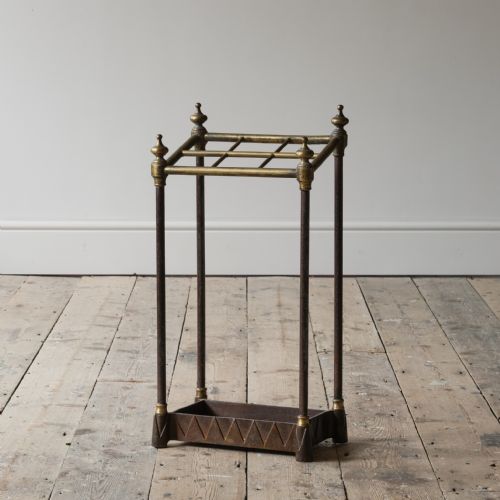
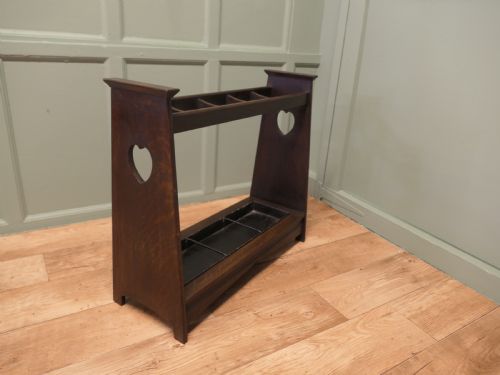
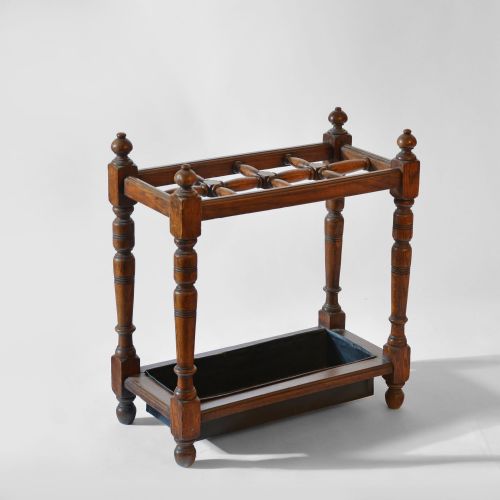
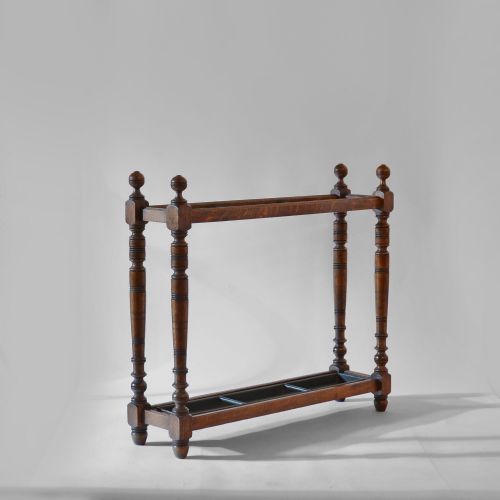
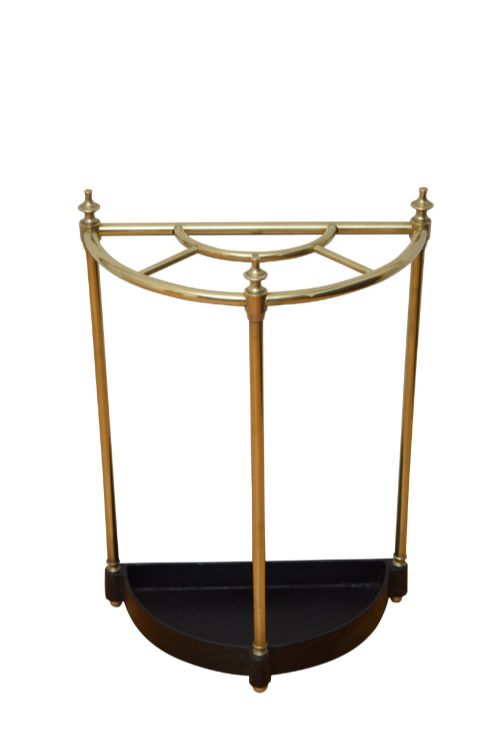
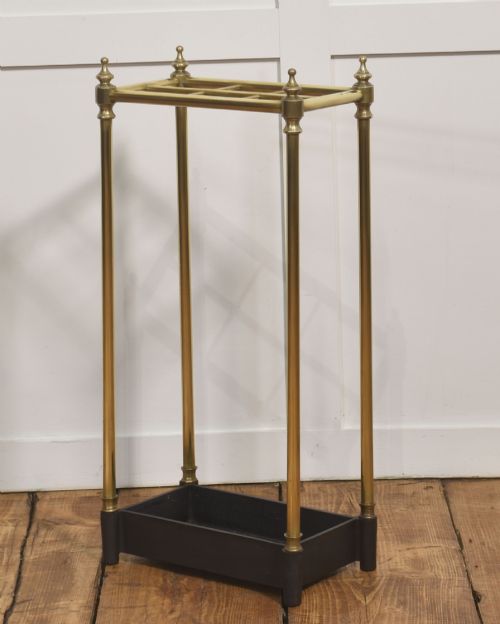
A vintage cane holder rack appears in various forms designed for hallways, including freestanding umbrella stands, stick stands, and hall stands. These pieces accommodate walking sticks and canes alongside umbrellas, keeping entryways tidy.
The pieces on this page originate from the nineteenth and twentieth centuries, spanning the Victorian and Edwardian eras through to the Art Deco period. Oak, cast iron, and brass examples dominate the selection, often taking demi-lune or corner shapes.
Materials and Construction
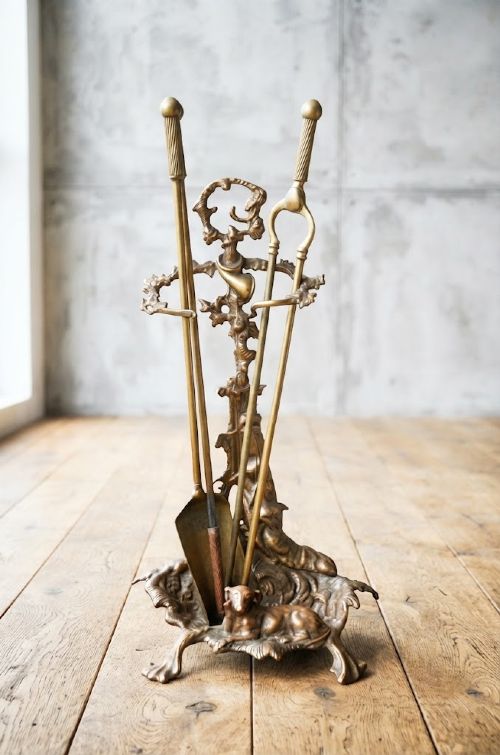
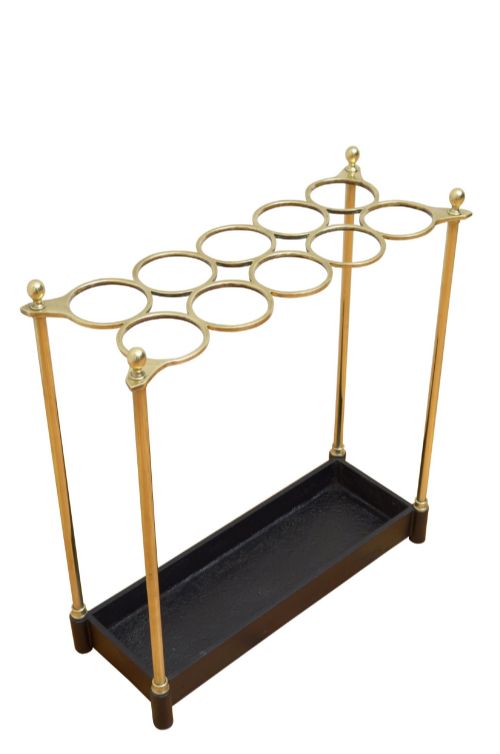
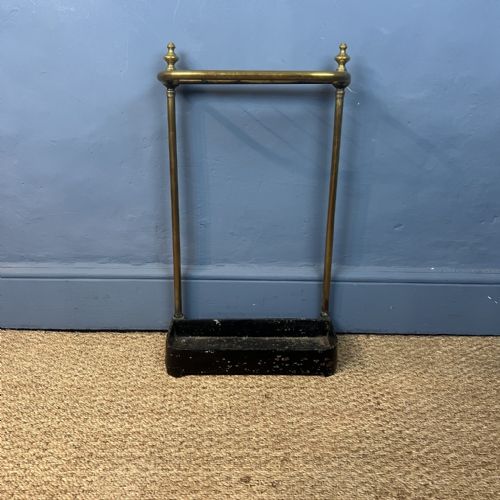
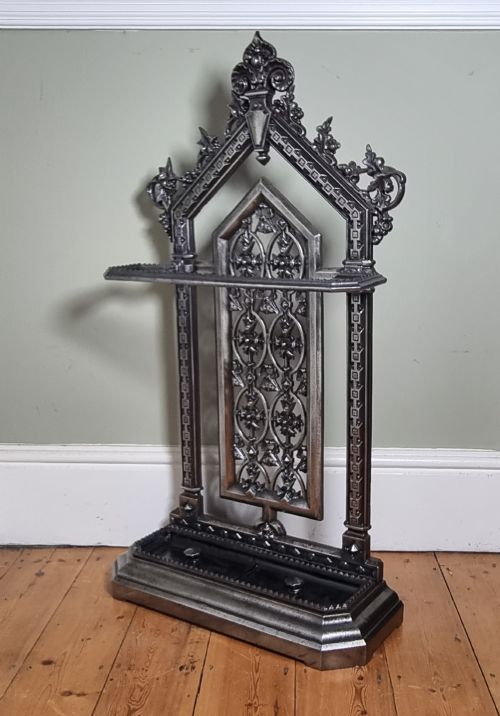
Cast iron and brass form the backbone of many metal stands, sometimes paired with zinc or enamel drip trays to catch rainwater from umbrellas. Iron frames frequently utilise decorative casting techniques to create floral or bamboo-mimicking motifs.
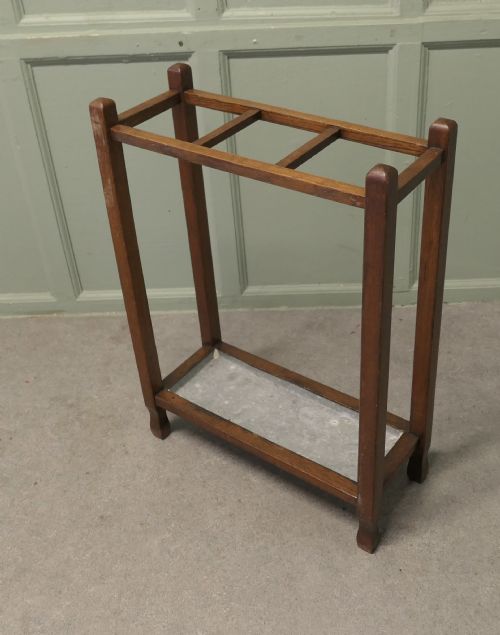
Timber versions rely on solid oak, mahogany, or pine, alongside bentwood. Joinery and panel construction support the weight of heavy walking canes and wet umbrellas over decades of daily use.
Some Victorian ironmongers cast full football kits onto umbrella stands, proving that sports obsession predates modern television.
Judging Quality
The distinction between ordinary and superior examples lies in the crispness of casting detail on iron models and the substance of the brass work. Heavier gauge metals and clean, unrubbed casting lines indicate better production standards.
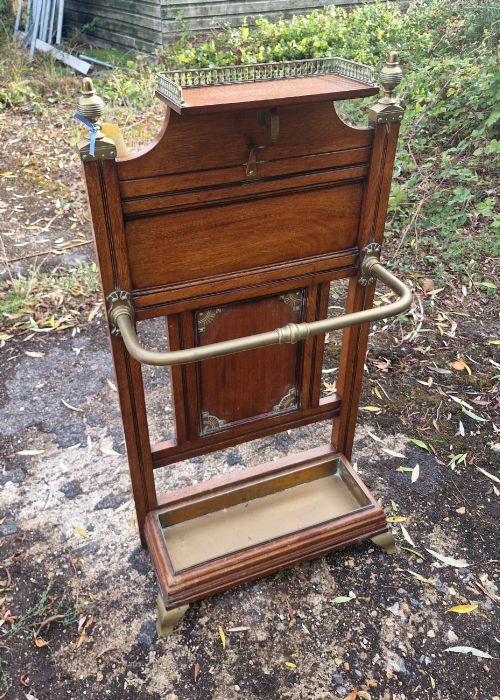
In wooden pieces, the selection of figured timber such as golden oak, alongside the integrity of the original drip trays and division rails, elevates the standing of the piece within its period style.
Coalbrookdale·Thonet·Heals of London
The Vintage Cane Holder Rack Glossary
- Demi-lune
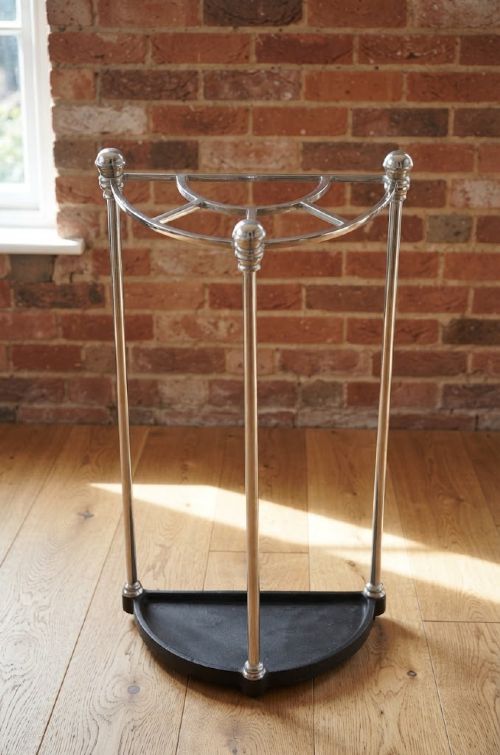
- Half-moon shape designed to sit flush against a hallway wall. This profile saves floor space while holding multiple sticks.
- Drip tray
- A metal base tray positioned beneath the rack to catch water from wet umbrellas. These are often removable for cleaning.
- Bentwood
- Wood softened by steam and bent into curved shapes. This technique creates lightweight yet robust frames.
- Finial
- A decorative terminal ornament placed on top of posts or ends. They frequently top the corner supports of brass stands.
- Faux bois
- Imitation of wood grain rendered in metal or other materials. Art Nouveau iron stands often adopt this naturalistic texture.
Vintage Cane Holder Rack: Frequently Asked Questions
Where should I place a cane holder rack?
These racks belong in a hallway, vestibule, or entrance lobby where household members and visitors deposit outdoor gear.
Their slim profiles, particularly demi-lune designs, allow them to fit against tight corridor walls without obstructing movement.
How do I protect my floors from wet umbrellas?
Most traditional stands include an integrated zinc, brass, or enamel drip tray at the base to pool rainwater.
Checking that this tray remains intact ensures moisture stays off wooden floorboards or carpets.
Can these racks hold walking sticks as well as umbrellas?
The vertical divisions and compartmentalised rings are built specifically to keep slender walking canes upright alongside bulkier umbrella shafts.
Divided sections prevent narrower items from sliding sideways and tangling together.
How do I distinguish a Victorian stand from an Edwardian one?
Victorian examples often favour heavy cast iron, Gothic revival influences, or ornate Aesthetic Movement brass work.
Edwardian and later pieces frequently lean towards simpler oak frames, lighter proportions, and cleaner geometric lines.