



Oak Walking Stick Rack
An oak walking stick rack keeps heavy canes and brollies orderly in the hallway, offering sturdy utility shaped by Victorian and Edwardian joinery.
Oak Walking Stick Rack
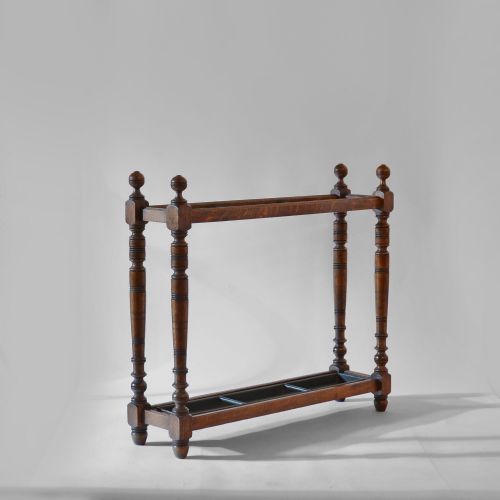
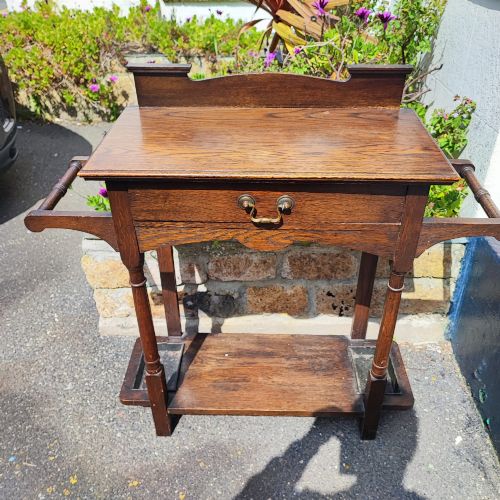
An oak walking stick rack is a practical hallway furnishing designed to hold canes, umbrellas and parasols upright in domestic interiors. The examples met on this page span the Victorian and Edwardian periods, stretching from the late nineteenth century into the early twentieth century.
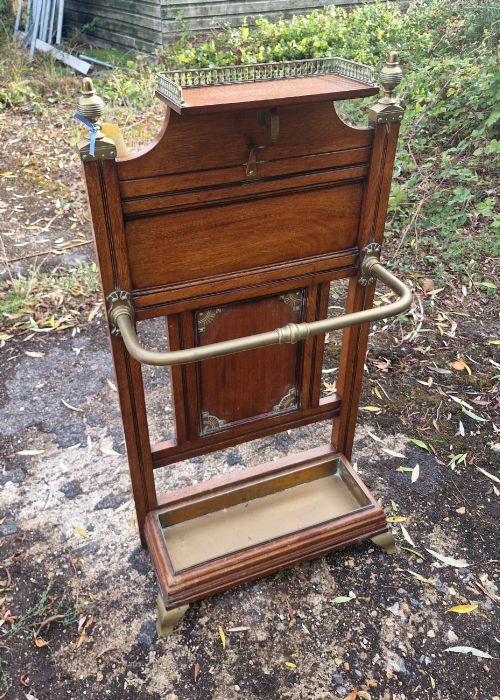
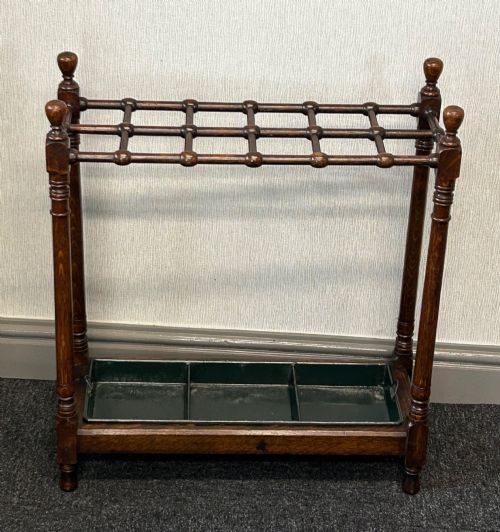
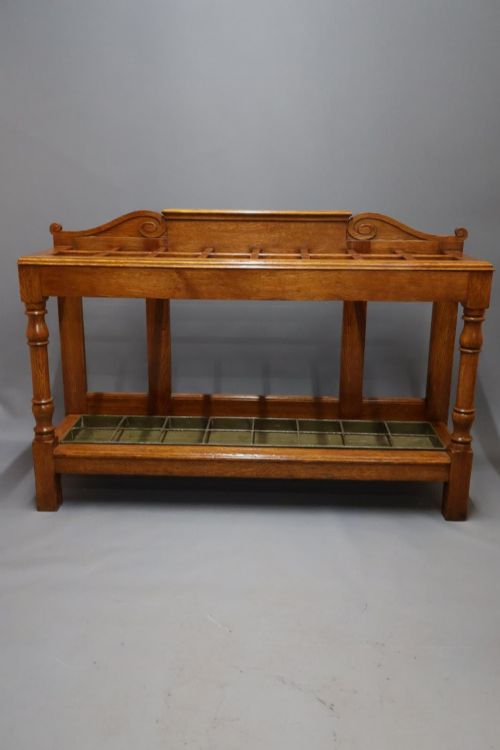
Most pieces take the form of dedicated stick stands or umbrella stands, while others emerge as part of larger hall stands and hall racks. Forms range from compact demi-lune shapes to large twenty-four division racks intended for substantial country houses.
How they were made
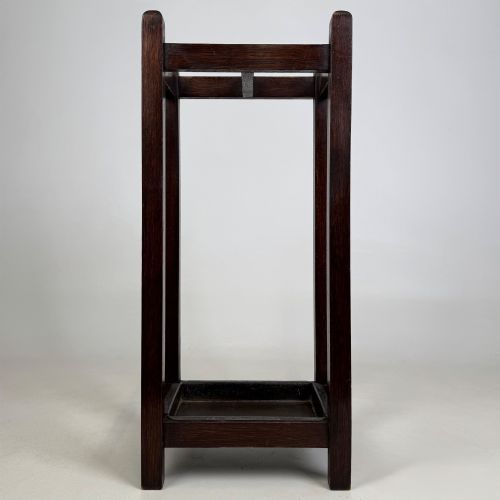
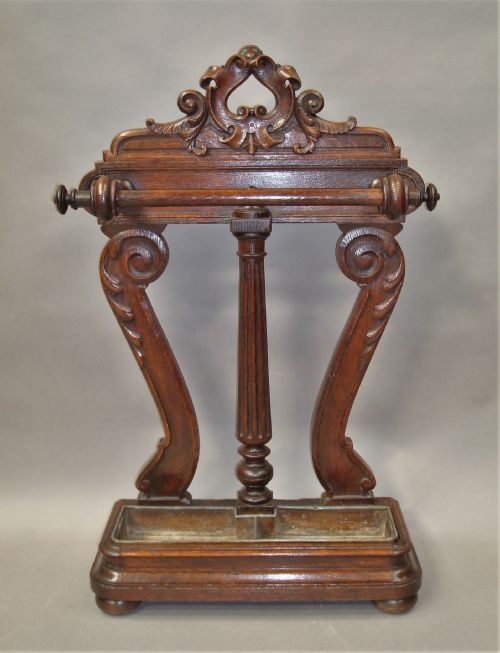
These racks rely on solid oak frameworks, frequently paired with metal, brass, zinc, or cast-iron drip trays to catch rainwater from wet umbrellas. Ceramic components sometimes appear within the structure to hold moisture or provide structural divisions for individual sticks.
Joinery techniques reflect the prevailing styles of their time, spanning plain country house construction, Gothic Revival framing, Aesthetic Movement lines, and structured Arts and Crafts designs.
What varies in quality
Quality separates simple utilitarian workshop pieces from sophisticated designs associated with known makers or retail houses like Heals of London. The refinement of the timber selection and the complexity of the stylistic idiom, such as Gothic Revival tracery or Arts and Crafts movement detailing, dictate the standing of an individual rack.
The integrity of the internal metal or ceramic drip trays and the preservation of the original framework determine how well a piece maintains its functional form over time.
Heals of London·R.A. Lister
The Oak Walking Stick Rack Glossary
- Demi-lune
- Half-moon shape in furniture design, often seen in hall stands intended to sit flush against an entranceway wall. This configuration saves valuable floor space in narrow corridors.
- Arts and Crafts
- A design movement prioritising traditional craftsmanship and honest construction using natural materials like oak. Pieces from this tradition often feature visible joinery and restrained decoration.
- Gothic Revival
- An architectural and decorative style drawing inspiration from medieval forms, featuring pointed arches, tracery, and heavy proportions. This aesthetic appears on robust nineteenth-century umbrella stands.
- Aesthetic Movement
- A late nineteenth-century design approach focused on artistic visual qualities rather than narrative or moral function. Racks in this style display refined proportions and thoughtful use of grain.
Oak Walking Stick Rack: Frequently Asked Questions
Where were stick racks placed?
These racks were positioned near the front entrance of a house so residents and guests could deposit walking canes and wet umbrellas immediately upon entry.
They anchored the hallway furniture scheme alongside coat hooks and mirrors, keeping damp floors safe from dripping rain.
How do I date an oak rack?
Dating relies on combining the stylistic clues, such as Gothic Revival motifs or Arts and Crafts simplicity, with the construction methods evident in the oak frame.
Victorian pieces tend to show heavier proportions, whereas Edwardian examples often display lighter frames and simpler lines.
Are all these stands made entirely of wood?
While the primary frame is constructed from oak, the majority incorporate metal, brass, zinc, cast-iron, or ceramic components.
These secondary materials were essential for the internal drip pans that caught water from wet umbrellas.
Can these racks hold modern umbrellas?
The division sizes within these antique racks accommodate standard walking sticks, canes, and most traditional umbrellas.
Larger country house models with numerous divisions offer ample space, though very wide modern golf umbrellas might require specific wider slots.