

Wooden Stick Stand Rack
A wooden stick stand rack organises hallways with sturdy practicality, bringing period timber and cast metal into daily domestic use.
Wooden Stick Stand Rack
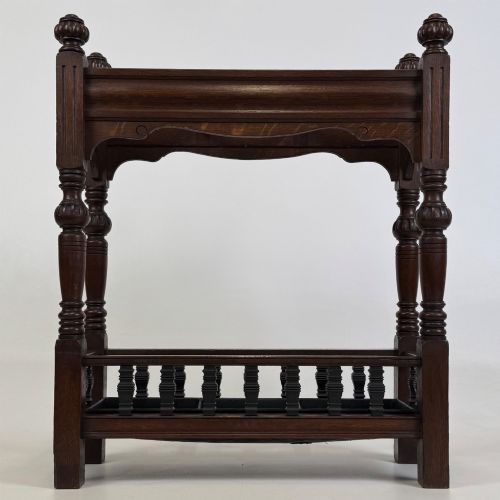
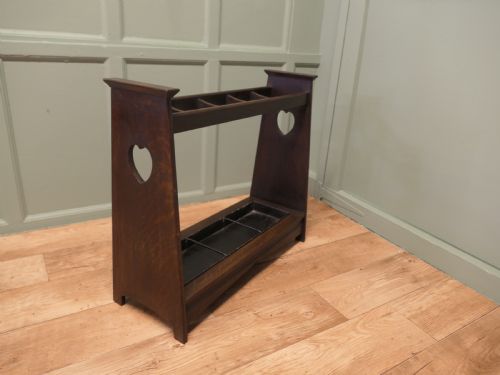
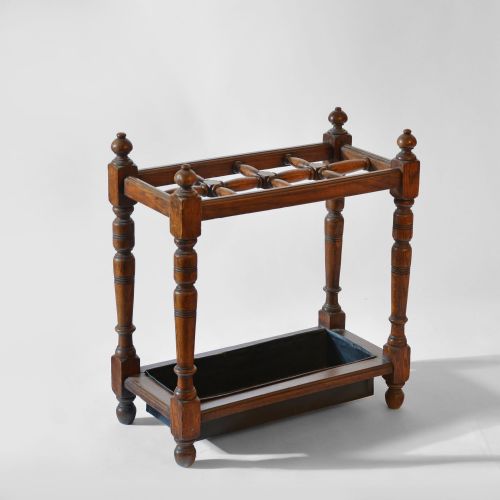
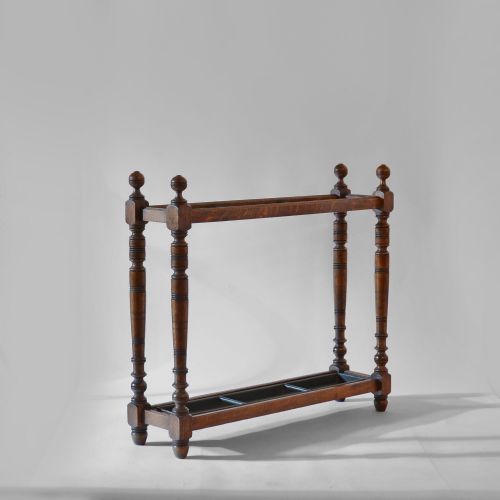
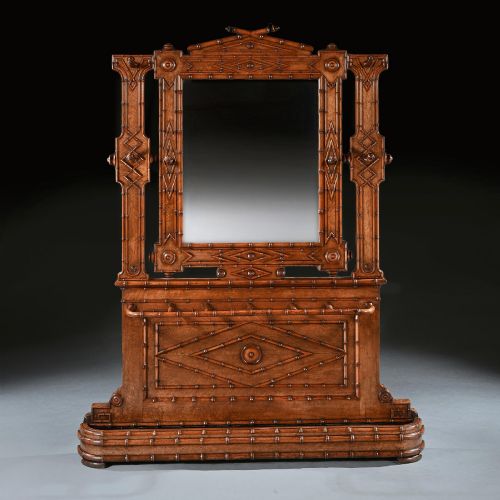
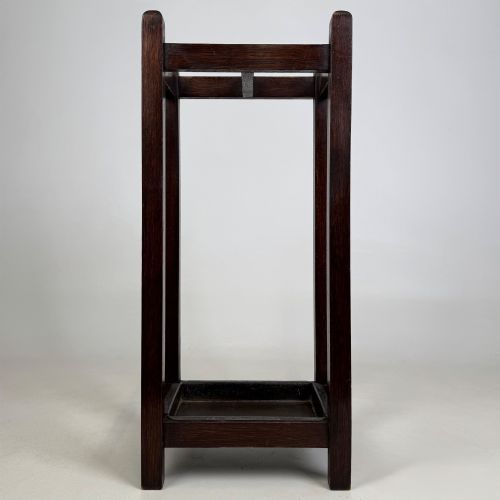
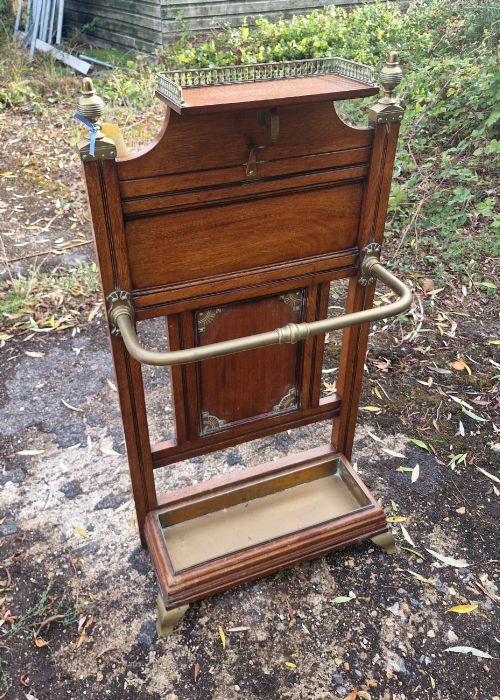
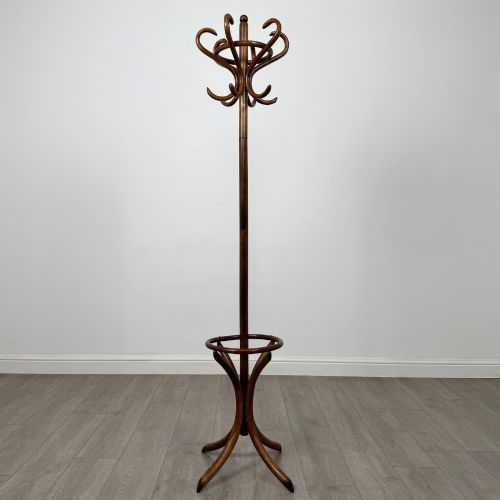
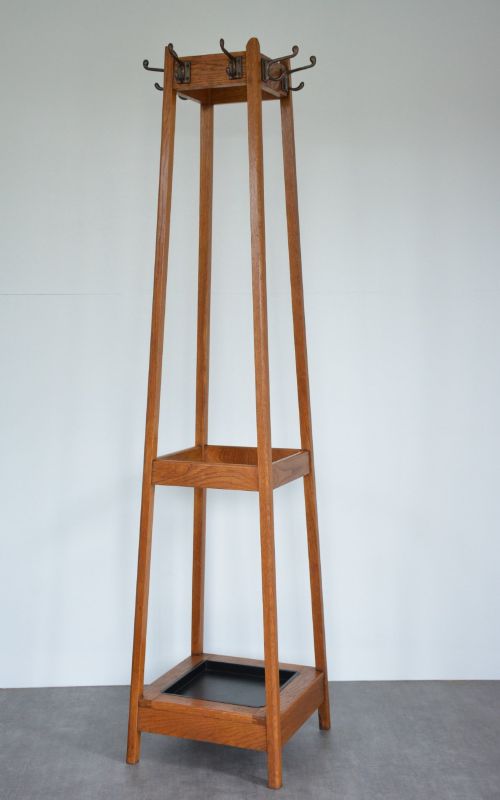
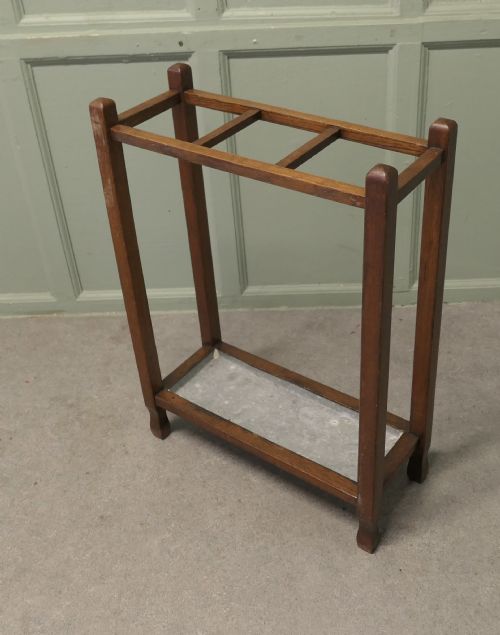
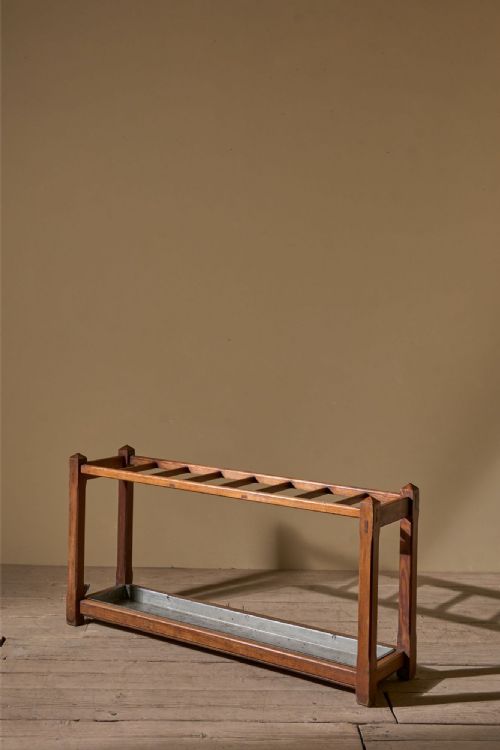
A wooden stick stand rack serves as a purposeful piece for an entrance hall, designed to hold walking sticks, umbrellas, and whips. Buyers searching this phrase will find that oak forms the predominant timber, appearing alongside mahogany, pine, and bentwood.
The pieces on this page span the nineteenth century through the Edwardian era, incorporating styles such as Arts and Crafts, Gothic Revival, and Black Forest carving. Many examples combine upright timber frames with metal drip trays and umbrella holders.
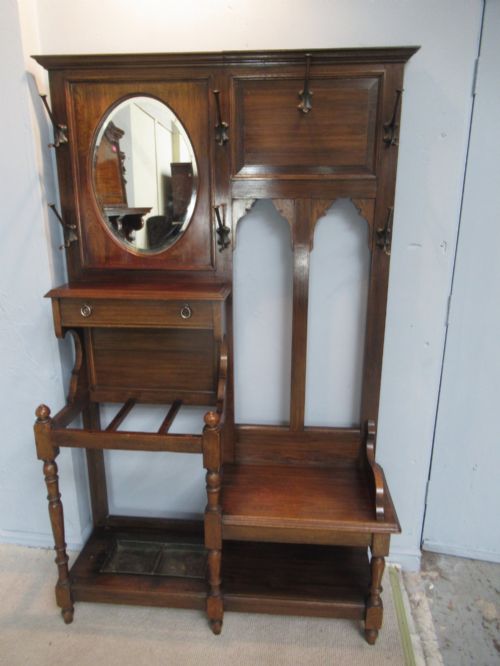
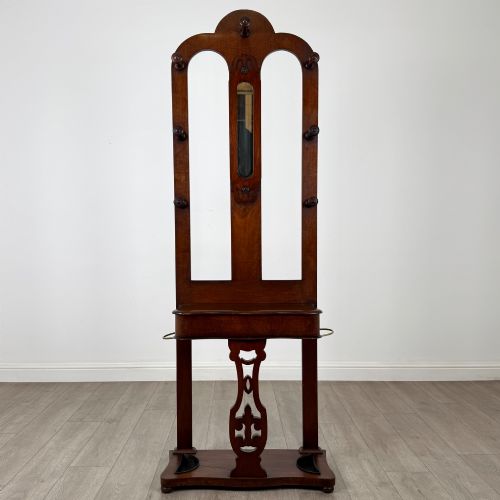
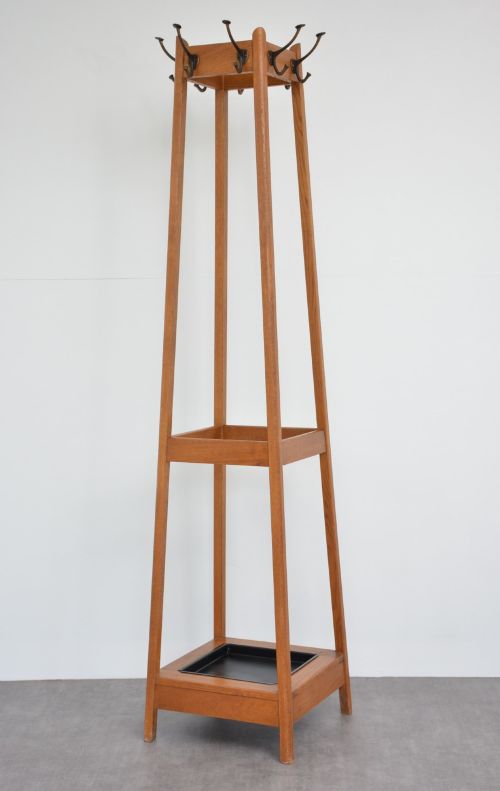
Larger hall stands combine the stick rack function with coat hooks, hat pegs, and sometimes central mirrors. More compact corner stands and dedicated umbrella holders make up the rest of the selection.
Materials and construction methods
Metal components play a structural and protective role, with cast iron, brass, and zinc forming integrated drip trays and divider rails. These metal elements catch water from wet umbrellas and prevent timber bases from rotting.
Carved wooden bears stand guard with umbrella rings, ready to hold your walking stick.
Assessing quality in stands
Quality rests on the selection of timber and the integrity of the joinery rather than mere ornamentation. Heavier, denser oak and well-figured mahogany indicate better workshop standards than softer utility pines.
The presence of original metalwork, particularly signed or cast drip trays and brass divider rails, elevates a piece. Carved details, such as those found on Black Forest bear stands or Gothic panels, show the hand of a skilled maker.
Thonet·Heals of London·Liberty Design
The Wooden Stick Stand Rack Glossary
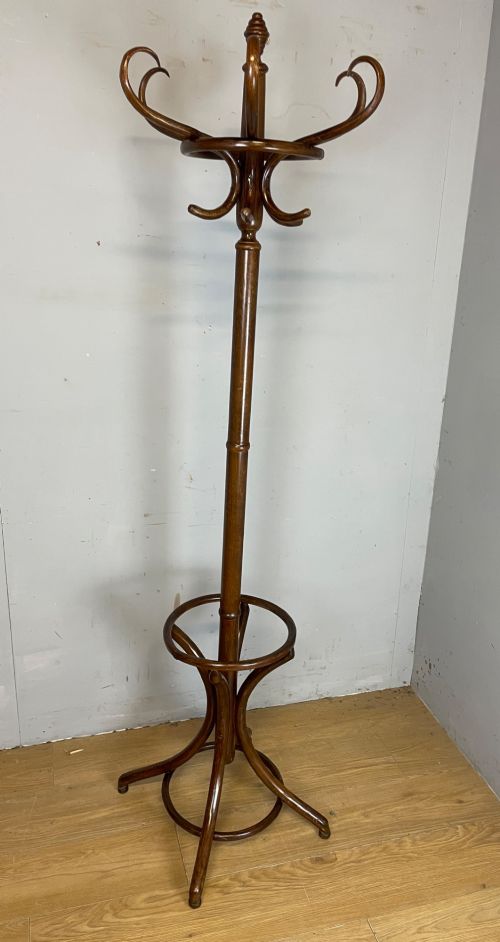
- Bentwood
- Wood softened by steam and bent into curved shapes. This technique created lightweight, resilient frames popular in the late nineteenth and early twentieth centuries.
- Drip tray
- A metal tray placed at the base of a stand to catch water. Zinc, brass, and cast iron served to protect the wooden floor from moisture.
- Black Forest
- A nineteenth-century carving style originating in Switzerland and Germany. These pieces typically feature naturalistic animal figures, most often bears.
- Hall stand
- A larger piece of furniture combining a stick stand with coat hooks, hat pegs, and a mirror or glove box. It anchored the entrance of period homes.
- Aesthetic Movement
- A late nineteenth-century design style emphasising visual beauty over narrative content. It influenced furniture lines with simpler forms and Japonisme details.
Wooden Stick Stand Rack: Frequently Asked Questions
What is a wooden stick stand rack?
A wooden stick stand rack is a piece of entrance hall furniture designed to hold walking sticks, umbrellas, and whips.
These stands use timber frames paired with metal trays to keep hallways tidy and dry.
How do I know the period of a stand?
Period identification relies on matching stylistic cues like Arts and Crafts joinery or Gothic carving with timber choices.
Victorian and Edwardian pieces often display distinct construction methods and hardware native to their decade.
Where should I place a hall stand?
These stands belong in entrance halls, porches, or boot rooms where wet outerwear and walking gear accumulate.
Their narrow footprints suit transitional spaces near front doors.
Are drip trays original?
Many stands retain their original zinc, brass, or cast iron drip trays designed to catch rainwater.
Original metalware matches the age and wear of the surrounding wooden frame.