




Country House Umbrella Rack
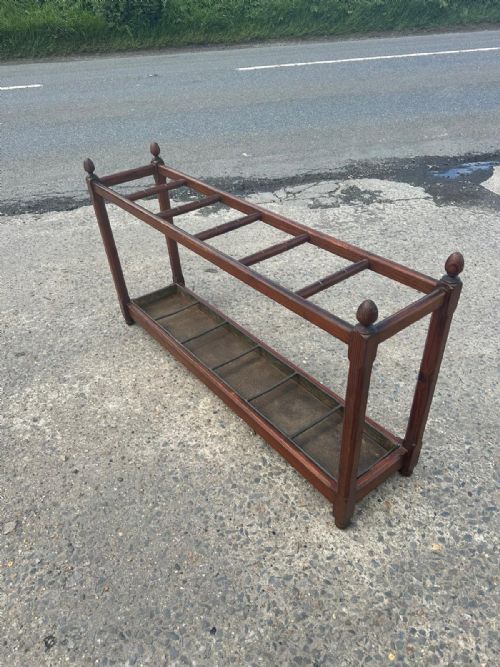
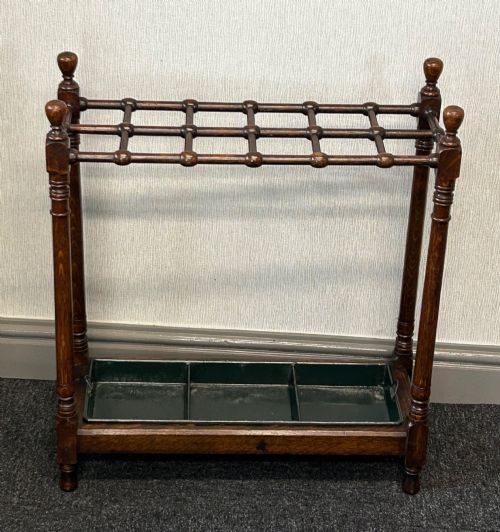
These country house umbrella racks are substantial hall furniture built to organise wet weather gear in large residences.
Country House Umbrella Rack
A country house umbrella rack is designed for hallways and entrance passages to hold walking sticks, canes and wet umbrellas. When searching for a country house umbrella rack, buyers encounter robust pieces dating from the Victorian and Edwardian eras, spanning the late nineteenth century through to the early twentieth century.
The forms on this page include dedicated umbrella stands, stick stands, hallstands and hall stands with multi-division racks. Many examples originate from English and Scottish country houses, withDemi Lune shapes and large scale pairs appearing among the listings.
Most pieces seen here belong to the Victorian and Edwardian periods, employing regional cabinet making traditions from 1880 to 1900. These items served a practical function in grand entrance halls, keeping floors clear of dripping water.
Materials and construction
Construction relies heavily on durable hardwoods such as oak, mahogany and pitch pine, often paired with metal components like cast iron, brass and zinc liners to catch water. Cabinet makers utilised sturdy joinery to withstand the weight of heavy wooden walking sticks and metal-tipped umbrellas.
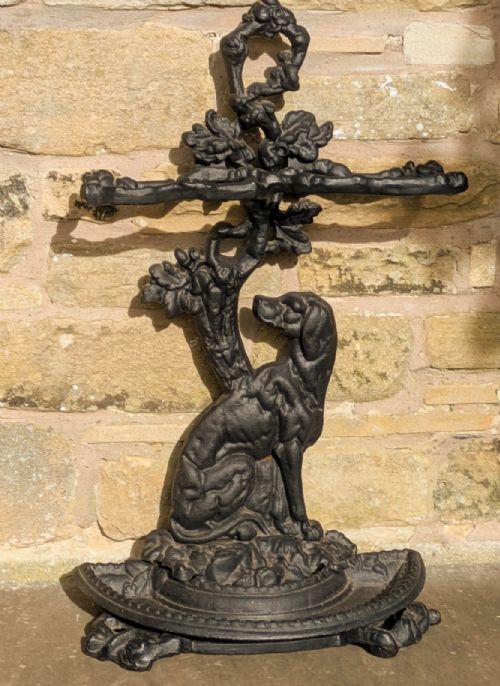
Cast iron examples incorporate open fretwork or figurative designs, such as gun dog motifs, cast directly in foundry moulds. Metal drip trays and zinc inserts protect the wooden bases from dampness and decay over decades of daily use.
Judging quality and character
Quality in these pieces rests upon the selection of timber and the complexity of the division framework. A twenty-four division rack or a substantial hallstand with integrated mirror and hooks demonstrates a higher grade of manufacture than a basic single-purpose stand.
The integrity of secondary elements, such as original brass fittings and removable zinc drip pans, distinguishes superior examples. Maker attribution, through stamps or known workshop designs like those associated with Heals of London or Coalbrookdale, elevates the standing of an individual rack.
Heals of London·Coalbrookdale
The Country House Umbrella Rack Glossary
- Demi Lune
- A half-moon shape used for hall furniture designed to sit flat against a wall. This profile saves floor space in narrow entrance passages.
- Hallstand
- A large piece of entrance hall furniture combining a stick stand, coat hooks and frequently a mirror. These multifunctional items dominated Victorian hallways.
- Zinc liner
- A removable metal tray fitted inside the base of an umbrella rack to collect water. This protective element prevents moisture from rotting the surrounding wood.
- Stick stand
- A compact piece intended specifically for walking sticks and canes. They share construction methods with umbrella racks but often feature narrower apertures.
Country House Umbrella Rack: Frequently Asked Questions
Where did these stands sit?
These racks stood in the main entrance halls and boot rooms of large residences where guests and family members removed wet outerwear.
Positioned near the front door, they provided immediate access for dropping off walking sticks and dripping umbrellas upon entry.
How do I care for the wood?
Keep wooden frames away from direct heat sources and sudden temperature shifts to prevent the timber from splitting.
Apply a traditional wax polish periodically to nourish the oak or mahogany surfaces and maintain their natural lustre.
Are zinc trays original?
Many Victorian and Edwardian stands retain their original removable metal drip pans designed to protect the floor and base timbers.
Replacements do occur due to corrosion from standing water, but matching the patination of the surrounding metal is common.
How do I date a stand?
Examine the wood species, construction fixings and stylistic cues such as Gothic Revival or Arts and Crafts ornamentation.
Victorian pieces often display heavier proportions and cast iron elements, whereas Edwardian versions can exhibit simpler rectilinear lines.