

Umbrella Stand Drip Tray
An umbrella stand drip tray collects the runoff from wet walking sticks and wet canines.
Umbrella Stand Drip Tray
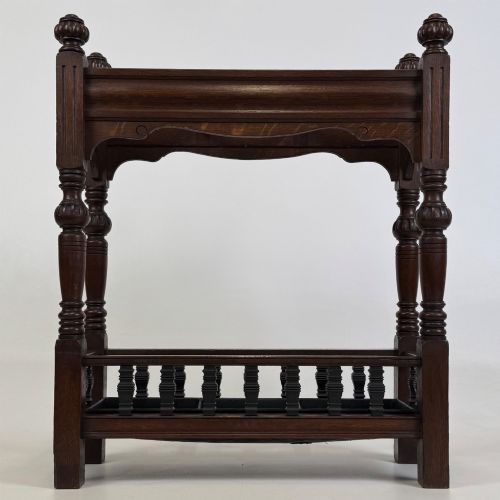
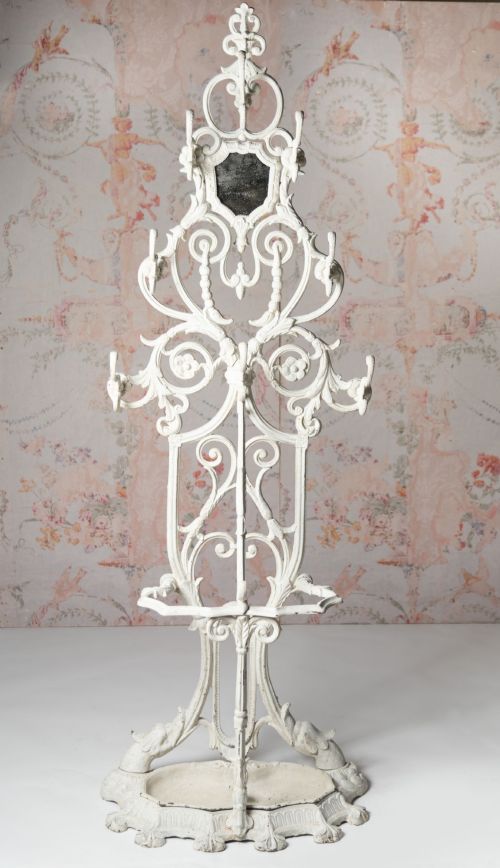
An umbrella stand drip tray sits at the base of hall furniture to catch rainwater from wet sticks and canopies. You will most frequently encounter these items incorporated directly into the lower frame of Victorian or Edwardian hall stands and freestanding stick holders.
The objects span multiple decades from the nineteenth century into the mid twentieth century, utilising timber and metal frameworks. Oak forms a large portion of the wooden examples, while cast iron and brass constitute the metal varieties.
Makers designed these catchers to protect domestic flooring from moisture pooling beneath walking equipment. Many survivors retain their original removable metal inserts designed to empty pooled water easily.
Materials and construction methods
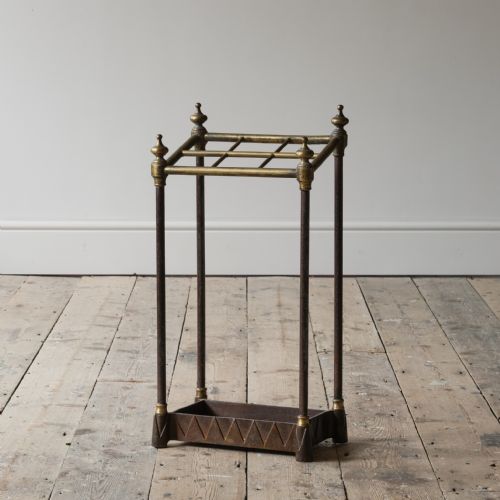
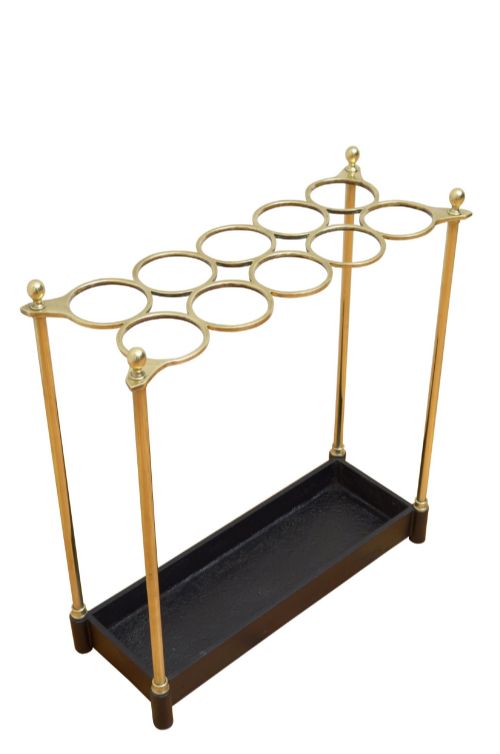
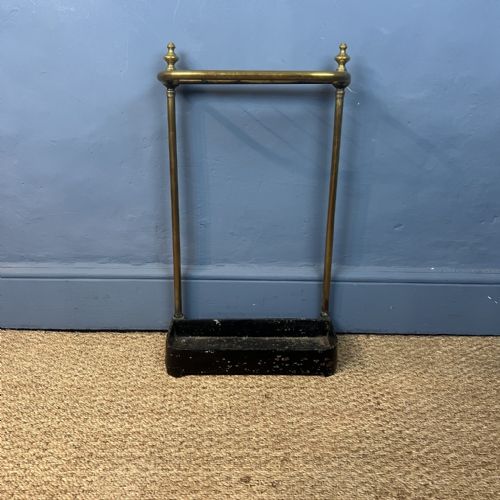
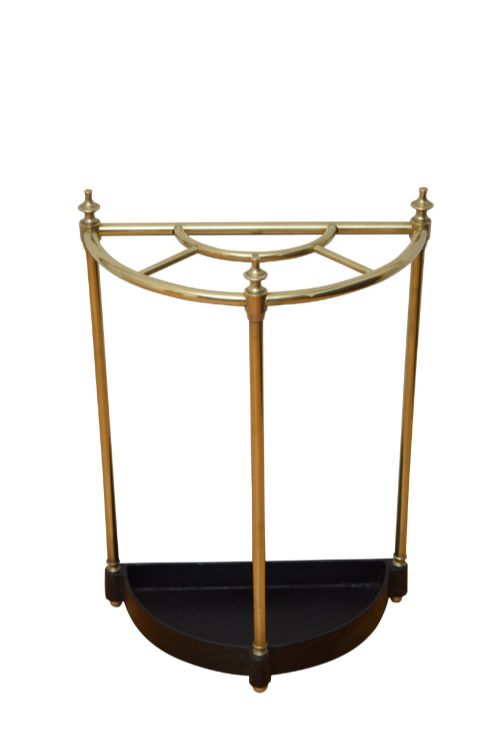
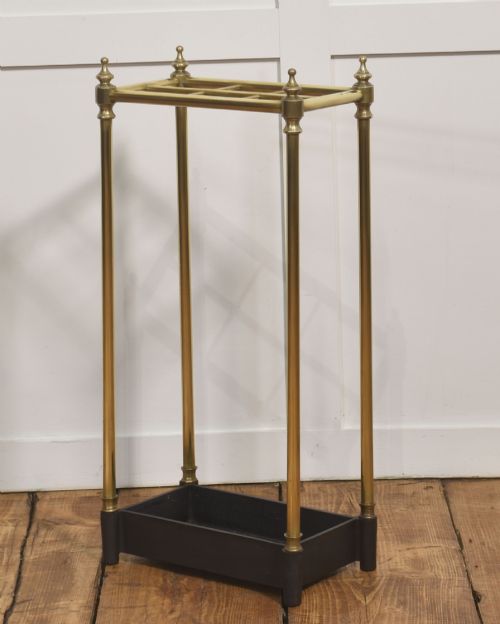
Foundries cast iron and brass into rigid frames, half moon shapes, and cylindrical holders, often incorporating decorative finials and dog tooth patterns. Metal trays were pressed or soldered from zinc, brass, and iron to withstand continuous exposure to moisture.
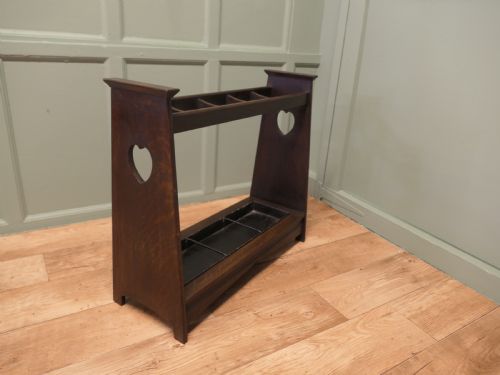
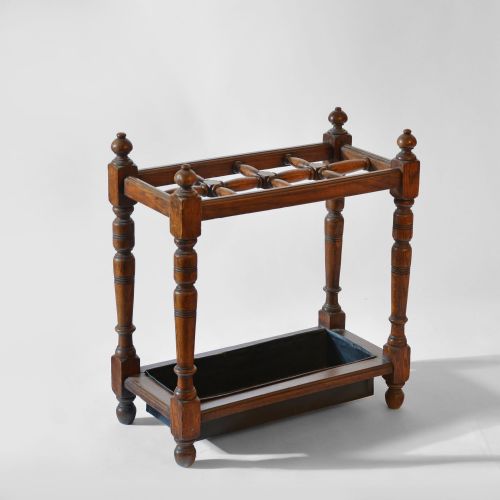
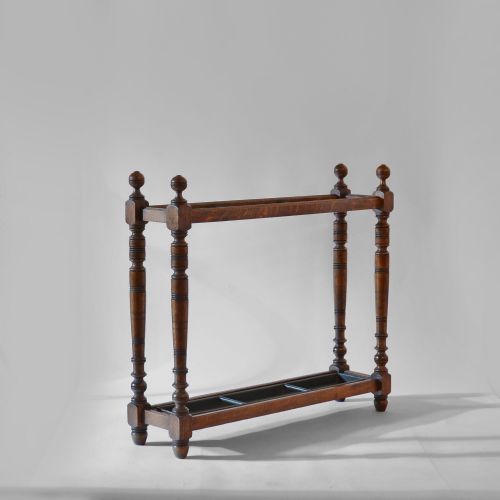
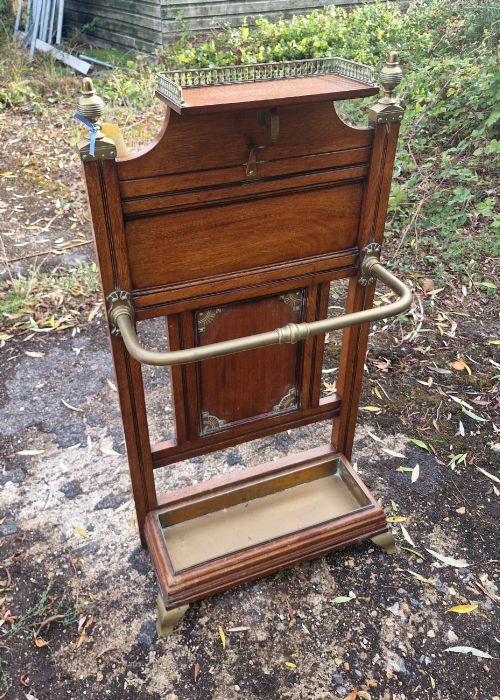
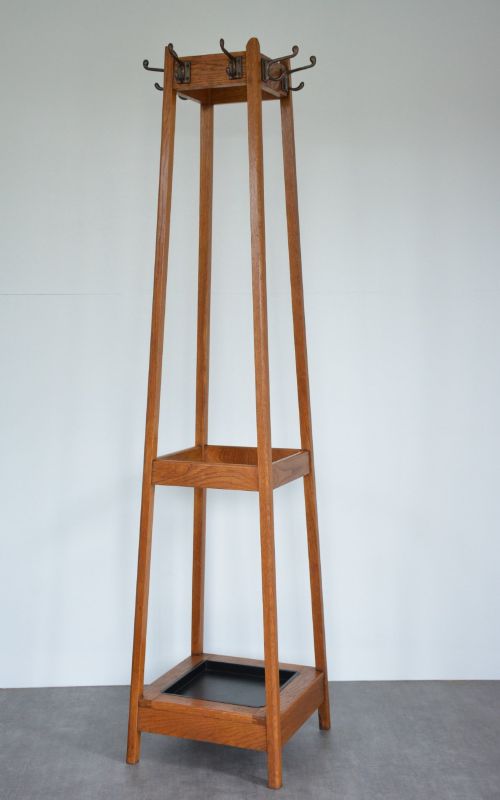
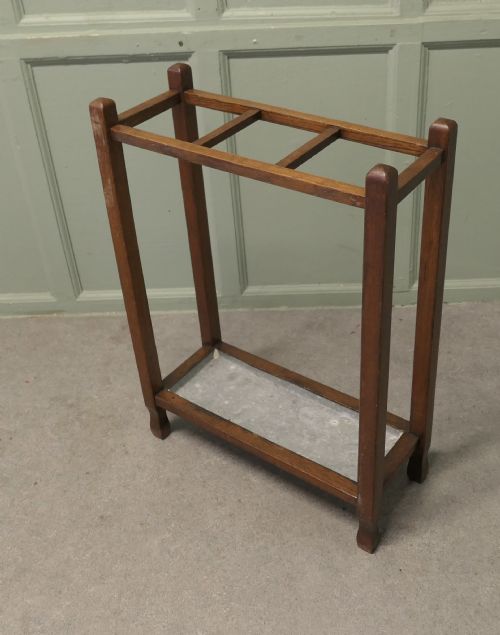
Joiners and cabinetmakers worked solid oak, mahogany, and pitch pine into stick stands and hall trees using traditional framing joints. Metal drip trays fitted snugly into rebated wooden bases or slid beneath open iron rails to contain runoff safely.
Materials span cast iron, brass, oak, mahogany, zinc, glass, and pitch pine across Victorian, Edwardian, and Art Deco periods.
Distinctions in quality and finish
Quality rests upon the retention of the original tray rather than a modern replacement sheet. Cast iron examples with crisp relief moulding and named foundry stamps sit above plain utility castings.
Timber selection and carving detail separate standard hallway furniture from pieces attributed to notable makers or specific design movements like Arts and Crafts and Aesthetic style.
Coalbrookdale·Thonet·Heals of London·Liberty Design
The Umbrella Stand Drip Tray Glossary
- Demi lune
- A half moon shape commonly found in brass and iron corner stands. This curved profile allowed furniture to sit flush against hallway walls.
- Finial
- A decorative ornament fixed to the top corners or posts of metal stands. These small brass or iron details finished the structural terminals.
- Bentwood
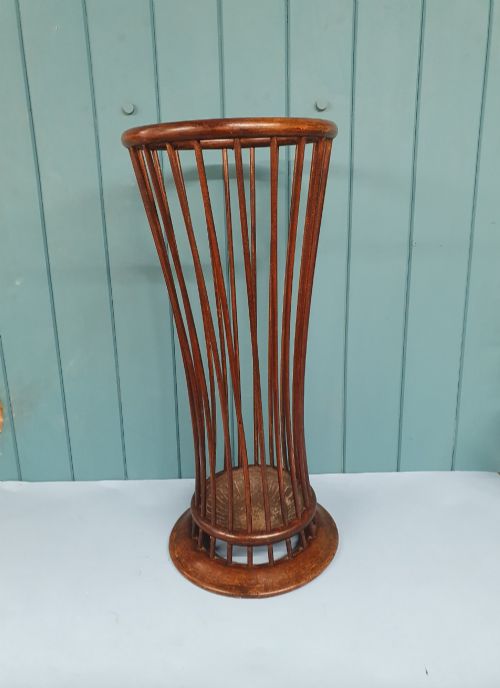
- Wood softened by steam and bent into curved forms. This technique created lightweight frames for hallway furniture.
- Cast iron
- Iron poured into a mould to set into rigid decorative shapes. This material provided heavy stable bases for umbrella holders.
Umbrella Stand Drip Tray: Frequently Asked Questions
Where did these trays sit?
These trays rested directly at the base of umbrella stands and hall trees, positioned to catch water running down wet shafts.
They slid beneath the main frame or sat within a dedicated wooden recess designed specifically for containment.
What materials make up the trays?
Makers utilised durable metals including brass, iron, and zinc to resist rusting from standing water.
Some wooden hall furniture incorporated lined wells or removable metal pans at floor level for the same purpose.
How do I spot an original tray?
Original trays show natural wear, patination, and fit precisely into the dedicated runners or floor housing of the stand.
Replacements often utilise modern gauge metal that lacks the age and surface texture of the surrounding frame.
Which periods produced these stands?
Production spans the Victorian and Edwardian eras, continuing through the Arts and Crafts movement into the 1930s and 1950s.
Earlier nineteenth century pieces favour heavy cast metals and solid oak, while later twentieth century examples adopt industrial forms.