





Vintage Oak Hallstand
A vintage oak hallstand solves the perennial problem of the entranceway with sturdy timber and practical hanging space.
Vintage Oak Hallstand
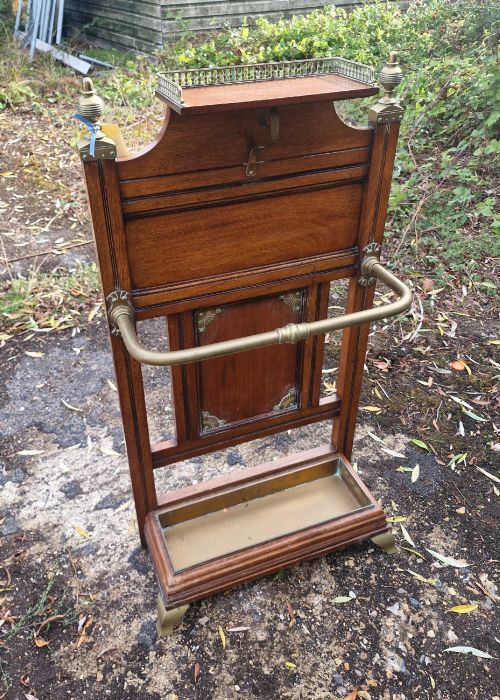
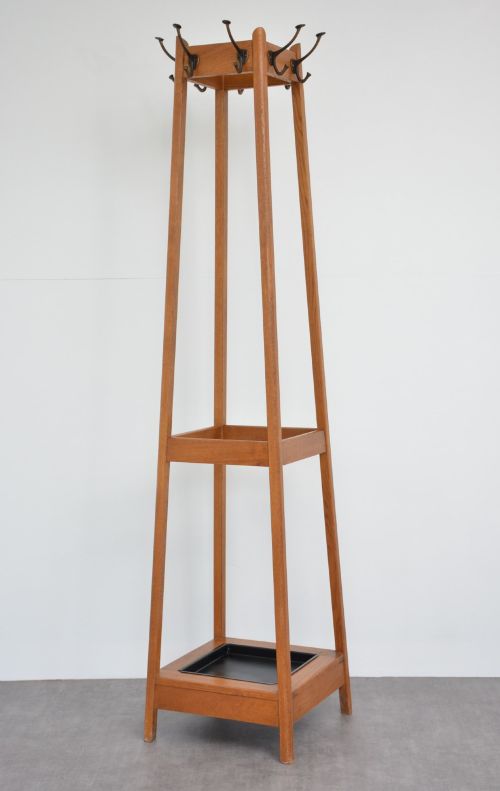
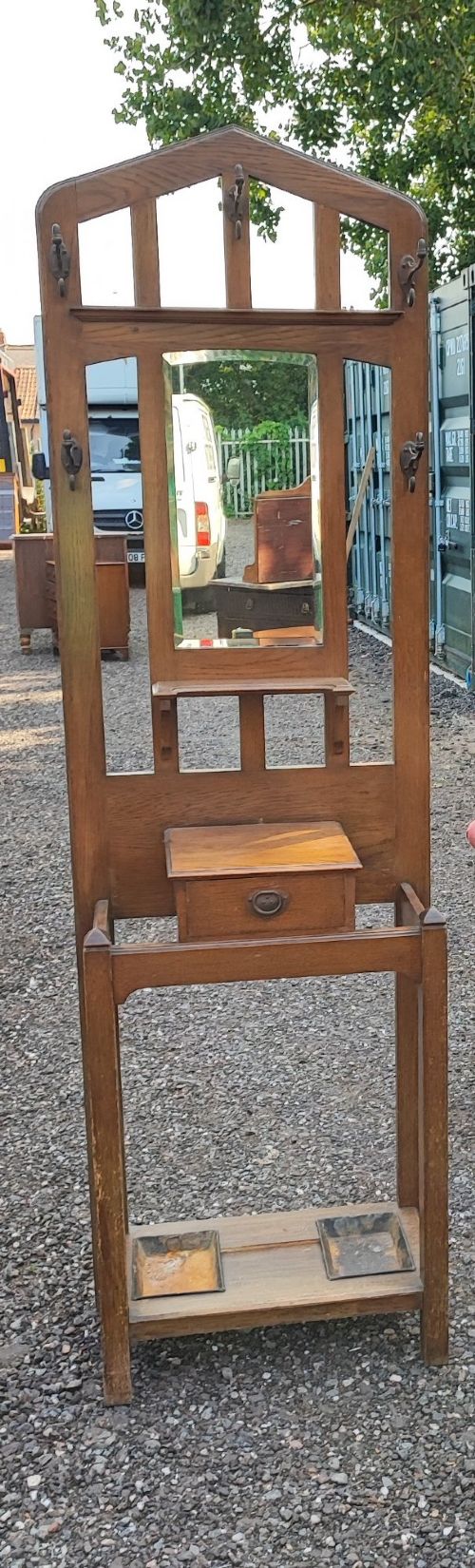
A vintage oak hallstand serves as a functional anchor for hallways, combining coat hooks, umbrella holders, and frequently a mirror into a single piece of furniture. The selection ranges from robust Victorian and Gothic Revival examples to lighter Arts and Crafts and Art Nouveau interpretations.
Most pieces encountered here date from the nineteenth and early twentieth centuries, reflecting the period's domestic routines. Common forms include tall combined hallstands with drip trays as well as dedicated umbrella or walking stick stands in solid oak.
Construction and materials
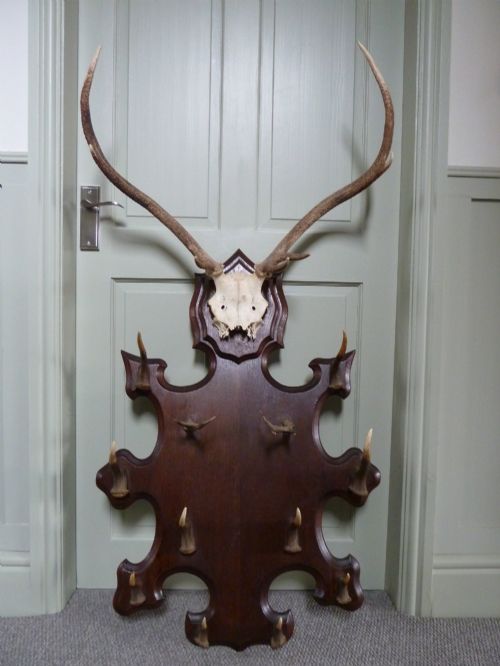
These items rely heavily on solid oak, chosen for its durability and prominent grain, often complemented by brass hooks and iron or metal drip trays. Certain pieces incorporate distinctive decorative elements such as stag horn, bone, or inset marble panels.
Joinery methods range from traditional mortise and tenon framing in Victorian country house workshops to more linear, pared-back construction seen in later industrial and Arts and Crafts pieces.
Vintage Oak Hallstand Retail Price Guide 2026
Typical asking prices for vintage oak hallstand among the pieces listed under this phrase on Sellingantiques today, from the lower quarter to the upper quarter. They describe what is for sale here now, not the wider market.
Several examples incorporate genuine stag horn hooks, ensuring muddy outerwear shared space with the forest.
Distinguishing quality
Quality reveals itself in the integration of secondary materials like heavy brass hardware, bevelled mirror glass, and intact metal drip trays that survive heavy daily use. Superior examples display thoughtful proportions and carved detailing rather than plain, utilitarian construction.
The integrity of the structural timber, particularly around the base where umbrella moisture collects, separates soundly preserved originals from those requiring extensive restoration.
James Shoolbred·Astrola
The Vintage Oak Hallstand Glossary
- Hallstand
- A combined hall furniture piece featuring coat hooks, a mirror, and umbrella wells. It stands against an entryway wall to receive outer garments and walking gear.
- Drip tray
- A removable metal basin positioned at the base of stick and umbrella holders. It catches rainwater from wet accessories to protect the surrounding oak floor.
- Gothic Revival
- A nineteenth-century architectural and decorative style characterised by pointed arches, heavy moulding, and ecclesiastical motifs. It frequently appears in substantial country house hall furniture.
- Arts and Crafts
- A design movement valuing visible handcraftsmanship, honest construction, and simple forms. Pieces from this tradition often feature unadorned oak surfaces and subtle geometric brackets.
Vintage Oak Hallstand: Frequently Asked Questions
How were hallstands used historically?
Historically, households used these stands as the first point of deposit upon entering a home. Residents and visitors hung heavy wool coats, deposited walking canes, and placed umbrellas into the designated lower wells.
The incorporated mirror allowed individuals to check their appearance before stepping back out through the front door.
How do I care for oak hallway furniture?
Maintenance involves dusting the oak timber regularly and occasionally applying a suitable wax to nourish the grain. Keeping the metal or iron drip trays clean and dry prevents moisture damage to the lower framework.
Positioning the piece away from direct heat sources ensures the solid wood remains stable over time.
How do I distinguish Victorian from Arts and Crafts styles?
Victorian hallstands often feature darker finishes, carved ornamentation, and formal architectural elements like pediments and turned spindles. They tend to look heavier and more formal.
Arts and Crafts examples showcase lighter oak tones, simpler linear forms, and exposed joinery that emphasises material honesty rather than applied decoration.