

Gothic Oak Hall Furniture
Gothic oak hall furniture brings architectural presence into an interior through sturdy timber benches, stands and chairs shaped by medieval revivalism.
Gothic Oak Hall Furniture
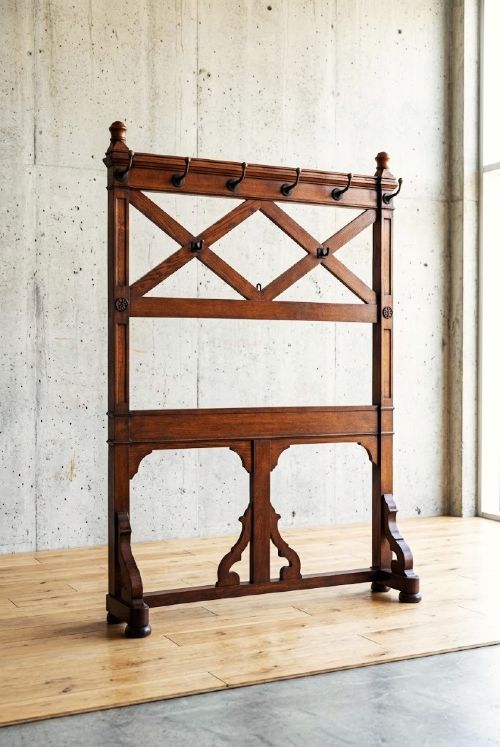
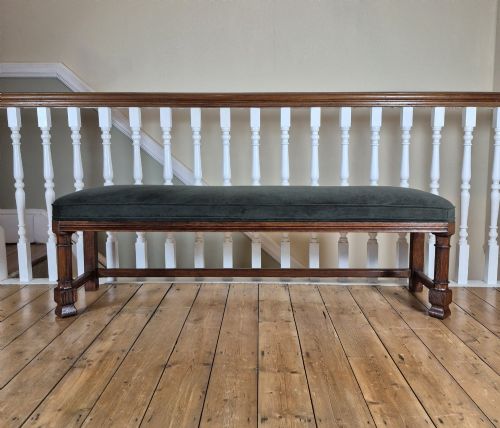
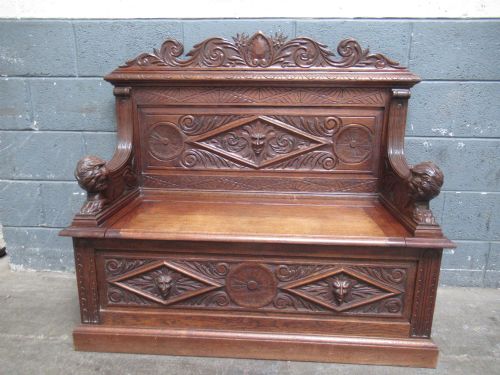
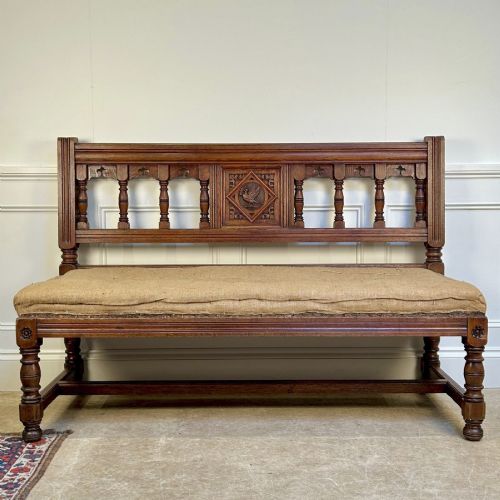
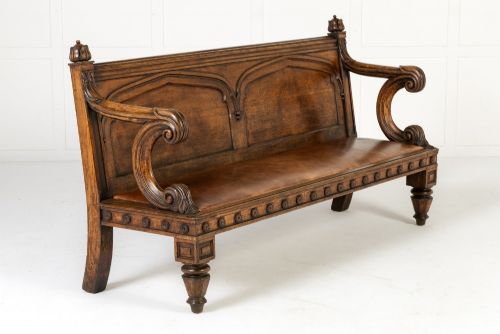
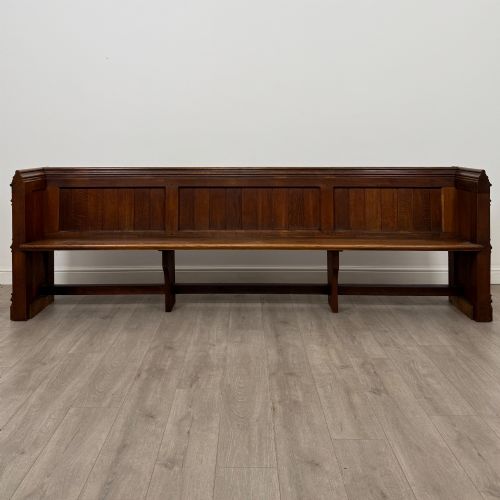
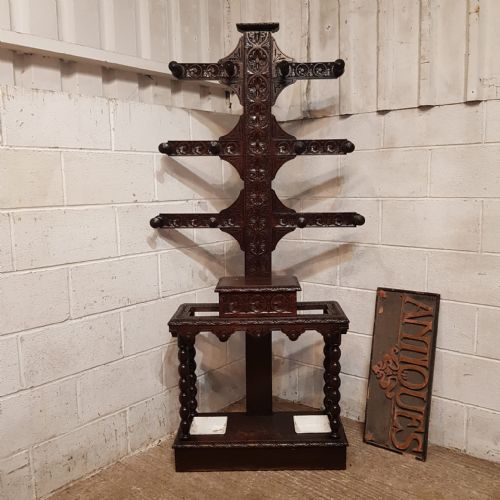
Gothic oak hall furniture comprises heavy timber seating, coat stands and umbrella holders designed to furnish entranceways with ecclesiastical and medieval motifs. You will most frequently encounter nineteenth-century Victorian bench seats, settles and hall stands shaped by Gothic Revival tastes.
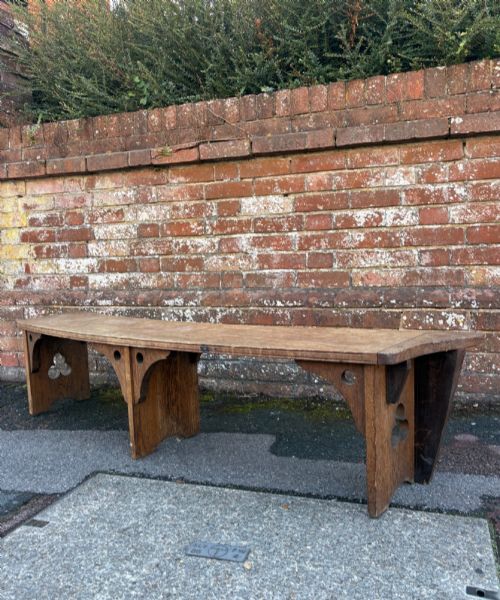
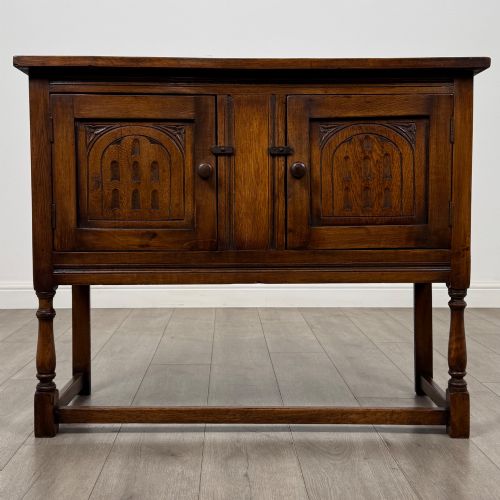
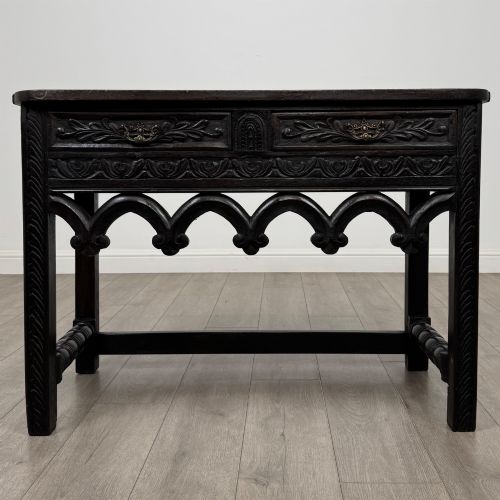
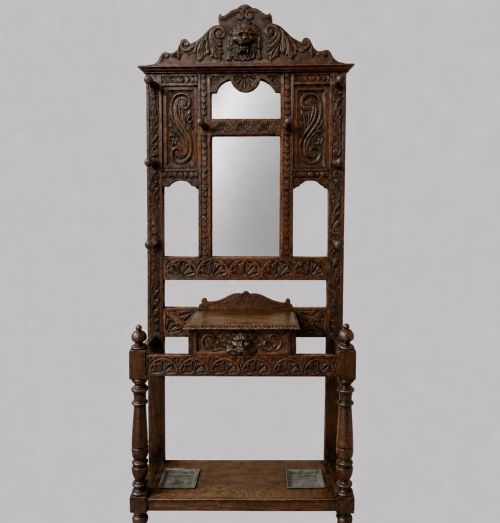
The pieces range from simple church pews and side chairs to elaborate hall stands featuring carved green man masks, trefoil supports and linenfold panels. Makers working in the Pugin style and firms such as Gillows produced robust oak items intended to anchor large entrance halls.
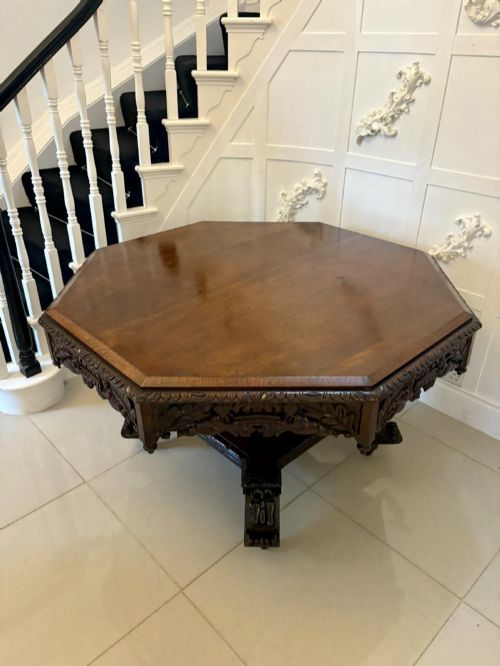
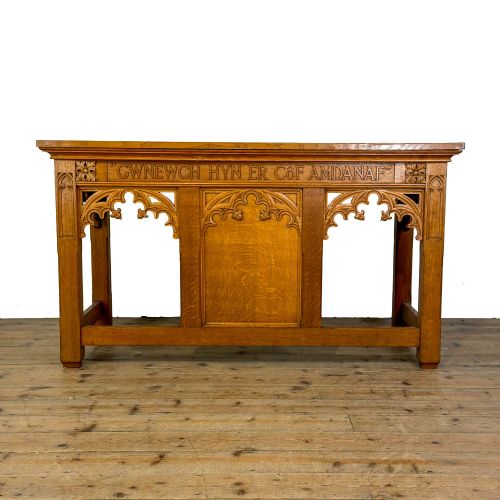
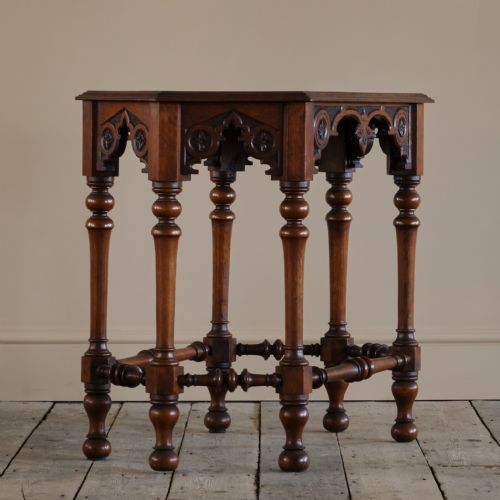
Alongside benches and pews, the selection includes occasional tables, church chairs and umbrella stands built from solid oak. These forms served practical domestic functions while projecting a serious, historic architectural character.
Judging Quality and Execution
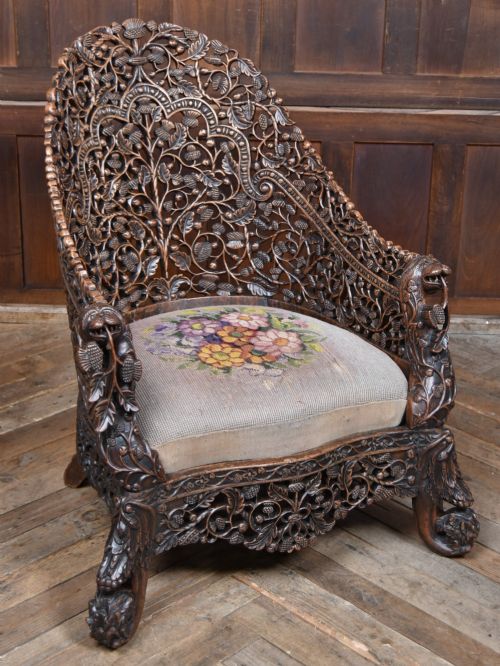
Quality rests upon the crispness of the hand carving and the selection of the timber. Deeply undercut foliage, sharp tracery and well-figured oak distinguish ambitious workshop production from plain utilitarian joinery.
Structural integrity depends on sound joint construction and the retention of original brass or iron hardware. Pieces stamped by established makers like Gillows or Liberty carry distinction through documented provenance and superior cabinetwork.
The listings span from the eighteenth century through the Edwardian period, with the majority originating in the nineteenth century.
Gillows·Liberty and Co
The Gothic Oak Hall Furniture Glossary
- Gothic Revival
- An architectural and decorative style drawing inspiration from medieval forms, pointed arches and ecclesiastical ornamentation. This aesthetic dominated nineteenth-century interior design.
- Green Man
- A sculptural motif depicting a human face disgorged from foliage or surrounded by leaves. It appears frequently on Victorian and Arts and Crafts carved oak panels.
- Trefoil
- A graphic ornament composed of three overlapping rings or lobes resembling a clover leaf. Craftsmen carved this shape into bench supports and chair backs.
- Settle
- A high-backed wooden bench with solid arms and a closed base designed to block draughts in entrance halls. These pieces often incorporate storage beneath the lift-up seat.
- Linenfold
- A style of wood carving that mimics folded lengths of fabric. It is commonly found on panels within nineteenth-century oak furniture.
Gothic Oak Hall Furniture: Frequently Asked Questions
What pieces count as gothic oak hall furniture?
This category includes oak benches, settles, hall stands, umbrella holders and side chairs produced in revival styles. They are designed specifically for entranceways and hallways.
Items range from plain church pews to elaborately carved Victorian hall stands featuring mirrors and coat hooks.
How do I identify a Victorian piece?
Nineteenth-century examples often display characteristic Gothic Revival details such as pointed arches, trefoils and heavy carved ornamentation. The use of solid oak combined with iron or brass hardware is typical.
Maker stamps or registration marks can occasionally confirm the nineteenth-century production date.
Where were these pieces used originally?
Owners placed them in the entrance halls and vestibules of Victorian homes, churches and public reception rooms. They provided seating for visitors removing coats and boots.
Large settles and benches also served to block cold draughts near front doors.
How do I care for antique oak furniture?
Keep wooden pieces away from direct heat sources and sudden humidity changes to prevent timber splitting. Regular dusting with a dry cloth maintains the surface finish.
Avoid using modern silicone polishes on historic oak surfaces.