


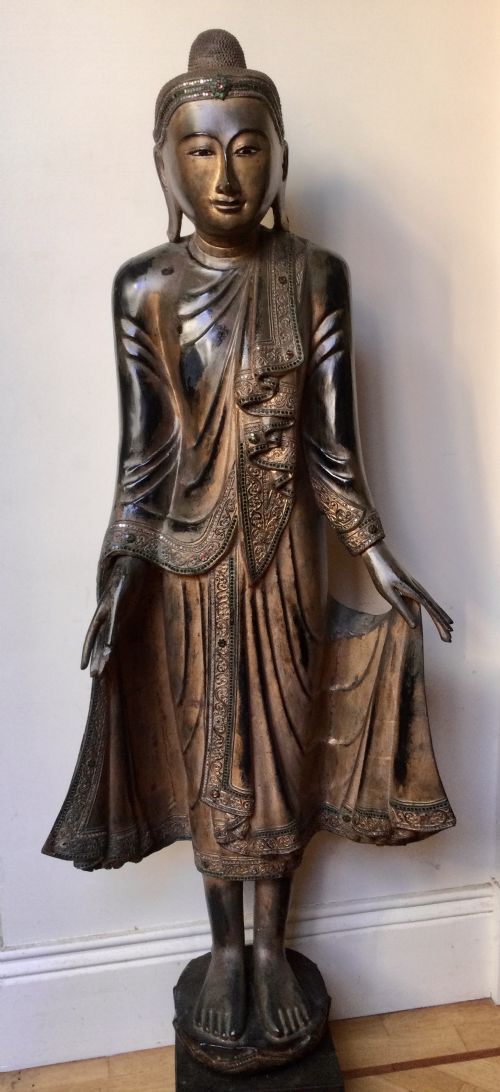


Vintage Buddha Figure
A vintage buddha figure brings quiet presence to a room, cast in bronze or carved from wood across traditions from Tibet to Burma.
Vintage Buddha Figure
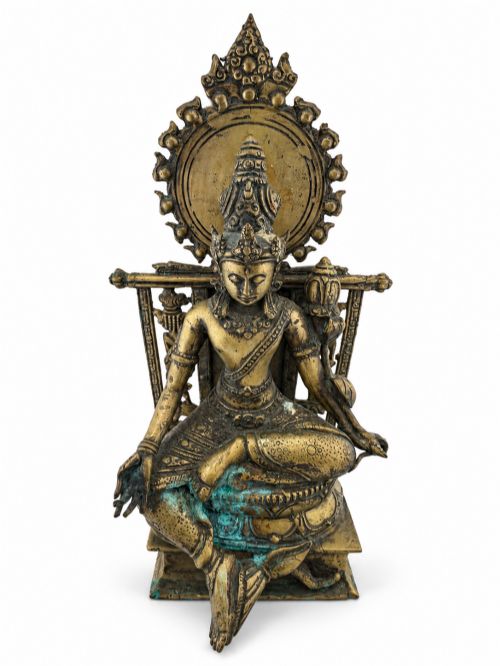
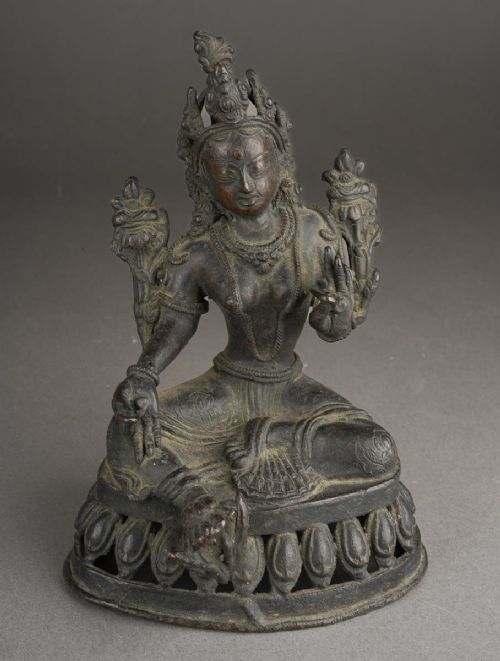
When you search for a vintage buddha figure, you encounter a diverse range of sculptures, statues, and ritual objects spanning the eighteenth to the early twentieth centuries. These pieces originate from regions including Tibet, China, Thailand, and Burma, reflecting distinct Buddhist and Asian artistic traditions.
The selections available here run from small bronze shrine statues and carved bone pendants to large wooden figures and stone or alabaster deities. Alongside traditional sculptures, you may find related forms such as carved soapstone seals, turquoise glazed porcelain lamps, and cast metal laughings figures.
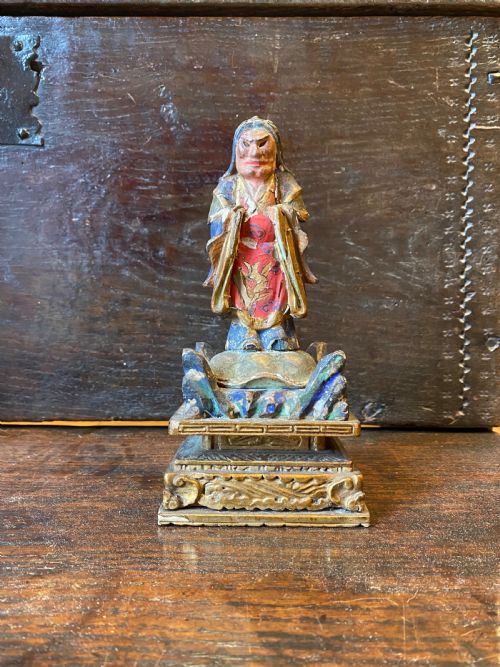
Most examples date from the nineteenth and early twentieth centuries, capturing the hand of regional artisans working in bronze, brass, copper alloy, carved hardwood, and lacquered wood. Each piece carries the distinct iconography of its origin, whether Himalayan, Southeast Asian, or Chinese Qing dynasty.
How they were made
Makers shaped these figures through casting, carving, and joining, utilising metals and organic materials suited to their local workshops. Bronze and copper alloy pieces typically emerge from lost wax casting, allowing artisans to render intricate robes, lotus bases, and multiple limbs with precision.
Regional styles represented include Tibetan, Burmese Mandalay, Chinese Qing dynasty, and Edwardian Chinoiserie, alongside items formed as desk seals, earrings, and lamps.
What varies in quality
Quality rests in the crispness of the casting and the sensitivity of the carving, distinguishing masterwork ritual items from simple commercial pieces. Finer bronzes display sharp facial expressions, well defined hands, and careful chasing to the reverse, whereas lesser examples lose detail in heavy patination or wear.
The integrity of the material and the preservation of original gilding, lacquer, or surface polish dictate the standing of a piece. Older items retain evidence of ritual handling in the worn high points of the metal or the mellow grain of aged wood.
The Vintage Buddha Figure Glossary
- Avalokiteshvara
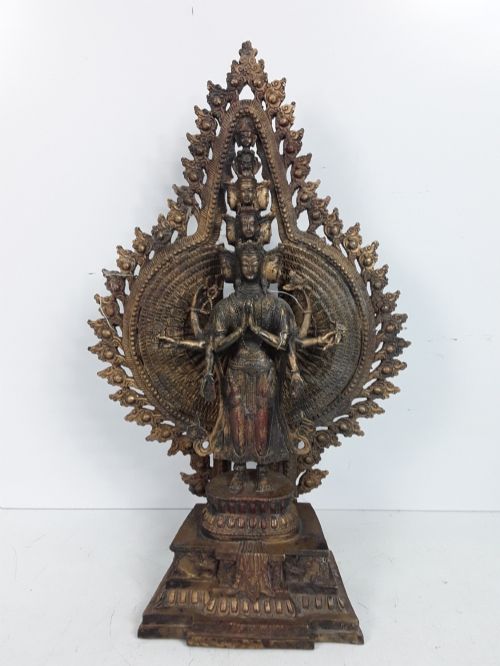
- A bodhisattva who personifies the compassion of all Buddhas. This multi-armed deity appears frequently in Himalayan and Tibetan traditions.
- Lost wax casting
- A metalworking method where a molten metal is poured into a mould that has been created by means of a wax model. Once the mould is made, the wax is melted and drained away.
- Patina
- A thin layer that naturally develops on the surface of bronze, copper, wood, or stone through age and use. It reveals the history of handling and exposure to the elements.
- Tara
- A female meditation deity in Tibetan Buddhism whose various forms represent compassion and protective action. Statues often depict her seated on a lotus throne with one leg pendent.
Vintage Buddha Figure: Frequently Asked Questions
How do I care for a bronze or wooden buddha?
Keep metal figures dry and dust them gently with a soft brush to protect the natural patina. Avoid using chemical cleaners or brass polishes that strip away age.
For wooden or lacquered pieces, maintain stable room humidity to prevent splitting or warping. Place them out of direct sunlight to preserve pigments and gilt surfaces.
What is the difference between Tibetan and Southeast Asian styles?
Tibetan and Himalayan figures often depict complex deities with multiple heads and arms, frequently adorned with intricate jewellery and seated on double lotus thrones. They utilise cast bronze and copper alloys with rich surface details.
Southeast Asian pieces, such as those from Thailand and Burma, generally show serene seated or standing figures with smooth robes and elongated earlobes. They emphasise quiet posture and rely on patinated bronze, gilt wood, or stone.
Where were these figures originally displayed?
Many smaller bronzes served as private shrine objects in Himalayan or Nepalese monasteries and domestic altars. They were used for daily meditation and devotional practices.
Larger wooden or stone statues often stood in temples, temple halls, or public shrine rooms across China, Sri Lanka, and Southeast Asia. Some portable pieces also accompanied travellers or merchants.