

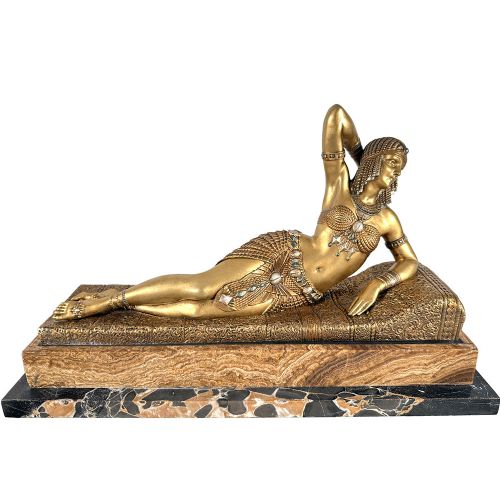
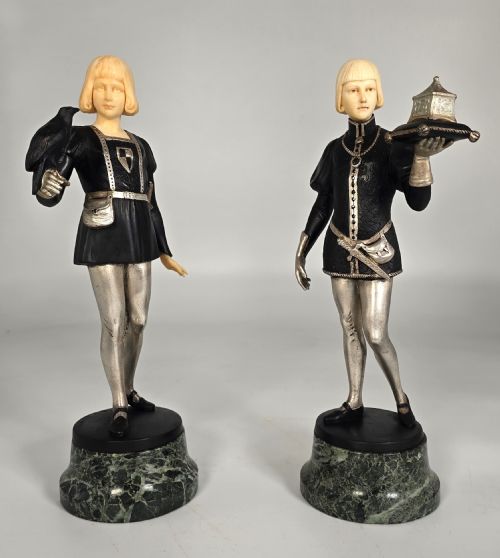





Vintage Bronze Mantel Statuettes
Vintage bronze mantel statuettes bring character to a fireplace, pairing solid metal figures with marble and onyx bases.
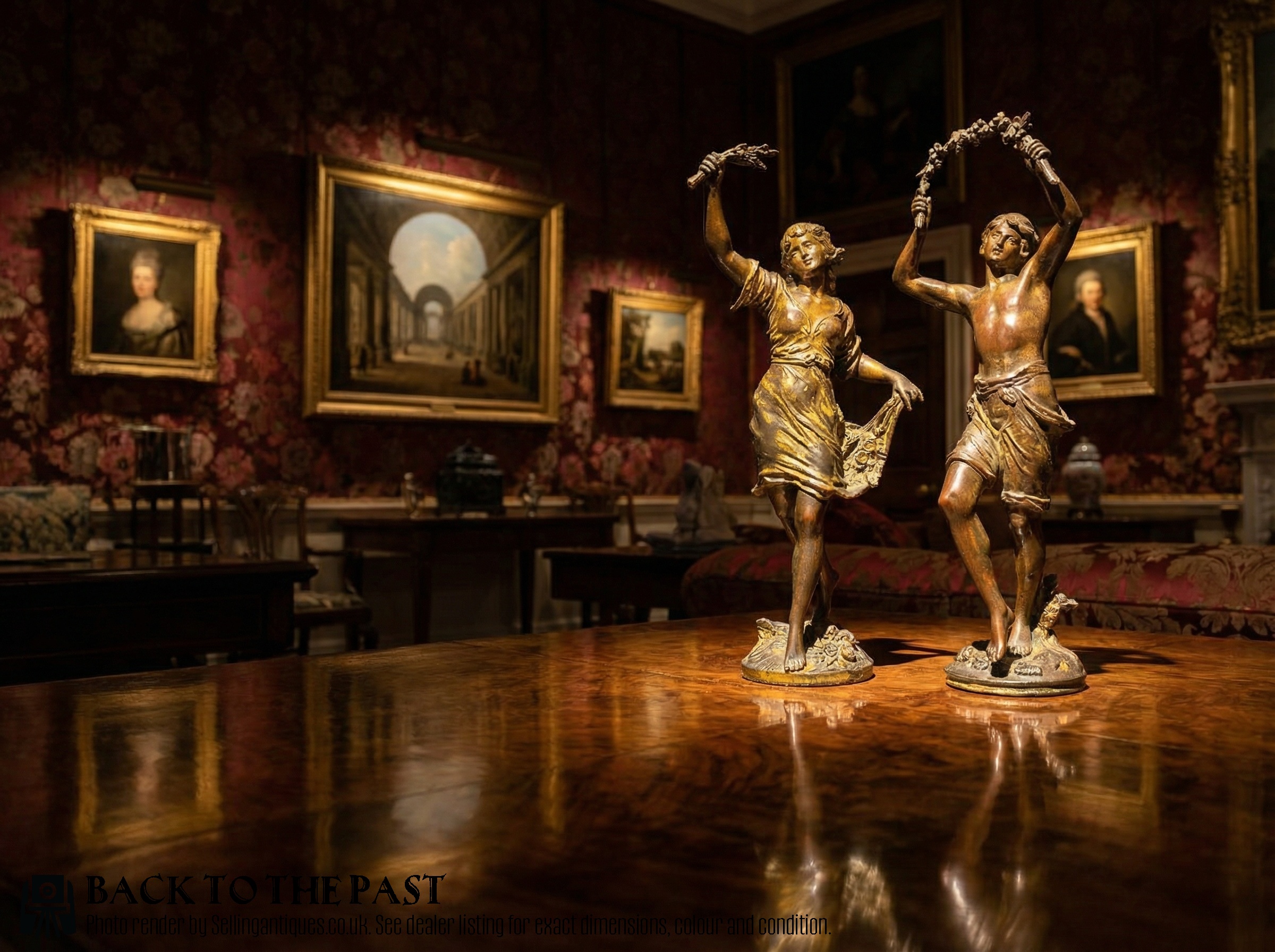
Vintage Bronze Mantel Statuettes
Vintage bronze mantel statuettes span several decades and styles, including Art Deco, Art Nouveau, and Victorian periods. When you search for vintage bronze mantel statuettes, you encounter figures of dancers, animals, and mythological subjects designed to sit upon a fireplace.
The pieces on this page originate from the nineteenth century through the nineteen-thirties, reflecting shifts in taste from elaborate French casting to streamlined Art Deco design. Many sit upon heavy stone bases, combining sculpture with functional decor.
Subject matter ranges from figurative dancers and historical figures such as Cleopatra and Egyptian shabtis to animals like panthers and horses. These sculptures utilise distinct casting methods characteristic of their respective eras.
Materials and construction methods
Foundries cast these figures in bronze, patinated bronze, silvered bronze, and spelter, frequently mounting them directly onto marble, onyx, or alabaster plinths. Some examples incorporate carved ivory details for hands and faces.
The manufacturing process involves traditional metal casting techniques, followed by hand-finishing and patination to achieve surface colour and texture. Bases are cut from natural stone and fitted securely to the metal sculptures.
Listings feature pieces from the nineteenth century through nineteen-thirty, utilising marble, onyx, bronze, and spelter.
Factors determining quality
Quality rests in the crispness of the casting and the finesse of the hand-chased surface details. Superior examples exhibit clean lines in the metalwork and naturalistic proportions.
The choice of base material influences the overall integrity of the piece, with dense marbles and onyx providing stability and weight. The application of silvering or patination remains intact on better preserved specimens.
Josef Lorenzl·Demetre Chiparus·Gotthilf Jaeger·Claire Colinet·Michel Decoux·Franz Bergman
The Vintage Bronze Mantel Statuettes Glossary
- Patina
- The surface coloration and sheen acquired by bronze over time or applied chemically by the foundry. This finish protects the metal and defines the visual depth of the sculpture.
- Spelter
- A zinc alloy commonly used as a cost-effective alternative to bronze during the early twentieth century. It accepts metallic paints and finishes to resemble bronze.
- Ormolu
- Gilt bronze produced by applying a finely ground high-carat gold mercury amalgam to bronze. This technique creates a rich golden surface finish on nineteenth-century pieces.
- Shabti
- A small funerary figure placed in ancient Egyptian tombs, reproduced in nineteenth-century decorative arts. These pieces often incorporate gilt surfaces and stone plinths.
- Plinth
- The solid base block of marble, onyx, or alabaster upon which the bronze figure is mounted. It provides structural support and elevates the sculpture.
Vintage Bronze Mantel Statuettes: Frequently Asked Questions
Are spelter and bronze different?
Spelter is a softer zinc alloy utilised as an affordable substitute for bronze in many twentieth-century figures. It feels lighter and is more susceptible to bending or surface wear.
Bronze contains copper and tin, offering superior durability, weight, and capacity for fine detail during the casting process.
Where should I place these?
Mantelpieces provide a traditional setting, offering a stable horizontal surface that showcases the height and base of the statuette. Ensure the location remains clear of excessive moisture and direct heat sources.
Sideboards and display cabinets also suit these pieces, provided the supporting furniture bears the weight of the stone plinths safely.
How do I date a statuette?
Examine the stylistic markers, such as the geometric lines of Art Deco design or the ornate flourishes of nineteenth-century French casting. Signatures or foundry stamps inscribed on the bronze or stone base often provide specific attribution.
Materials also indicate age, as materials like onyx and specific patination styles align with distinct manufacturing decades.