

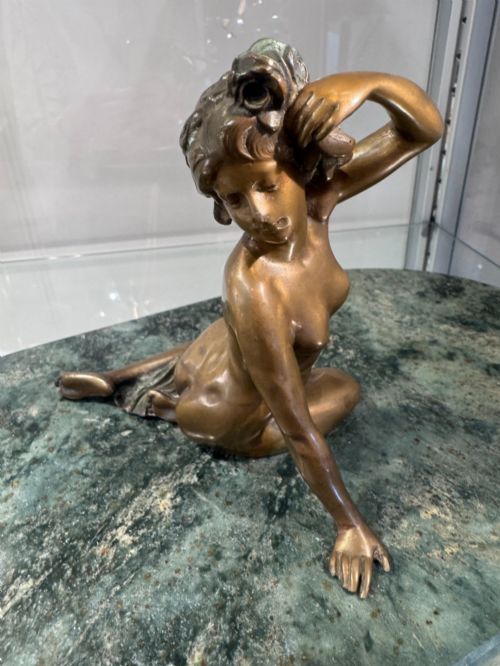


Turn of Century Bronze Statues
These turn of century bronze statues capture the fluid lines and naturalistic subjects of the 1900s, offering collectors expressive focal points for domestic interiors.
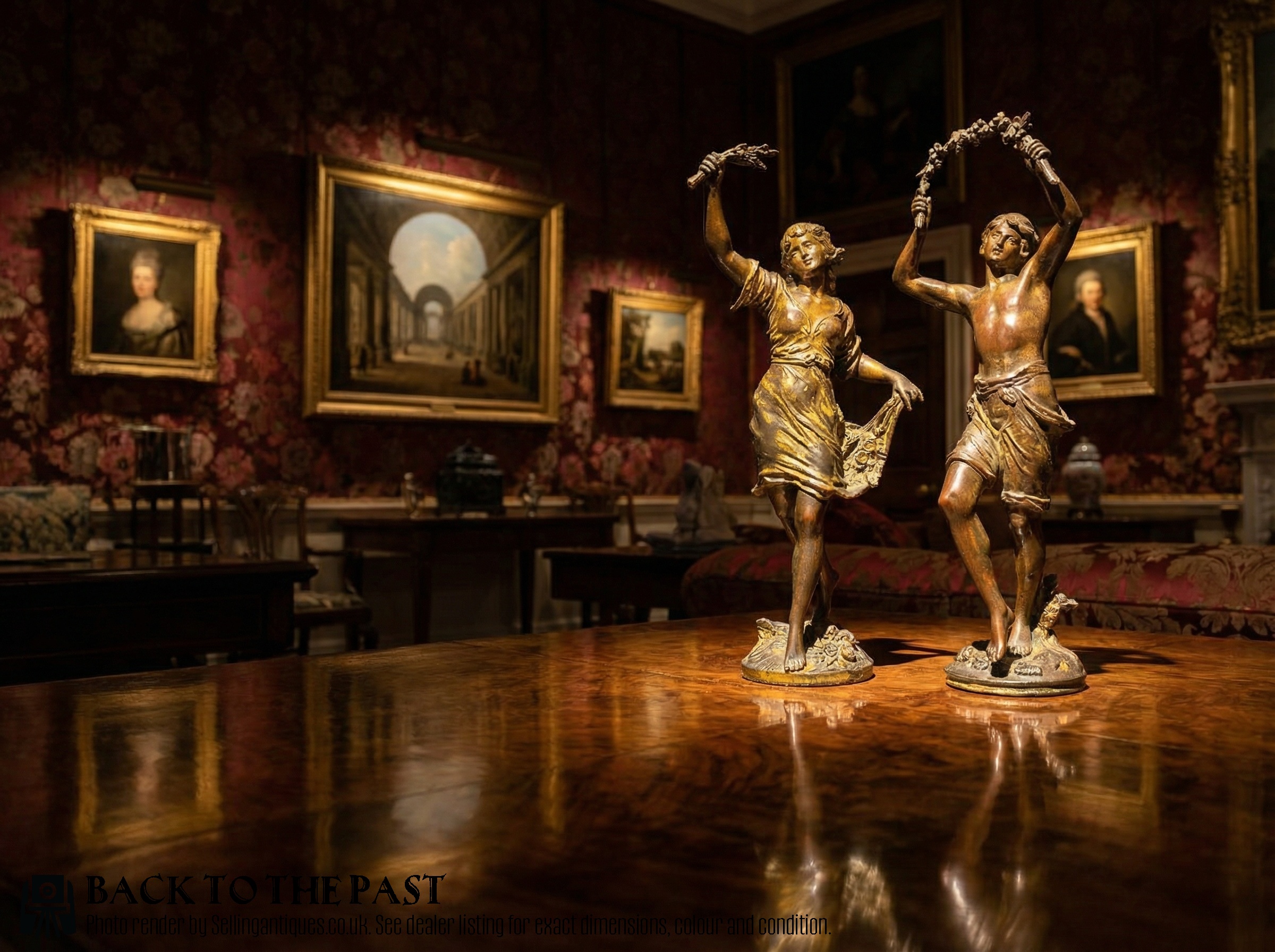
Turn of Century Bronze Statues
When buyers search for turn of century bronze statues, they encounter sculptural works spanning the late Victorian era through the 1920s, predominantly shaped by Art Nouveau aesthetics and Animalier traditions. The selection on this page centres heavily on figures of women, animal studies, and portrait busts created around 1900.
The objects take several distinct forms, from small cabinet figurines and table lamps to substantial library sculptures. Alongside solid cast metal works, the pieces frequently incorporate organic materials like carved marble bases or mixed media finishes.
Originating largely from European workshops, particularly in France, Austria, and Vienna, these sculptures reflect the diverse decorative tastes of the early twentieth century. Buyers will find both signed gallery pieces and unsigned commercial figures representing this transitional period in design.
How they were made
The creation of these works relies fundamentally on metal casting, utilising either traditional hot-cast bronze or alternative alloys like spelter. Artisans often applied cold-painted pigments directly to the metal surfaces to enhance details on garments, hair, and naturalistic settings.
Many sculptures incorporate contrasting supports, mounting the metal figures onto heavy marble bases or wooden plinths. Alternative mediums such as terracotta and bronzed plaster also appear, demonstrating the period's experimental approach to sculptural materials.
Current listings demonstrate a strong presence of 1900 and 1910 pieces, utilising bronze, spelter, terracotta, and marble across Art Nouveau and Animalier styles.
What varies in quality
The distinction between standard commercial pieces and finer works lies in the crispness of the casting and the sensitivity of the finishing hand-work. Superior examples retain sharp facial expressions, distinct drapery folds, and clean chisel marks that disappear in worn secondary castings.
Surface patination significantly influences the character of a piece, with deliberate chemical ageing or intact cold-painted pigments preserving the original artistic intent. The integration between the figure and its base, especially where metal meets marble or wood, demonstrates the underlying structural integrity of the manufacture.
Rudolf Küchler·Franz Bergman·Edith Parsons·Goldscheider·Carl Kauba·HL Blasche·Reps & Trinte
The Turn of Century Bronze Statues Glossary
- Art Nouveau
- A decorative art style characterised by flowing, organic lines and floral motifs, prominent around 1900. It heavily influenced the curvature and posture of figures from this period.
- Animalier
- A nineteenth and early twentieth century artistic focus on the realistic portrayal of animals. Sculptors in this tradition captured beasts in dynamic motion or natural repose.
- Spelter
- A zinc-based alloy commonly used as an economical alternative to bronze for decorative figures. It often received a bronze-coloured coating to mimic the heavier metal.
- Cold-painted
- A technique where paint is applied to a metal sculpture without subsequent heat firing. This finish requires careful preservation to prevent flaking over time.
- Patina
- The surface coloration and sheen developed through age or chemical treatment on bronze. Collectors value patinas that show honest handling without aggressive cleaning.
Turn of Century Bronze Statues: Frequently Asked Questions
How do I identify a genuine bronze from spelter?
Bronze typically feels heavier, exhibits a resonant sound when lightly struck, and shows a warm metallic tone beneath any worn patina. Spelter is a softer zinc alloy that often reveals a greyish-white metal underneath chips in the surface coating.
Magnetic testing offers a quick guide, as neither bronze nor spelter is magnetic, though internal iron mounting rods may attract a magnet.
Where were these sculptures originally displayed?
These figures typically decorated Victorian and Edwardian drawing rooms, studies, and antechambers as ornamental focal points on mantelpieces or desks. Portrait busts and mythological figures often occupied libraries to signify cultural interests.
Larger statues stood upon dedicated pedestals or hall tables, while smaller lamp-form sculptures provided functional illumination combined with decorative appeal.
How should I clean my antique sculpture?
Dusting gently with a soft, dry microfibre cloth is generally sufficient to maintain the surface without disturbing the historic patina. Avoid using water, household detergents, or metal polishes, which strip away original finishes.
Waxing should be approached with caution and applied only to unpainted bronze surfaces using specialised microcrystalline museum wax if protection is necessary.
What is an Animalier sculpture?
Animalier refers to nineteenth and early twentieth century artworks dedicated to the realistic depiction of animals, particularly predators and domestic beasts in motion. Sculptors studied anatomy closely to capture muscles and tension accurately.
Pieces like the turning terrier represent this specific genre, which gained immense popularity among collectors seeking naturalism in domestic decoration.